What Are Closing Costs?
Closing costs are the final fees you pay to finish buying a house. They cover all the background work needed to approve your loan and legally transfer the property to your name. You pay these fees at the very end of the process. This happens on closing day when you sit down to sign the final paperwork. The banking and real estate industries coined the phrase to group all the final administrative fees together. It literally refers to the final closing of a business deal.
These costs are a major part of buying a home. You usually have to pay them out of pocket. They are completely separate from your down payment. Many first time buyers are surprised by how much cash they need to bring to the table on the final day.
What Do They Include?
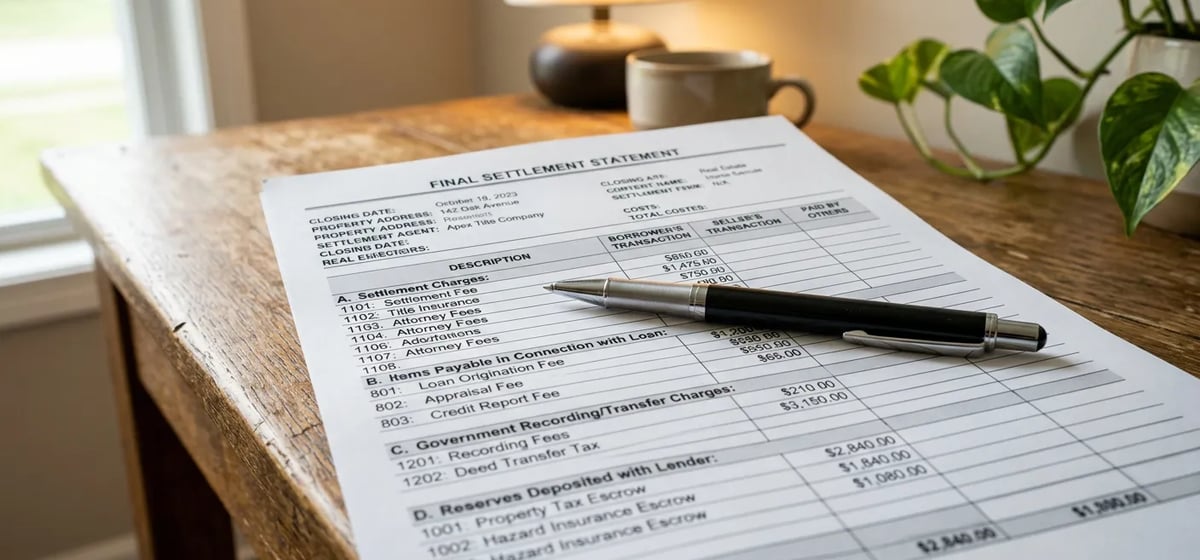
The total bill is actually a large bundle of smaller charges. Lenders, local governments, and third party companies all charge fees for their services to make the sale happen. Here are the most common items you'll see on your final statement:
- Loan origination fees: Your lender charges this to process, underwrite, and approve your mortgage application.
- Appraisal fees: The bank hires a professional to confirm the house is worth the price you agreed to pay.
- Title search and insurance: This proves the seller actually owns the home. It also protects you if someone else claims they own the property later on.
- Prepaid costs: Lenders often ask you to pay a few months of property taxes upfront. You also have to pay your first full year of home insurance in advance.
- Discount points: You can choose to pay extra cash upfront to lower your long term mortgage interest rate.
- Recording fees: Your local city or county charges a small fee to officially record the new deed in your name.
How Much Will You Pay?
Closing costs usually equal 2 percent to 5 percent of your total loan amount. Keep in mind that exact ranges vary heavily by state, local tax laws, and your specific lender. If you buy a house for 300,000 dollars, your closing costs could be anywhere from 6,000 to 15,000 dollars. This is a massive chunk of cash to plan for. You might pay 500 dollars for an appraisal, 1,500 dollars for title insurance, and another 200 dollars for recording fees. The loan origination fee alone can cost 1 percent of your total loan amount.
Can You Lower Your Closing Costs?
You have a little bit of wiggle room to lower these fees. You can't change property taxes or government recording fees. However, you can shop around for certain services. The Loan Estimate document will tell you exactly which services you can pick yourself. You can often choose your own title company or hire your own survey company. You can also ask your lender to lower or waive their origination fee.
If the housing market is slow, you can ask the seller to cover some of your costs. This is called asking for seller concessions. It keeps money in your pocket for new furniture or immediate repairs. In other cases, lenders let you roll the closing costs into your mortgage. This means you bring less cash to closing, but you'll pay interest on those fees for the next 30 years.
How to Pay on Closing Day
You can't just write a personal check or hand over a stack of cash on closing day. Title companies require secure and verified funds. You'll need to go to your bank and get a cashier's check made out to the title company. Alternatively, you can set up a wire transfer a day or two before you close. Always call your title company directly to verify wire instructions so you don't fall victim to wire fraud.