What is a snow guard?
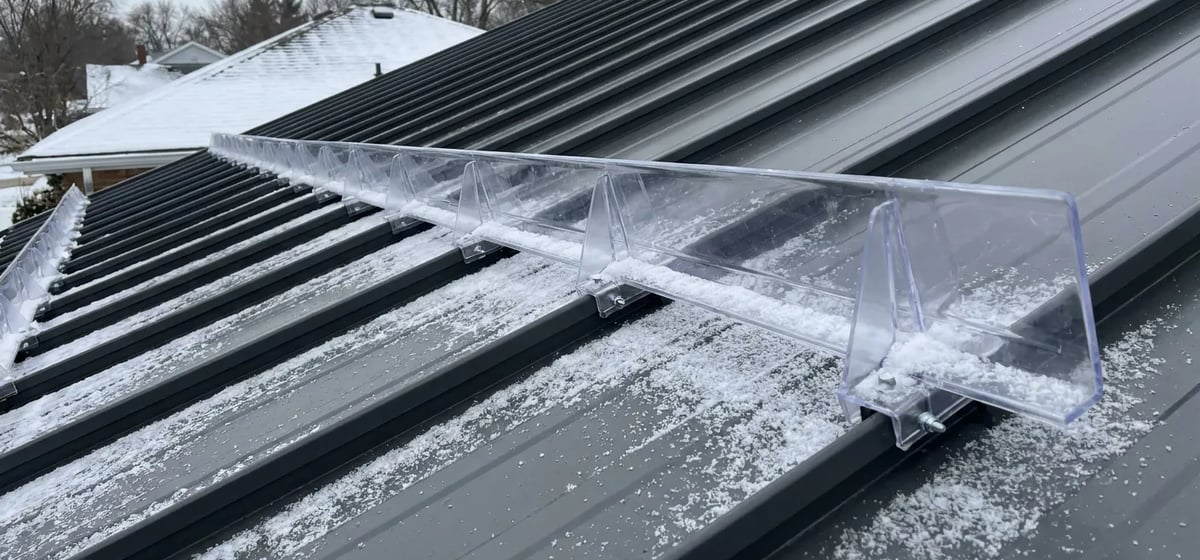
A snow guard is a small device attached to a sloping roof. It stops heavy sheets of ice and snow from sliding off all at once. When snow builds up on your roof, a sudden melt can cause a dangerous roof avalanche. Snow guards hold the snow in place. This allows the snow to melt slowly and drip harmlessly into your gutters.
The concept actually dates back to mountainous regions of Europe. People there used to place heavy stones on their roofs to keep snow from falling on them. The modern English term emerged in the late 1800s. That's when inventors patented metal versions for slate and metal roofs. Today, you'll find them made of metal or clear polycarbonate plastic. They come in many shapes, including small cleats, bars, or rails.
Why it matters to you
If you live in an area that gets heavy winter weather, a roof avalanche is a real threat. A sudden slide of packed snow and ice can weigh hundreds of pounds. When it falls, it can cause serious damage.
- It can rip off your gutters and downspouts.
- It can crush expensive shrubs and bushes around your foundation.
- It can damage lower roofs, porches, or skylights.
- It can severely injure anyone walking out your front door or standing near the house.
Installing snow guards is a smart way to protect your property and your family. Preventing damage to your home exterior means you avoid expensive repairs in the spring. If you want to learn more about keeping your yard safe from winter runoff, check out our guide on Landscaping, Drainage & Outdoor.
Where you run into them
You'll mostly see snow guards in cold climates. They are incredibly common on metal roofs. Metal is very slick, so snow slides off it much faster than it does off rough asphalt shingles. You'll also see them on slate, tile, and synthetic roofs. Asphalt shingles usually have enough grit to hold snow, but steep asphalt roofs might still need them.
Builders usually place them in a staggered pattern across the lower half of the roof. They are especially important over doorways, garage doors, walkways, and driveways. If you're upgrading your home or installing a new roof, your contractor might suggest adding them. You can read more about roofing materials and upgrades in our Roofing guide.
What they cost and what to watch for
The cost to install snow guards depends on your roof type and the material you choose. Keep in mind that prices vary based on where you live and the size of your house. For a standard home, you can expect to pay anywhere from 300 to 800 dollars for the materials and labor. Clear plastic guards are usually the cheapest option. Copper or color-matched metal guards cost more. If you choose a continuous rail system instead of individual cleats, the price can jump to 1,000 to 2,500 dollars.
Never try to install snow guards yourself on a steep or slippery roof. Always hire a professional who has the right safety gear and knows how to seal the fasteners so your roof doesn't leak.
When you hire a pro, ask how they plan to attach the guards. On standing seam metal roofs, contractors use clamps that pinch the metal seams. This is great because it doesn't poke holes in your roof. On slate or asphalt roofs, they have to use screws or nails. They must seal these holes perfectly to prevent water damage. If you need help finding a good roofer, look at our guide on Hiring Contractors & What Things Cost.
Finally, check your snow guards every fall. Make sure none are loose or missing. A quick visual check from the ground is usually all you need to do to get ready for winter.