The Golden Rule of Grading
The dirt around your house needs to slope away from the walls. Builders call this positive grading. If the dirt slopes toward your house, rain runs right against your foundation. This leads to wet basements, mold, and structural damage over time.
You want the ground to drop 6 inches for the first 10 feet away from your house. If your yard slopes the wrong way, you need to fix it. Add dense topsoil against the foundation and pack it down to create a ramp away from the walls. Read more about protecting your structure in our Foundation & Structure guide.
Managing Roof Runoff
Your roof catches thousands of gallons of water during a heavy storm. Your gutters collect this water, and your downspouts dump it on the ground. If they dump it right next to your house, you have a big problem. Water will pool and seep straight down into your basement or crawlspace.
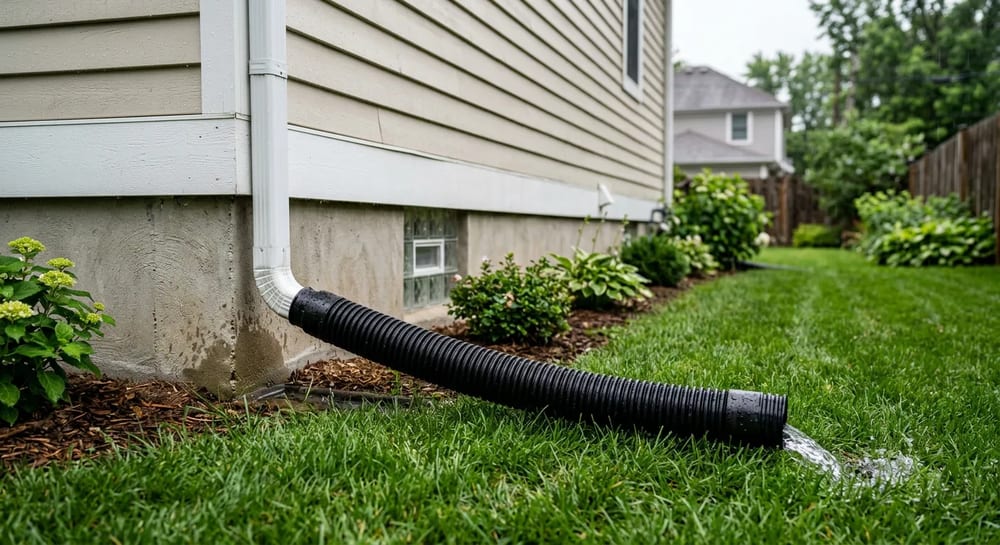
Add downspout extensions to push that water at least 5 feet away from the house. You can buy simple plastic tubes that attach to the end of the downspout. You can also bury smooth PVC pipes underground to carry the water even further away. Just make sure the end of the pipe stays clear of leaves and debris.
Yard Drainage Solutions
Sometimes grading is not enough. You might have a low spot in your yard that turns into a swamp after a rainstorm. If water sits in your yard for days, you need a drainage system.
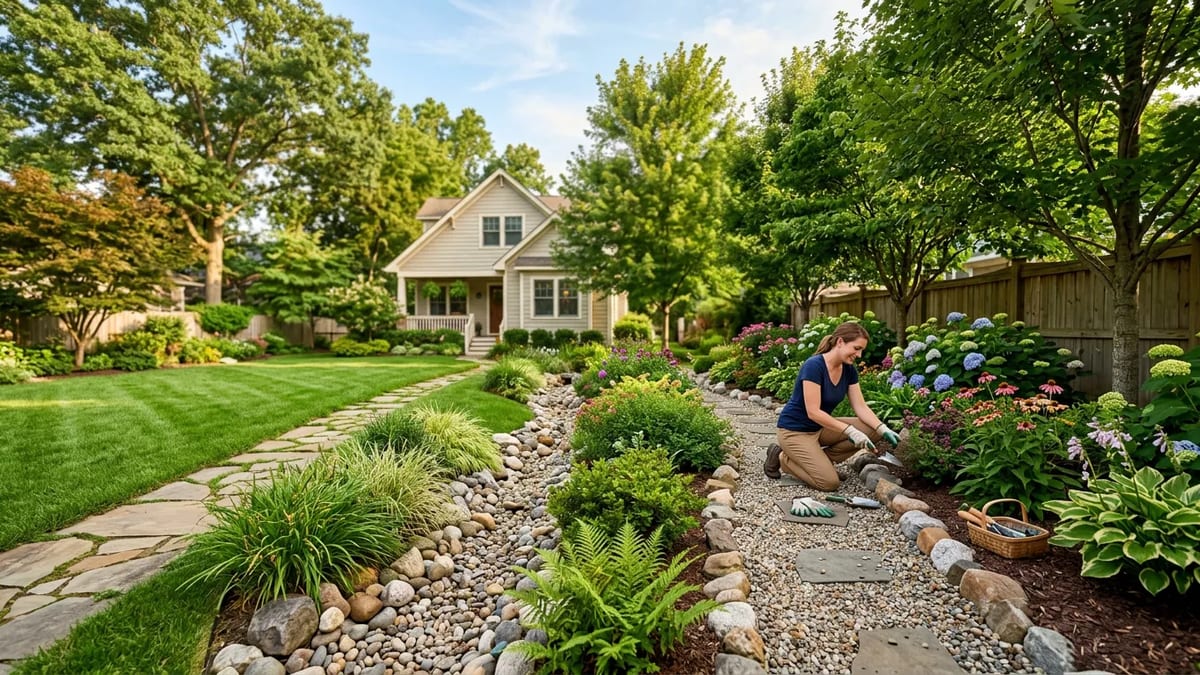
- French Drains: A French drain is a trench filled with gravel and a perforated pipe. It catches water that soaks into the ground and gives it an easy path to flow away.
- Catch Basins: A catch basin works like a shower drain for your yard. It sits at the lowest point of the yard. Water flows into a grate on top, and a solid underground pipe carries the water to the street or a drainage ditch.
- Dry Wells: A dry well is a large underground tank with holes in it. You pipe water into the tank, and it slowly leaks out into the surrounding deep soil.
Installing drainage can involve heavy machinery and digging up your lawn. Keep in mind that costs vary widely by region, scope, and home age.
Trees and Your House
Trees add shade and beauty to your property. But a tree planted too close to your house is a hazard. Tree roots can crack concrete sidewalks and crush underground sewer pipes. High branches can scrape your shingles and dump leaves into your gutters. You can learn about protecting your roof from tree damage in our Roofing guide.
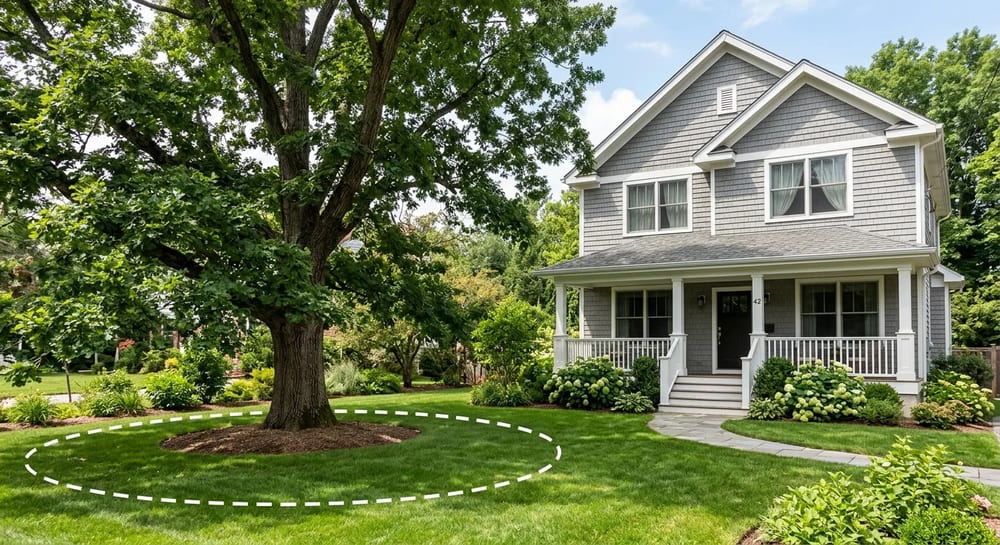
A good rule of thumb is to look up the mature size of the tree before you plant it. The roots usually spread out as far as the branches do. If you have an old, dead tree near your house, hire a professional to cut it down before a storm blows it over.
| Tree Size at Maturity | Safe Distance from House | Average Removal Cost |
|---|---|---|
| Small (under 20 feet) | 10 feet | $200 to $500 |
| Medium (20 to 40 feet) | 15 feet | $500 to $1,200 |
| Large (over 40 feet) | 20 or more feet | $1,200 to $3,000 |
Tree removal costs vary by region, scope, and home age. Removing a tree near power lines always costs more.
Lawn Care Basics
A thick, healthy lawn chokes out weeds naturally. The best thing you can do for your grass is to mow it high. Set your mower deck to 3 or 4 inches. Tall grass grows deeper roots and shades the soil so it stays moist longer.
Water your lawn deeply but infrequently. Give it about an inch of water once or twice a week. This trains the roots to grow deep down looking for moisture. If you water a little bit every day, the roots stay near the surface and dry out fast in the hot sun.
Over time, the soil under your grass gets packed down hard. Water and air cannot reach the roots. You can fix this by aerating your lawn. An aerator machine pulls small plugs of dirt out of the ground to let the soil breathe. If you notice large dead patches in your grass despite watering, you might have grubs. Check out our Pest Control guide for help with yard bugs.
Irrigation Systems
An underground sprinkler system saves you time and keeps your yard green. But it needs regular upkeep. Sprinkler heads sit flush with the ground. They easily get buried by dirt or run over by lawnmowers. Walk your yard once a month while the sprinklers are running. Make sure they spray the grass and not your house walls or the street.
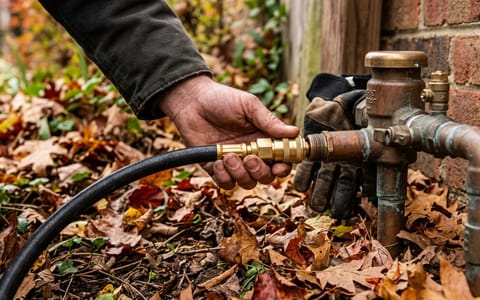
If you live in a place with cold winters, you must winterize your sprinklers before the first freeze. A professional uses an air compressor to blow all the water out of the underground pipes. If you skip this step, the water will freeze, expand, and shatter the pipes.
Hardscaping and Retaining Walls
Patios, walkways, and retaining walls are called hardscaping. They give you solid places to walk and sit. A retaining wall is a heavy structure built to hold back soil on a hill. They look great, but they have a hidden enemy: water pressure.
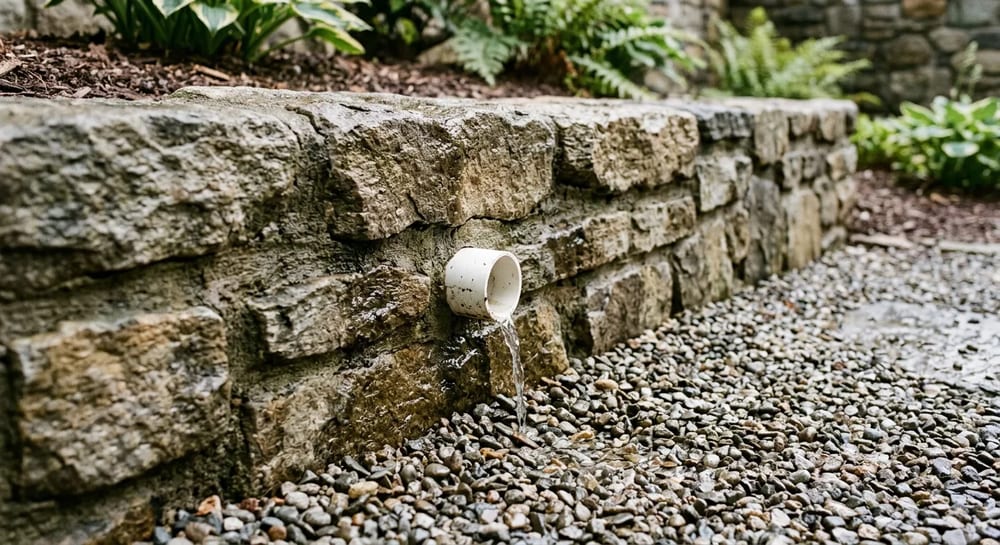
When it rains, the dirt behind a retaining wall turns into heavy mud. If the water cannot escape, the pressure will literally push a stone wall over. A properly built wall always has a layer of gravel behind it and a drain pipe at the bottom. It should also have weep holes. These are small gaps or pipes near the bottom that let trapped water leak out. If you plan to hire someone to build a large patio or wall, read our Hiring Contractors & What Things Cost guide so you know what to expect.
Lawn Care Through the Seasons
Your lawn needs different things at different times of year. A few simple jobs done at the right time keep the grass thick and crowd out weeds. The biggest mistake is feeding or seeding at the wrong moment, so the timing matters as much as the task itself.
Leave your grass clippings on the lawn after you mow. They break down fast and feed the soil for free. This only works if you mow often enough that the clippings stay short. A thick layer of long clippings can smother the grass below.
| Season | Main Jobs |
|---|---|
| Spring | Rake out dead grass, apply a light feeding once the grass greens up, and patch bare spots. |
| Summer | Mow high, water deeply in the morning, and watch for dry patches or insect damage. |
| Fall | Aerate compacted soil, overseed thin areas, and apply the main feeding of the year. |
| Winter | Keep heavy traffic and parked cars off frozen or dormant grass to avoid crushing the crowns. |
Caring for Trees and Shrubs
Healthy trees and shrubs need a little attention each year. Prune most trees in late winter while they are dormant and leafless. You can see the shape clearly, and the cuts heal fast once spring growth starts. Always cut off dead, broken, or crossing branches first.
Keep limbs trimmed back so they do not touch your roof or siding. Branches that rub on shingles wear them down, and they give insects a bridge onto your house. Read more about protecting your walls in our Exterior & Curb Appeal guide.
Young trees need regular water for the first two or three years while their roots get established. Soak the root zone slowly once or twice a week during dry spells rather than a quick splash every day.
Mulch and Garden Beds
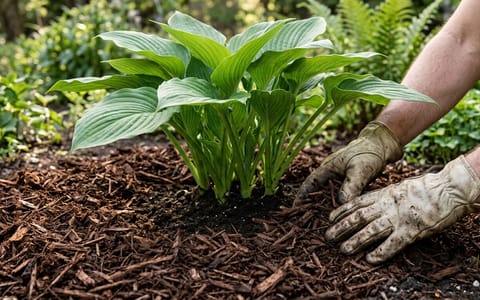
Mulch is a layer of material spread over the soil in your garden beds. It does more than look tidy. It holds moisture in the ground, blocks weed seeds from sprouting, and protects plant roots from heat and cold. As wood mulch breaks down, it slowly feeds the soil too.
Spread mulch 2 to 3 inches deep across the bed. Less than that lets weeds push through. More than that can starve the soil of air and trap too much water against plant stems. Pull the mulch back an inch or two from the base of each plant so the stems can breathe.
Top up your mulch once a year, usually in spring, as the old layer thins out and fades. You rarely need to remove the old mulch first. Just add a fresh layer on top to bring it back to the right depth.