What Is Strain Relief?
Have you ever accidentally yanked the cord on your vacuum or power drill? You probably noticed the cord did not rip right out of the machine. You can thank a small part called a strain relief for that. This simple piece of hardware grips the outer jacket of an electrical cable right where it enters a metal box, a plug, or an appliance. It holds the cord tight and absorbs the physical pull. This stops the pulling force from reaching the fragile wire connections inside the device. The term comes from the early 1900s when electricians needed a mechanical way to relieve physical tension on wires to meet new safety rules.
Why It Matters in Your Home
When a cord gets pulled, twisted, or bent over and over, the inside wires take a beating. If those inner wires pull loose from their screws or wire nuts, bad things happen. A loose wire can touch the metal case of an appliance and give you a nasty shock. It can also cause a spark that starts a hidden fire inside your walls. A strain relief acts like a seatbelt for your electrical cords. It keeps everything safely locked in place. If you are learning about your Electrical system, this is a tiny part that does a huge job for your safety. Building codes require these fittings anywhere a wire enters a metal box so the wire does not rub against the sharp metal edges.
Where You Will Find It
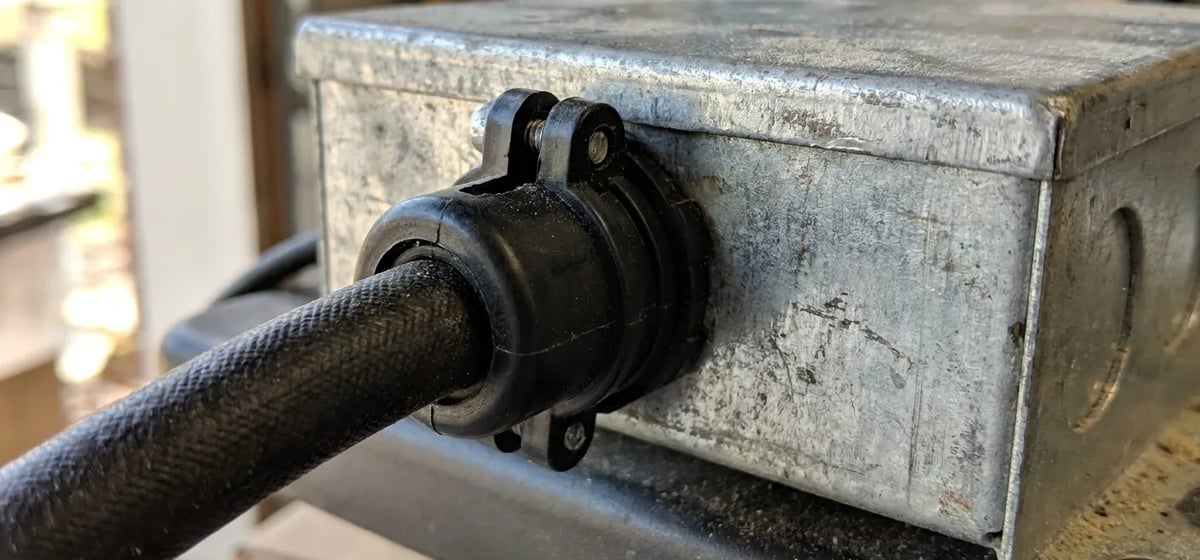
You will see these fittings all over your house once you know what to look for. They come in a few different styles to handle different jobs. Some are hard plastic sleeves that bend with the cord. Others are metal clamps with two small screws that pinch down on the wire.
- Major appliances: Look at the back of your washing machine, refrigerator, or microwave. You will see a plastic or rubber collar where the power cord enters the metal frame.
- Light fixtures: Hanging pendant lights use a strain relief at the ceiling canopy so the weight of the lamp does not pull the ceiling wires apart.
- Junction boxes: If you look at the metal boxes in your basement, garage, or attic, you will see metal clamps holding the thick cables safely in place.
- Kitchen equipment: Your dishwasher and garbage disposal vibrate heavily when they run. They rely on metal clamps to keep their power cords from shaking loose over time.
| Type of Strain Relief | Where You Usually See It |
|---|---|
| Plastic Snap Bushing | Back of household appliances and electronics |
| Metal Twin Screw Clamp | Junction boxes, garbage disposals, and dishwashers |
| Molded Rubber Grip | Heavy duty extension cords and power tools |
How Much Does It Cost?
The part itself is incredibly cheap. If you go to the hardware store, a basic metal clamp or a plastic bushing costs between 1 to 5 dollars. However, if a home inspector finds missing strain reliefs on your electrical boxes, you will need to hire a pro to fix them safely. An electrician usually charges a service fee just to show up. You can expect to pay 150 to 300 dollars for a pro to install a few missing clamps and check your wiring. Prices always vary based on where you live and how hard it is to reach the exposed wires.
What to Watch For
Missing or broken strain reliefs are a very common write up on home inspection reports. When you buy a house, the inspector will check the attic and basement for exposed wires entering metal boxes without a clamp.
You should also check the cords on your heavy appliances. If you spot a cord pulling away from an appliance and you can see the individual colored wires inside, stop using it immediately. The strain relief has failed and the connection is no longer safe. You will need to replace the cord or the fitting before you plug it back in. Keeping an eye on your cords and wiring is a smart habit to build during Your First Year as a Homeowner.