What Step Flashing Is
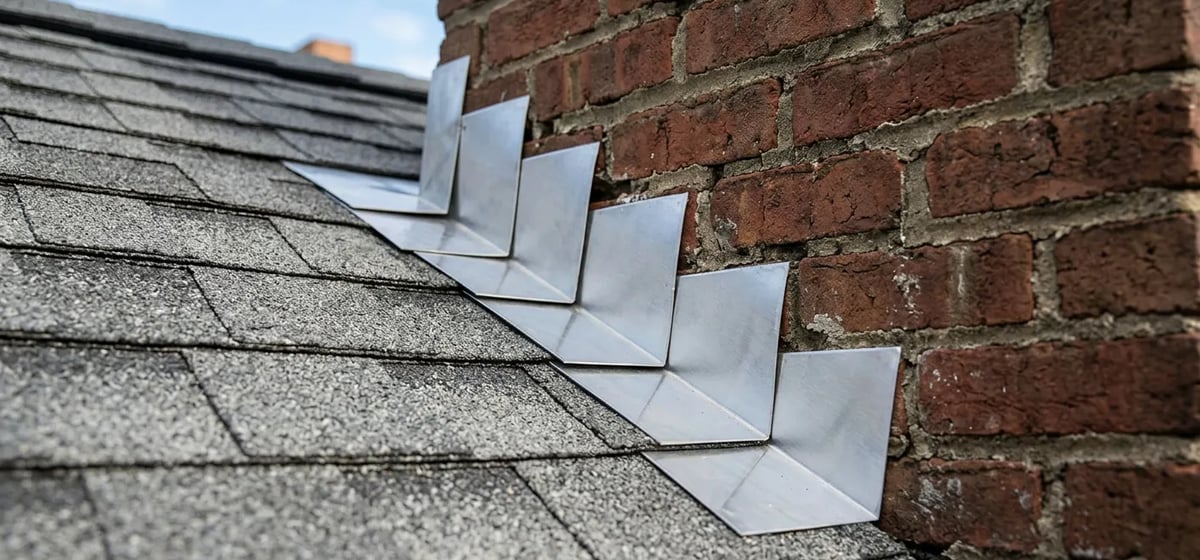
Step flashing is a series of small metal squares bent into an L shape. Roofers use these metal pieces right where your roof meets a vertical wall. The word step refers to the overlapping staircase pattern created during installation. Builders have used this clever trick since the 1800s to prevent leaks at vertical joints.
The roofer places one piece of metal over a shingle. Then they nail the metal to the wall. Next, they place the next shingle over the top edge of that metal. The upward standing part of the L shape slides tightly behind your house siding. This weaving process repeats all the way up the slope of the roof. It creates a waterproof staircase that directs rain down the roof and away from the vulnerable wall joint.
Why It Matters to You
Water is incredibly sneaky. When heavy rain hits the side of your house, it runs right down the wall. If that wall sits directly on top of a lower roof section, the water will pool in that corner. Without proper metal flashing, the water simply sneaks under the shingles. Over time, this trapped water rots your roof deck and ruins your wall framing. This hidden moisture creates a perfect home for mold. The water will eventually drip into your attic and ruin your ceiling drywall.
Step flashing acts like a tiny gutter system hidden inside the corner of your roof. It catches the water and safely drops it back on top of the next shingle. Good flashing is the unsung hero of your Roofing system.
Where You Find It
You'll find this metal anywhere a sloped roof bumps into a straight up and down surface. The most common spot is a brick or stone chimney. You'll also see it around skylights and dormer windows sticking out of your roof. Another big spot is where a single story garage roof attaches to the side of a two story house.
The metal sits tucked behind your siding boards or brick veneer. If you look closely at these inside corners from a ladder, you should just barely see the bottom edge of the metal peeking out over each shingle. It usually looks like a thin line of bare aluminum or dark painted steel.
What to Watch For
Step flashing can fail as your house ages and settles. High winds can bend or tear the thin metal. Rust can eat tiny holes through older galvanized steel pieces over the years. Sometimes lazy roofers skip the metal pieces entirely and just smear black roofing tar in the corner to save time. Tar will dry out, shrink, and crack within a few short years.
You should check these areas from the ground once a year using binoculars. Keep an eye out for these common warning signs:
- Loose metal flapping in the wind.
- Pieces of metal that have slipped down the roof.
- Thick globs of cracked black tar instead of metal.
- Brown water stains on your ceiling right below a wall joint.
Repair Costs
Fixing a flashing leak is usually a job for a professional. The roofer has to carefully pry up your shingles and sometimes remove pieces of your Exterior: Siding, Garage & Decks to get the new metal properly in place.
Repair costs for step flashing usually run from 300 to 600 dollars for a small chimney. Fixing a long wall section might cost 500 to 1,200 dollars. Keep in mind that ranges vary based on where you live and how steep your roof is. If a roofer finds rotten wood underneath the old metal, your bill will go up. Always get a few quotes before you hire someone to do the work. You can read more about this process in our guide to Hiring Contractors & What Things Cost.