How Power Enters Your Home
Electricity travels from the street to your house through thick cables. These cables connect to your electric meter. The meter measures the power you use so the utility company can bill you. From the meter, the power flows directly into your main electrical panel. This panel is the heart of your home electrical system.
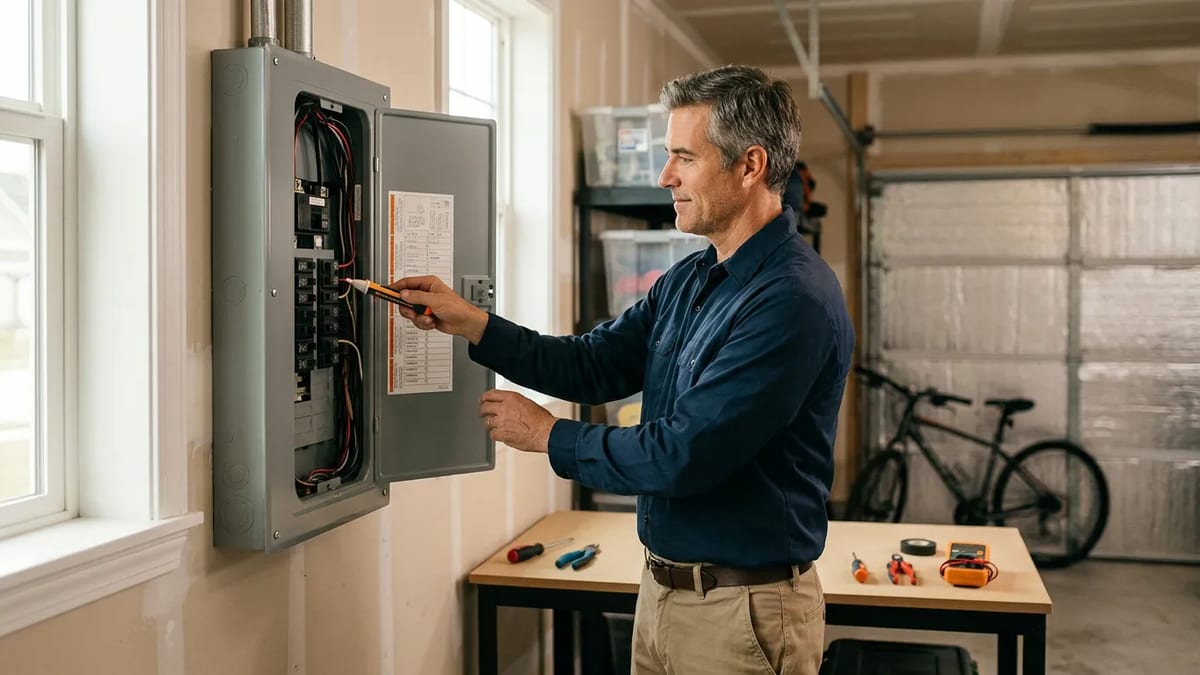
As you start learning your new home, you should locate this panel immediately. It is usually a grey metal box. You will often find it in the garage, the basement, or a utility room. Sometimes it sits on an outside wall. Knowing where it is saves you time and panic if the lights suddenly go out.
The Electrical Panel
Your electrical panel takes the massive amount of power coming from the street and splits it into smaller, safer streams. These streams are your circuits. Each circuit goes to a different part of your house.
When you open the little door on the front of the panel, you see rows of switches. These are the circuit breakers. Breakers are safety devices. If a wire gets too hot or pulls too much power, the breaker trips. It snaps to the "off" or "middle" position to cut the power and prevent a fire.
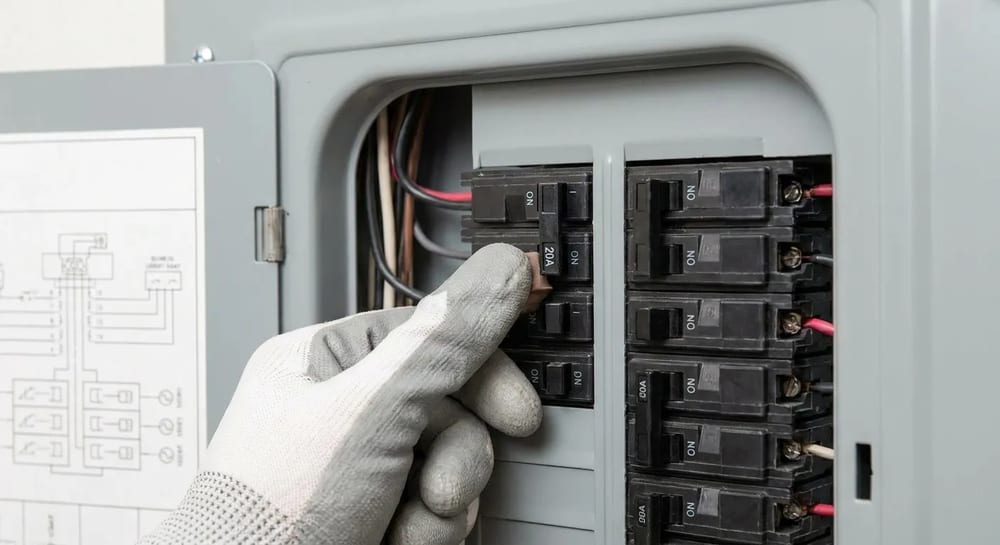
You will also see one large switch at the very top or bottom. This is the main breaker. Flipping it turns off all power to the entire house. You should flip this off if you ever have a major flood or a severe electrical fire.
Outlets and Switches
Your breakers send power to the outlets and switches in your walls. Most rooms use standard outlets. However, areas near water require special protection. This is where GFCI outlets come in.
GFCI stands for Ground Fault Circuit Interrupter. You will see these in kitchens, bathrooms, garages, and outdoors. They have two small buttons on the front labeled "Test" and "Reset". A GFCI outlet watches the power flowing in and out. If even a tiny bit of power goes missing, it assumes the power is shocking someone. It cuts the power in a fraction of a second.
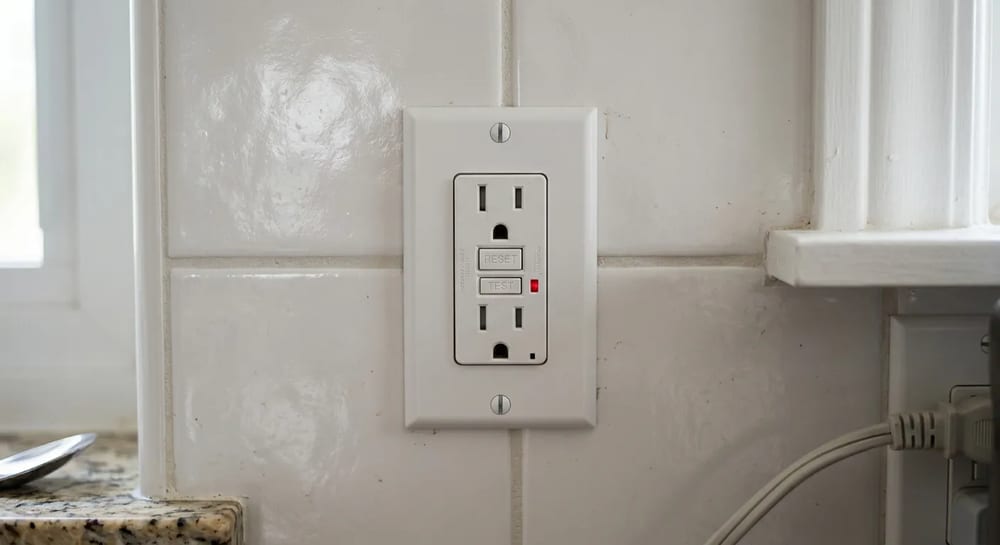
If your bathroom outlet stops working, check the GFCI first. Press the reset button firmly. That usually fixes the problem.
Circuit Overloads and Trouble Signs
A tripped breaker is annoying, but it means the system is doing its job. Breakers usually trip because of an overload. This happens when you plug too many heavy appliances into the same circuit. Running a microwave, a toaster, and a coffee maker all at once will easily trip a kitchen breaker.
Sometimes, a tripped breaker points to a bigger problem. Watch out for these warning signs of bad wiring:
- Lights that flicker or dim when an appliance turns on.
- Outlets or light switches that feel warm to the touch.
- A faint buzzing sound coming from a switch or the main panel.
- A smell like burning plastic or fish near an outlet.
If you see sparks or smell burning, treat it as a home emergency. Turn off the main breaker and call an electrician right away.
Why Your Breaker Keeps Tripping
A breaker that trips once in a while is normal. A breaker that keeps tripping over and over is trying to tell you something. The trick is figuring out which of three problems you have, because each one needs a different fix. People often ask if it is dangerous when a circuit breaker keeps blowing. The honest answer is: a single trip is a safety feature working correctly, but a breaker that trips repeatedly should never be ignored, because one of the causes is a genuine fire risk.
There are really only three reasons a breaker trips. Walk through them in order before you call anyone.
| Cause | What It Looks Like | What To Do |
|---|---|---|
| Overload | Trips only when several things run at once (space heater + microwave). | Unplug some devices and spread them across other circuits. |
| Short circuit | Trips instantly every time you reset it, often with a pop or burning smell. | Stop. Leave it off and call a licensed electrician. |
| Ground fault | Trips on a wet-area circuit (bathroom, outdoors, kitchen). | Look for a tripped GFCI first; a damp appliance may be the cause. |
To find a simple overload, follow these steps:
- Note which lights and outlets died, so you know which circuit tripped.
- Unplug every device on that circuit, especially heaters, hair dryers, and window air conditioners.
- Reset the breaker by pushing it fully to "off" first, then back to "on".
- Plug devices back in one at a time. The item that trips the breaker is your culprit.
- Move that heavy device to a different room on a different circuit.
One more thing homeowners miss: the breaker itself can wear out. After thousands of trips over many years, the internal spring weakens and it starts tripping at a lower load than its rating. If one breaker trips constantly while the circuit clearly is not overloaded, an electrician can swap the breaker for a small fee. This is also a common warning sign in older panels covered in the home emergencies guide.
When a GFCI Outlet Stops Working
A dead outlet in a bathroom, kitchen, garage, or on an exterior wall is one of the most common electrical calls, and it is usually the easiest to fix yourself. Nine times out of ten, the outlet is not broken at all. A GFCI somewhere on that circuit has tripped and cut the power to protect you. The confusing part is that one GFCI often protects several plain outlets downstream, so the dead outlet may have no buttons on it at all.
Here is how to check a GFCI and bring the power back:
- Find the GFCI outlet. Look for an outlet with "Test" and "Reset" buttons, often in the same room or the nearest bathroom, garage, or outside.
- Press the "Reset" button firmly until you hear or feel a click. If it clicks and stays in, your power should return.
- If "Reset" will not stay in, press "Test" first, then "Reset" again.
- Check your breaker panel too, since the whole circuit breaker may also have tripped.
- Unplug whatever was running when it died. A faulty appliance or a wet plug can keep tripping the GFCI.
| Symptom | Likely Cause | Fix |
|---|---|---|
| Outlet dead, GFCI "Reset" pops back out | A device or moisture is causing a real ground fault. | Unplug everything, dry the area, then reset. |
| Outlet dead, no buttons on it | A GFCI elsewhere on the circuit has tripped. | Find and reset that GFCI. |
| "Reset" button will not click in at all | The GFCI itself may have failed (they wear out). | Replace the GFCI or call an electrician. |
| GFCI keeps tripping after a rainstorm | Water in an outdoor outlet box. | Let it dry; add a weatherproof "in-use" cover. |
Wire Size and Amp Ratings
Every wire in your house is matched to the breaker that feeds it. This pairing is the single most important safety rule in residential wiring, and it explains why you should never replace a breaker with a larger one just to stop it tripping. The wire can only carry so much current before it overheats. The breaker is sized to trip before the wire reaches that point. Put a bigger breaker on a thin wire and you remove the safety net, leaving the wire free to cook inside your wall.
Wire thickness is measured in American Wire Gauge, or AWG. The confusing part is that a smaller number means a thicker wire. Here is a simple chart of the common household sizes and what they are allowed to feed.
| Wire Gauge (AWG) | Max Breaker | Typical Use |
|---|---|---|
| 14 gauge | 15 amp | Most light fixtures and bedroom outlets. |
| 12 gauge | 20 amp | Kitchen, bathroom, and garage outlets. |
| 10 gauge | 30 amp | Electric dryers and water heaters. |
| 8 gauge | 40 amp | Ranges and larger appliances. |
| 6 gauge | 55 amp | Large electric ranges and sub-panels. |
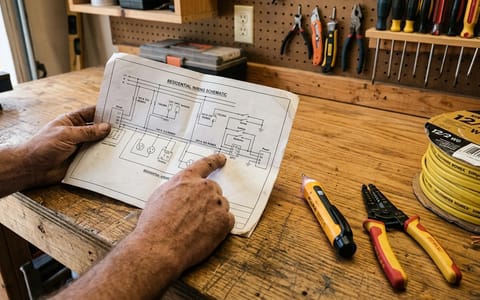
You can read a basic house wiring diagram with this in mind: thicker cables run to the big appliances, thinner cables fan out to the lights and standard outlets. If you ever notice a 20 amp breaker feeding thin 14 gauge wire, that is a dangerous mismatch someone created in the past, and it needs to be corrected. The same logic applies when you add a circuit for a heavy appliance like one of the units in the appliances guide.
What Is Safe to Touch?
Electricity demands respect. You must know your limits. When deciding what to DIY, stick to tasks that do not expose you to bare wires.
| Task | Safe for Homeowners? | Why |
|---|---|---|
| Resetting a tripped breaker | Yes | Breakers are fully insulated and designed for manual operation. |
| Testing GFCI outlets | Yes | You just press the buttons on the front plate. |
| Replacing a light switch plate | Yes | You only touch the external plastic and screws. |
| Adding a new circuit | No | Requires opening the panel and working near live main lugs. |
| Upgrading the main panel | No | Extremely dangerous. Requires pulling the utility meter. |
Typical Electrical Costs
When you need to call a professional, costs add up quickly. Electricians charge for their specialized knowledge and the high risks they take. Most charge a service fee just to show up, plus an hourly rate. Rates usually run between $75 to $150 per hour.
Here are common ballpark costs for residential electrical work. Keep in mind that costs vary greatly depending on your region, the age of your home, and the scope of the project. Always get multiple quotes when hiring a contractor.
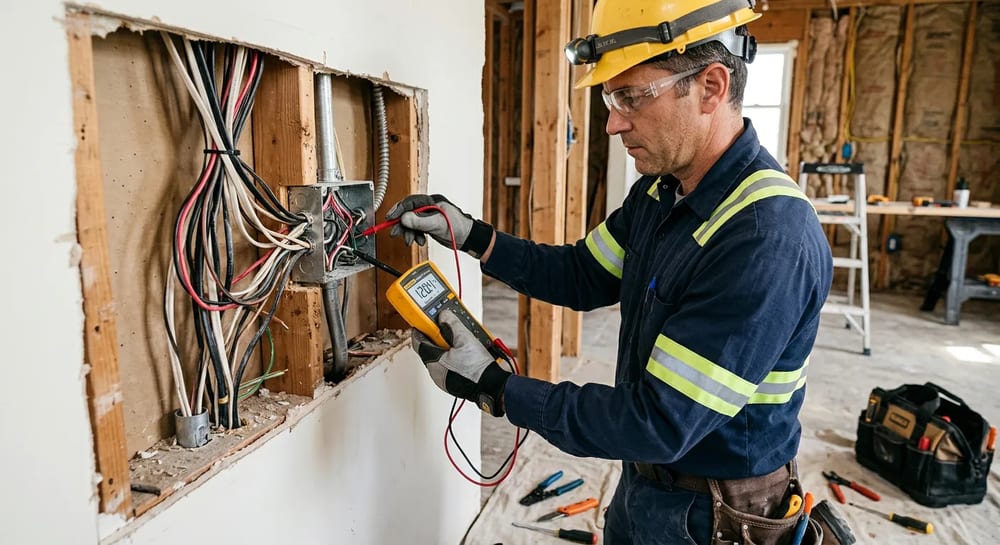
Never ignore electrical problems to save money. A cheap, poorly done wiring job can burn down your house. If you feel unsure about any electrical task, step back and call a licensed pro.