What is a turbine vent?
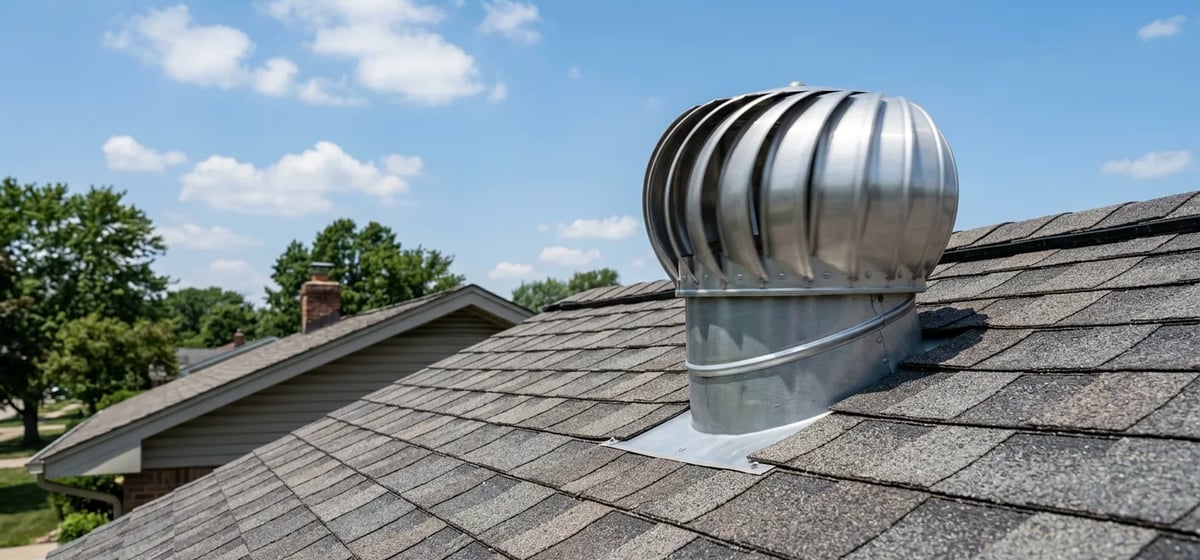
A turbine vent is a dome shaped metal vent sitting on top of your roof. It has a series of angled spinning fins. When the wind blows against these fins, the top part of the vent spins. This spinning action acts like a vacuum. It pulls hot, stale air up and out of your attic. The word turbine comes from the Latin word turbo. That word means a spinning top or a whirlwind. Roofers adopted this smart design from huge industrial exhaust fans and sized them down for everyday residential homes. They're a very common sight in older neighborhoods across the country.
Why it matters for your home
Your attic gets incredibly hot during the summer months. The sun beats down on your shingles and turns the space into an oven. Your attic also traps moisture from your showers, laundry, and cooking during the winter. A turbine vent removes this trapped heat and moisture. It costs absolutely nothing to run because it relies completely on the natural breeze outside. This helps your air conditioner run less often, saving you money on your energy bills. It also protects the wood framing in your attic from rotting due to damp air. Good ventilation is a major part of taking care of your Roofing over the years. Without a way for hot air to escape, your shingles will actually bake from the inside out and fail years before they should.
Common problems and maintenance
Turbine vents are tough and last a long time. However, they do have moving parts that wear out. You'll know it's time to check your vents if you notice a few common signs:
- A loud squeaking or grinding noise coming from the roof on windy days.
- A vent that wobbles back and forth instead of spinning smoothly.
- A vent that stands completely still even when a strong breeze is blowing.
Over time, the metal ball bearings inside the spinning head can dry out, gather dust, or rust. Sometimes a squeak means you just need to spray some silicone lubricant on the bearings. If the metal fins get bent from a falling tree branch or heavy hail, the vent will wobble. A wobbling vent will eventually break its mount. A stuck turbine vent is also bad news because it lets rain and snow blow straight down into your attic. Look up at your roof from the yard a few times a year to make sure they're spinning freely.
Winter covers and weather
Some homeowners think they need to cover their turbine vents with a plastic bag or canvas cover during the winter. They worry that the vent will pull all the warm air out of their house. This is actually a bad idea. Your attic needs to breathe all year long.
A properly insulated attic floor keeps the heat inside your living space where it belongs. Let your vents spin freely through the snow and cold. If you're worried about drafts, you should check your HVAC & Climate Control system and make sure your attic floor has enough insulation.
How much they cost
Replacing a broken turbine vent is a pretty standard job. The metal vent itself usually costs 50 to 100 dollars at a local hardware store. If you hire a professional roofer to climb up and install it, expect to pay 150 to 300 dollars for the total job. Keep in mind that ranges vary based on where you live and how steep your roof is. Sometimes a roofer will suggest adding an extra turbine vent or two if your attic stays far too hot. This is a fast and cheap way to improve your home without wiring up expensive electric fans.