What Is a Truss?
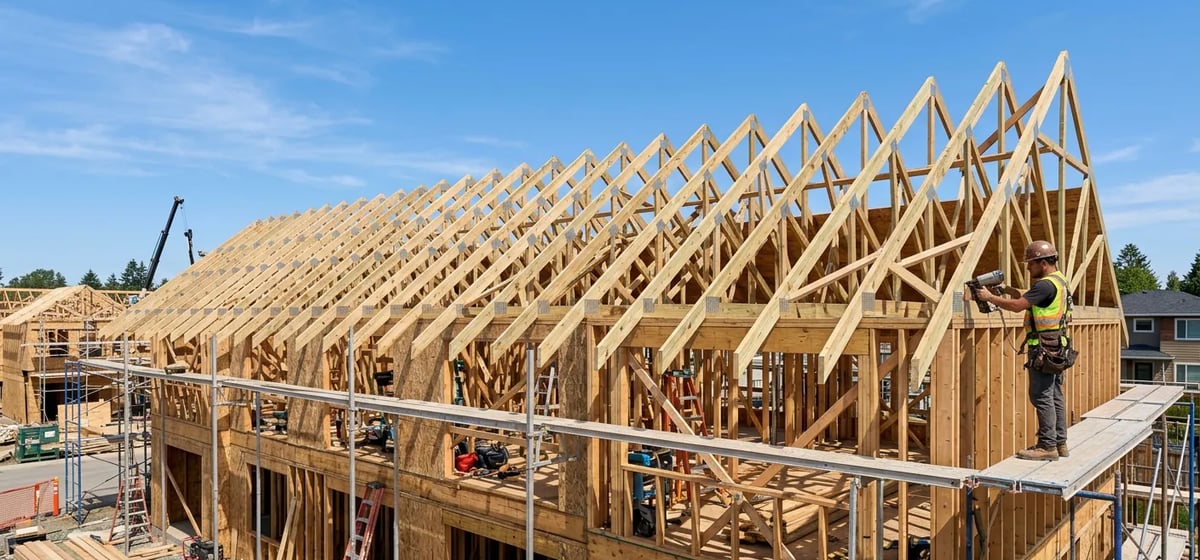
A truss is a strong wooden framework made of connecting triangles that supports your roof. The term comes from the Old French word trousser, which means to bind or pack closely together. Builders have used triangular bracing for centuries. However, factory built wooden roof trusses became the standard for home building in the 1950s. Today, you'll find them in almost every new house.
Instead of building the roof piece by piece on site, factories build these large frames ahead of time. Trucks ship them to your house, and cranes lift them into place. The triangle shape is incredibly strong. It spreads the heavy weight of your roof evenly across the outer walls of your house. The wooden pieces are held together by flat metal brackets called gusset plates. These plates have sharp teeth pressed deep into the wood to keep the joints from pulling apart.
Why Trusses Matter to You
Trusses allow builders to span wide open rooms without needing extra support walls inside the house. Because the outer walls carry the weight, you can easily knock down most interior walls to create an open floor plan. This makes remodeling much easier. They also save time and money during construction. A typical roof truss costs 150 to 400 dollars, though ranges vary based on the size and local lumber prices.
Because they arrive pre built, a framing crew can set up a whole roof in just one or two days. This lowers labor costs and keeps your house protected from the weather much faster. You can learn more about how your home supports itself in our guide to Foundation & Structure.
Traditional Rafters Versus Trusses
Before the 1950s, builders used a method called stick framing. They cut individual boards, called rafters, and nailed them together right on the roof. Some custom homes still use this method today. Traditional rafters leave your attic wide open, which is great for living areas or heavy storage. However, they require expensive thick lumber and take a long time to build by hand. Rafters also require interior load bearing walls to help hold up the weight.
Trusses are built in a factory and shipped to the site. They use cheaper materials and lower your labor costs. The webbing takes up space and limits your storage, but the triangles spread the weight to the outside walls. If you want to finish your attic and turn it into a bedroom, traditional rafters make that easy. Trusses make it nearly impossible without a total roof replacement.
Where You'll See Them
You'll mostly interact with trusses when you go up into your attic. When you pop your head through the attic hatch, you'll see a repeating pattern of wooden boards crossing through the space. These crisscrossing boards are called webs. While trusses are incredibly strong, all those webs take up a lot of room. This means you usually can't use a truss attic for heavy storage.
You might also hear about floor trusses. Some modern homes use flat wooden trusses to support the floors instead of solid lumber joists. These flat trusses make it very easy for plumbers and electricians to run pipes and wires through the ceiling.
What to Watch For
The most important rule for homeowners is to never cut a truss. If you want to install a skylight or a pull down attic ladder, you must fit it between the existing wooden frames. Cutting even one small board will ruin the strength of the entire triangle. This can cause your roof to sag or even collapse.
You should also watch out for signs of damage. Check your attic once a year and look for:
- Dark stains or rotting wood caused by roof leaks.
- Cracked or splintered boards along the webbing.
- Loose or rusted metal plates at the joints.
If you see any of these issues, call a professional right away. You can review our advice on Roofing for tips on spotting leaks early. If you need to hire someone to fix a broken frame, check out our guide on Hiring Contractors & What Things Cost.