House Windows Explained: A Simple Guide to Types and Styles
A plain-English guide to identifying house window types, understanding how they operate, and choosing the right styles for your next replacement project.
Full guide Windows & Doors Learn how to spot energy leaks, fix drafts, and decide when to replace your windows and doors.Drafty rooms and rising energy bills usually lead to one late-night search: house windows. But within five minutes of looking at manufacturer websites, you hit a wall of industry terms. What exactly is a casement? Why does a double-hung unit cost more than a single-hung? You do not need a contractor's license to buy replacements, but knowing the basic vocabulary keeps you from feeling overwhelmed during a sales pitch.
Let's translate the jargon so you know exactly what is sitting in your walls right now, how to order the right replacement parts, and what to ask for when it is time for an upgrade.
What Are the Most Common Types of House Windows?
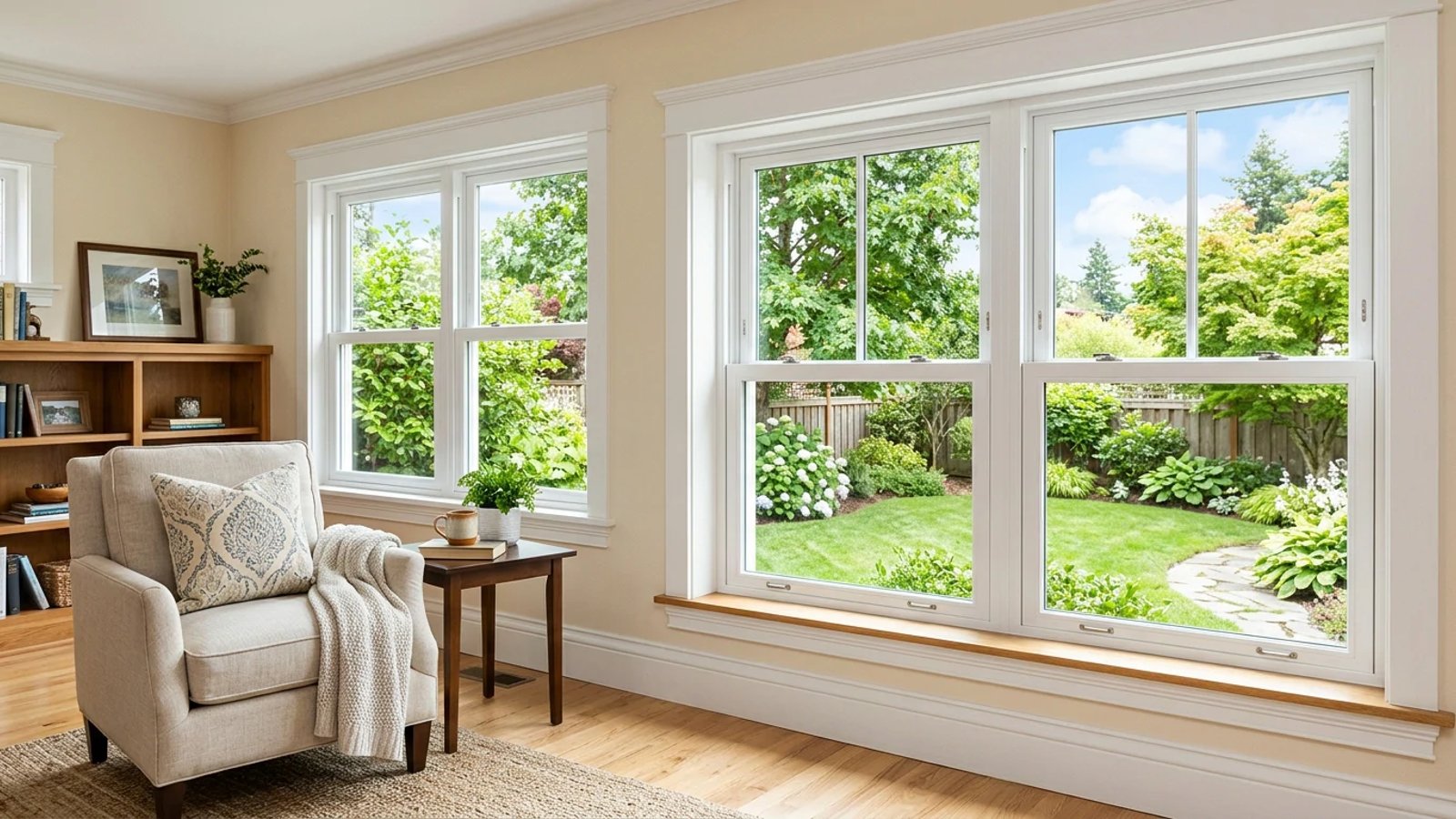
When you picture a traditional house window, you are likely thinking of a hung window. There are typically five common types of house windows you'll encounter. These feature two separate glass panels, called sashes, stacked vertically. The difference comes down to how many of those panels actually move.
Single-Hung Windows: On these models, the top sash is permanently fixed in place. Only the bottom sash slides upward to let in fresh air. Because they have fewer moving parts, they are highly reliable and typically the most budget-friendly option, often sitting in the $200 to $350 range for a standard uninstalled vinyl unit.
Double-Hung Windows: Here, both the top and bottom sashes move independently. You can slide the top down, the bottom up, or both. This allows for excellent air circulation; cool air enters through the bottom while warm air escapes through the top.
When I lived in a third-floor condo, tilt-in double-hung windows were an absolute lifesaver. I could wash the exterior glass with standard glass cleaner and a microfiber cloth while standing safely in my living room, completely avoiding the need for a 30-foot extension ladder.
Beyond their operational flexibility, double-hung windows are also often favored for their ease of cleaning, especially those with the tilt-in feature mentioned. This makes them a popular choice for upper stories where exterior cleaning would otherwise be challenging or require professional help. Their classic aesthetic also blends well with most architectural styles, making them a versatile option for whole-house window replacements.
Crank-Outs: Casement and Awning Styles
If your window opens via a rotating handle at the base, you have a crank-out window. These operate on hinges rather than sliding tracks, making them incredibly easy to open with one hand.
Casement Windows: These are hinged on one side and swing outward like a door. They are fantastic for catching passing breezes and directing fresh air into the house. Because the entire window area opens, they provide maximum ventilation.
Awning Windows: These are hinged at the top and swing outward from the bottom, creating a small glass roof—or awning—over the opening. You can leave awning windows open during a light rainstorm without water dripping onto your floors.
Awning and casement windows are the undisputed champions of the kitchen sink. Reaching over a deep basin to push up a heavy sliding window is terrible for your back; turning a smooth crank handle is effortless.
In my experience, these crank-out styles are also top-tier for blocking drafts. According to Energy Star guidelines, casement and awning models typically offer lower air leakage rates than sliding styles. When you lock them, the hardware pulls the sash tightly against the weatherstripping, essentially vacuum-sealing the opening.
While excellent for ventilation during light rain, awning windows are also great for providing privacy when placed higher on a wall, such as in a bathroom or basement. Their outward-swinging design means they can be left open without obstructing interior pathways, unlike casement windows that might jut into a walkway.
Sliders and Fixed: When Do They Make Sense?
Not every opening is built for a tall, vertical window. Some spaces are wide and short, which calls for a different approach.
Sliding Windows: Also called gliding windows, these are essentially double-hung windows turned on their side. One or both sashes slide horizontally along a track. They are very common in mid-century modern homes, basements, and rooms with low ceilings. They are easy to operate, but the bottom tracks require regular vacuuming to keep dirt and dead bugs from jamming the rollers.
Despite their straightforward operation, the horizontal tracks of sliding windows can accumulate dirt, dust, and debris, which can hinder smooth operation over time. Regular cleaning of these tracks is essential to prevent jamming and ensure the window opens and closes effortlessly. They are a practical choice for areas where vertical space is limited, offering a wide, unobstructed view.
Picture Windows: A picture window is entirely fixed. It does not open, slide, or crank. Because it has no moving parts and no seams, it is the most energy-efficient window you can buy. Picture windows are designed to do exactly what their name implies: frame a beautiful view and let in massive amounts of natural light.
Because they are sealed units, picture windows excel at thermal performance, minimizing air leaks and maximizing energy efficiency. They are ideal for creating a focal point in a room, bringing the outdoors in without the need for ventilation. However, their fixed nature means they cannot be used for emergency egress or to provide fresh air, so their placement needs careful consideration.
Specialty Shapes: Bay, Bow, and Architectural
Sometimes a window is meant to be a structural focal point rather than just a hole in the wall for ventilation.
Bay Windows: A bay window projects outward from the exterior wall, creating a small shelf or seating area inside. It is typically made of three panels: a large fixed picture window in the center, flanked by two smaller operable windows (usually casements or double-hungs) set at 30- or 45-degree angles.
Bow Windows: Similar to a bay, but made of four or more equal-sized panels arranged in a gentle, sweeping curve rather than sharp angles.
Choosing the Right Window Material
The material of your window frames significantly impacts their durability, insulation properties, maintenance requirements, and overall cost. Understanding the pros and cons of each common material can help you make an informed decision for your home.
Vinyl Windows
Vinyl is the most popular choice for replacement windows due to its affordability, excellent energy efficiency, and low maintenance. These frames are typically made from PVC (polyvinyl chloride) and are resistant to rot, rust, and insect damage. They come in a variety of colors, though the color is usually integrated throughout the material, meaning scratches are less noticeable.
Wood Windows
Wood windows offer timeless beauty and superior natural insulation. They can be painted or stained to match any aesthetic and are often preferred for historic homes or those seeking a classic, warm look. However, wood frames require more maintenance, including regular painting or sealing, to prevent rot, warping, and insect infestation.
Fiberglass Windows
Fiberglass frames are known for their exceptional strength, durability, and stability. They are highly resistant to expansion and contraction due to temperature changes, making them very energy efficient and long-lasting. While generally more expensive than vinyl, fiberglass offers a premium look and can often be painted to match specific design preferences, combining the best of both worlds.
Aluminum Windows
Aluminum windows are strong, lightweight, and very durable, making them a good choice for modern or commercial applications. They offer slim sightlines, allowing for larger glass areas and unobstructed views. However, aluminum is a good conductor of heat, meaning standard aluminum frames are less energy-efficient than other materials unless they incorporate thermal breaks.
Understanding Energy Efficiency Ratings
When selecting new windows, you'll encounter several ratings that describe their energy performance. The most common are the U-factor, Solar Heat Gain Coefficient (SHGC), and Visible Transmittance (VT).
The U-factor measures how well a window prevents heat from escaping your home. A lower U-factor indicates better insulation. The Solar Heat Gain Coefficient (SHGC) measures how much solar radiation passes through the window and turns into heat inside your home. A lower SHGC is desirable in warmer climates to reduce cooling costs, while a higher SHGC can be beneficial in colder climates for passive solar heating. Finally, Visible Transmittance (VT) indicates how much visible light passes through the window. A higher VT means more natural light enters your room.
How to Identify Your Current House Windows
If you have a broken latch, a torn screen, or a cracked pane, you need to know exactly what you are dealing with before ordering parts. Follow this quick check to identify your style:
- Test the movement. Unlock the sash and push. Does the glass slide vertically, slide sideways, or crank outward?
- Count the moving parts. If it slides vertically, check if the top glass can also pull downward. If both move, it is double-hung.
- Look for the hinges. If it swings outward, check the hinge placement. Side hinges mean it is a casement; top hinges mean it is an awning.
- Inspect the hardware. Write down whether you have a crank handle, a simple lift rail, or tilt-pins, as these details help hardware suppliers match your exact replacement parts.
Choosing the Right Style for Your Upgrade
Replacing house windows is a major investment, so matching the style to the room's function is critical. Put awnings over kitchen counters. Use double-hungs on the second floor so you can clean them safely. If you have a stunning backyard view in the living room, center a large picture window and flank it with two narrow casements for the perfect balance of light and fresh air.
Take a walk around your house with a notepad, test how easily your current sashes open, and note where you feel drafts. Knowing exactly what you have—and what frustrates you about it—is the best way to ensure your next set of windows is a perfect fit.
- Choose casement or awning windows for hard-to-reach areas like over the kitchen sink.
- Opt for double-hung windows on upper floors so you can clean the exterior glass safely from the inside.
- Never attempt to DIY a bay or bow window installation; their weight requires professional structural support.
- Pair fixed picture windows with operable side windows to get maximum natural light without losing ventilation.