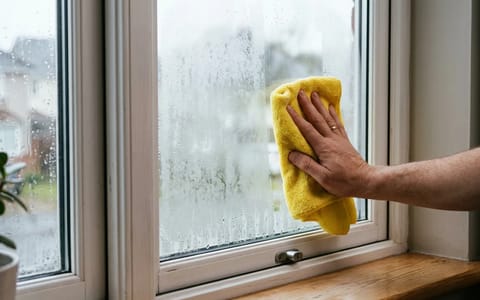
Window Condensation Inside? How to Stop the Sweating
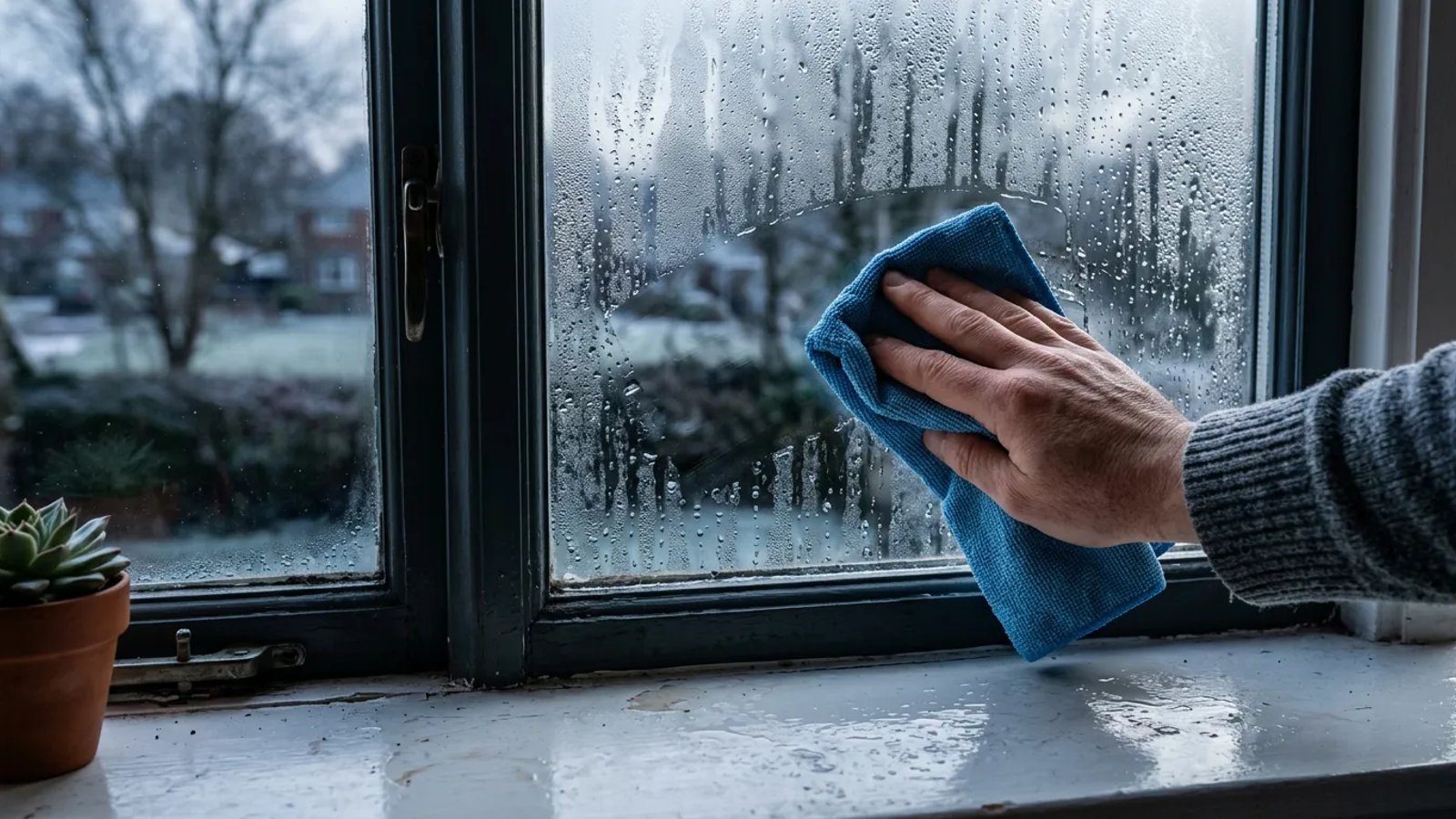
Waking up to dripping windows? Learn how to stop room-side window condensation by managing indoor humidity and airflow before it causes mold or wood rot.
Full guide Windows & Doors Learn how to spot energy leaks, fix drafts, and decide when to replace your windows and doors.Homeowners often wake up to find their windows dripping with water on the room-facing side. Left unchecked, this daily moisture quickly leads to ruined drywall, bubbling paint, rotting wood sills, and stubborn black mold. Wiping down the glass every morning with a towel is a frustrating chore that treats the symptom, not the root cause.
Unlike condensation trapped between the glass panes, seeing window condensation inside your home is strictly an indoor humidity and airflow problem. When warm, moisture-heavy air inside your house hits the cold surface of your window glass, the air cools rapidly and drops its moisture as liquid water. Fixing this means changing the environment inside your rooms.
What Causes Window Condensation Inside?
To stop the sweating, you need to understand the dew point. Warm air acts like a sponge, holding a significant amount of invisible water vapor. This moisture comes from everyday activities: cooking pasta, taking hot showers, running the dishwasher, drying clothes, and even just breathing. A family of four can easily add several gallons of water vapor into the indoor air every single day.
When that warm, humid air comes into contact with a cold surface—like a window pane on a chilly night—the air's temperature drops. Cold air cannot hold as much moisture as warm air. Once the air cools down to its dew point, it physically cannot hold the water vapor anymore. The water is forced out of the air and clings to the coldest surface available, which is usually your window glass.
A few years ago, I chased a severe condensation problem in my own 1960s colonial home after noticing puddles forming on the bedroom sills every morning. I bought a cheap digital hygrometer and tested the air. The reading showed 55 percent humidity—way too high for a 20-degree night. The moisture was condensing so fast that it was pooling on the wood trim and starting to peel the paint. Once I understood that the house was simply too humid for the outdoor temperature, I knew exactly how to fix it.
The Environmental Protection Agency (EPA) recommends keeping indoor humidity between 30 and 50 percent to prevent mold growth and control moisture. However, when outdoor temperatures drop below freezing, you may need to lower your indoor humidity closer to 30 percent to stop condensation entirely.
Diagnosing the Sweat: Is It Room-Side or a Broken Seal?
Before you start adjusting your home's humidity, you must confirm where the water actually is. A simple 30-second check will tell you if the moisture is on the room side or trapped within the panes. Double-pane and triple-pane windows have a sealed airspace between the layers of glass, usually filled with an insulating gas like argon. If this seal fails, moisture can get inside the window assembly itself.
Run your finger across the wet glass. If your finger comes away wet and leaves a clear streak on the pane, you are dealing with room-side condensation. This is good news, as it means your window is structurally fine and you just need to manage your indoor air.
If the glass feels dry to the touch, but the window looks foggy, milky, or has water droplets trapped inside, the insulated glass unit (IGU) has failed. No amount of dehumidification will fix a broken seal. You will need to contact a glass replacement company to swap out the IGU.
Immediate, Zero-Cost Fixes to Improve Airflow
If your windows are sweating on the inside, you do not need to immediately buy expensive equipment. Stagnant air allows moisture to settle against cold surfaces. In my experience, even small adjustments to airflow can stop the condensation cycle tonight.
Here is a step-by-step plan to immediately alter the airflow and humidity in your home without spending a dime:
- Run your exhaust fans longer. Leave your bathroom fan on for at least 30 minutes after you finish showering to fully expel the humid air outside.
- Use the kitchen hood. Always run your stove's exhaust hood when boiling water or simmering soups, as cooking is a massive source of indoor moisture.
- Leave interior doors open. Keep bedroom and bathroom doors open during the day to allow your HVAC system to circulate air evenly throughout the house.
- Raise your blinds at night. Pull heavy curtains back or raise your blinds by two to three inches before you go to sleep.
- Turn on ceiling fans. Run your ceiling fans on a low setting in reverse (clockwise) to gently push warm air down and keep it moving across the windows.
Trapping cold air against the glass with heavy drapes is the fastest way to turn your window into a water generator.
The trick with the blinds is crucial. When you close blinds or thick curtains tightly against a window, you create an isolated pocket of air between the fabric and the glass. The room's heating system cannot reach that pocket, so the glass gets freezing cold. Moisture from the room slowly seeps past the edges of the blinds, hits the ice-cold glass, and condenses. By leaving a small gap at the bottom of the blinds, warm room air can wash over the glass and keep the surface temperature above the dew point.
Adjusting Your HVAC and Humidifier Settings
Many modern homes are built incredibly tight for energy efficiency. While this saves money on heating bills, it also traps moisture inside. If you have a whole-home humidifier attached to your furnace, it might be working against you during cold snaps.
Whole-home humidifiers are great for preventing dry skin and static shock in the winter, but they must be adjusted based on the outdoor temperature. If it is 40 degrees outside, an indoor humidity of 45 percent is perfectly fine. But if the temperature drops to 10 degrees, that same 45 percent humidity will cause water to stream down your windows.
Locate the humidistat dial on your furnace or near your thermostat. Most manual dials have a chart printed right on them showing the recommended setting for different outdoor temperatures. If a cold front is moving in, turn the dial down. If your windows are actively sweating, turn the humidifier completely off for a few days until the glass dries out, then slowly dial it back up.
You also need to check the HVAC supply registers in the rooms with sweating windows. Ensure that furniture, rugs, or heavy drapes are not blocking the vents. You want the warm air from your furnace to flow freely toward the exterior walls to keep the window frames warm.
Long-Term Solutions for Stubborn Sweating
If you have managed your airflow, turned down the humidifier, and you still wake up to wet sills, you need to look at the windows themselves and consider active dehumidification.
Cold drafts make window glass significantly colder than it should be. If the weatherstripping around your window sashes is worn out, flattened, or missing, cold outdoor air will leak into the frame. Replacing old weatherstripping is a cheap and highly effective DIY project. You can buy rolls of self-adhesive foam tape or V-strip weatherstripping for under $20. Clean the window track thoroughly, apply the new weatherstripping along the sides and bottom of the sash, and lock the window tight. This stops the draft, raises the surface temperature of the glass, and pushes the dew point out of the danger zone.
For rooms that naturally generate a lot of moisture—like a basement bedroom or a master suite with an attached bathroom—a standalone dehumidifier is the best long-term fix. A small, portable compressor dehumidifier can pull pints of water out of the air every day. Set the machine to target 40 percent humidity and let it run. You will need to empty the water bucket regularly, but your windows will stay bone dry.
Finally, if you have older single-pane windows, they offer almost no thermal resistance. The glass will always be freezing cold in the winter. Adding exterior storm windows or applying heat-shrink window insulation film across the interior trim creates a dead-air space that acts like a double-pane window. The clear plastic film stops the warm, moist room air from ever touching the cold glass.
Stopping window condensation is an active balancing act between your indoor temperature, the outdoor weather, and the moisture you generate daily. By monitoring your humidity levels and keeping the air moving, you can protect your window sills from water damage and keep your home dry and healthy.
- Buy a $10-$15 digital hygrometer to monitor your indoor humidity; aim for 30 to 50 percent during colder months.
- Run bathroom exhaust fans for at least 30 minutes after showering to expel excess moisture before it reaches your windows.
- Raise your window blinds or crack your heavy curtains by a few inches at night to let warm room air circulate against the glass.
- If your windows have a whole-home humidifier attached to the HVAC system, lower the setting as the outdoor temperature drops.