How to Get Rid of Drain Flies in Your Bathroom Fast
Spotting fuzzy, moth-like bugs in your bathroom? Learn exactly how to destroy their breeding ground and get rid of drain flies for good with this multi-step DIY guide.
Full guide Plumbing Learn how your home plumbing works and how to stop leaks before they ruin your house.You just walked into your bathroom and spotted tiny, fuzzy, moth-like bugs hovering near the sink or shower. Panic sets in, and you immediately search for how to get rid of drain flies, wondering if your plumbing is broken or if you need to hire an exterminator.
Take a deep breath. In my experience, drain flies in the bathroom are a common, highly solvable problem that you can tackle yourself. You do not need to tear out your pipes, and you probably do not need a professional pest control service.
To fix the issue, you simply need to understand how these insects survive and target their food source. This guide will walk you through the exact steps to clear your plumbing and reclaim your bathroom.
Before you wage war, it's smart to confirm you're dealing with drain flies. These tiny, fuzzy insects are often mistaken for fruit flies, but their behavior and breeding grounds differ. Drain flies are poor fliers, often seen 'hopping' or crawling rather than buzzing quickly. A simple test: tape a a piece of clear packing tape over your drain opening before bed, sticky side down. If you wake up to tiny, moth-like bodies stuck to the tape, you've got drain flies.
How to Get Rid of Drain Flies: Understanding the Problem
When I first spotted these fuzzy little moth-like bugs in my own guest bathroom, I assumed my plumbing was failing. After a bit of investigation, I realized they were just taking advantage of a dirty pipe. Drain flies, sometimes called moth flies, are small insects, typically about 1/8 inch long, that thrive in moist, decaying organic matter.
Every time you wash your hands, take a shower, or shave, organic material goes down the drain. Over time, hair, skin cells, soap scum, and toothpaste combine to form a thick, gelatinous sludge that coats the inside of your pipes. This sludge is the perfect breeding ground for drain flies.
While often found in bathrooms, drain flies aren't exclusive to sinks. They can also thrive in shower drains, floor drains in basements or utility rooms, and even in the overflow drain of your sink. Any place where a thin film of moist, decaying organic matter can accumulate is fair game. Understanding their preference for this specific environment is key to breaking their life cycle.
To eliminate drain flies, you have to destroy their breeding ground.
According to the Penn State Extension on pest management, adult drain flies lay their eggs in this biological film. The larvae hatch, feed on the sludge, and eventually emerge as the fuzzy adults you see hovering around your mirror. If you want to stop the cycle, you have to completely remove the slime.
Before You Start: Identifying Your Foe and Gathering Supplies
As mentioned, confirming these pests are indeed drain flies is your first step. Unlike fruit flies which are attracted to rotting food, drain flies are drawn to the biological gunk in your pipes. The tape test is highly effective for this. If your tape comes up clean, you might be dealing with a different pest, and a different strategy would be needed.
Good news! You likely have most of the necessary tools already. You'll need a kettle or large pot for boiling water, liquid dish soap, baking soda, white vinegar, and a flexible pipe cleaning brush (often called a drain brush or snake brush). An enzymatic drain cleaner will be your secret weapon for the final clean-up and ongoing prevention.
Step 1: The Boiling Water and Dish Soap Method
Your first line of defense is a simple thermal shock. This step will not solve the root cause, but it will immediately kill the active larvae and adult flies hanging out in the P-trap.
- Boil a kettle of water. You will need about one gallon of rolling boiling water.
- Squirt dish soap into the drain. Add a generous tablespoon of liquid dish soap (like Dawn) directly into the drain opening.
- Pour the water slowly. Carefully pour the boiling water down the drain, aiming for the sides of the pipe to wash the soap down into the trap.
The dish soap breaks the surface tension of the water, trapping the adult flies, while the extreme heat eliminates the larvae living in the upper section of the pipe.
Step 2: Loosen the Sludge with Baking Soda and Vinegar
Now that the active bugs are handled, it is time to attack the slime. Mechanical scrubbing is required, but you can make that job much easier by loosening the grime first with a foaming chemical reaction.
Pour one-half cup of baking soda directly down the drain. Next, follow it with one cup of plain white vinegar. The mixture will immediately begin to fizz and expand inside the pipe.
Let this mixture sit undisturbed for 30 to 45 minutes. The expanding foam helps break down the sticky bonds of the soap scum and organic matter clinging to the pipe walls. Once the time is up, flush the drain with another pot of hot water.
Step 3: Scrub and Digest (The Ultimate Fix)
This is where most homeowners fail. Pouring liquids down the drain is rarely enough to remove 100 percent of the sludge. To guarantee the drain flies do not come back, you must physically clean the pipe.
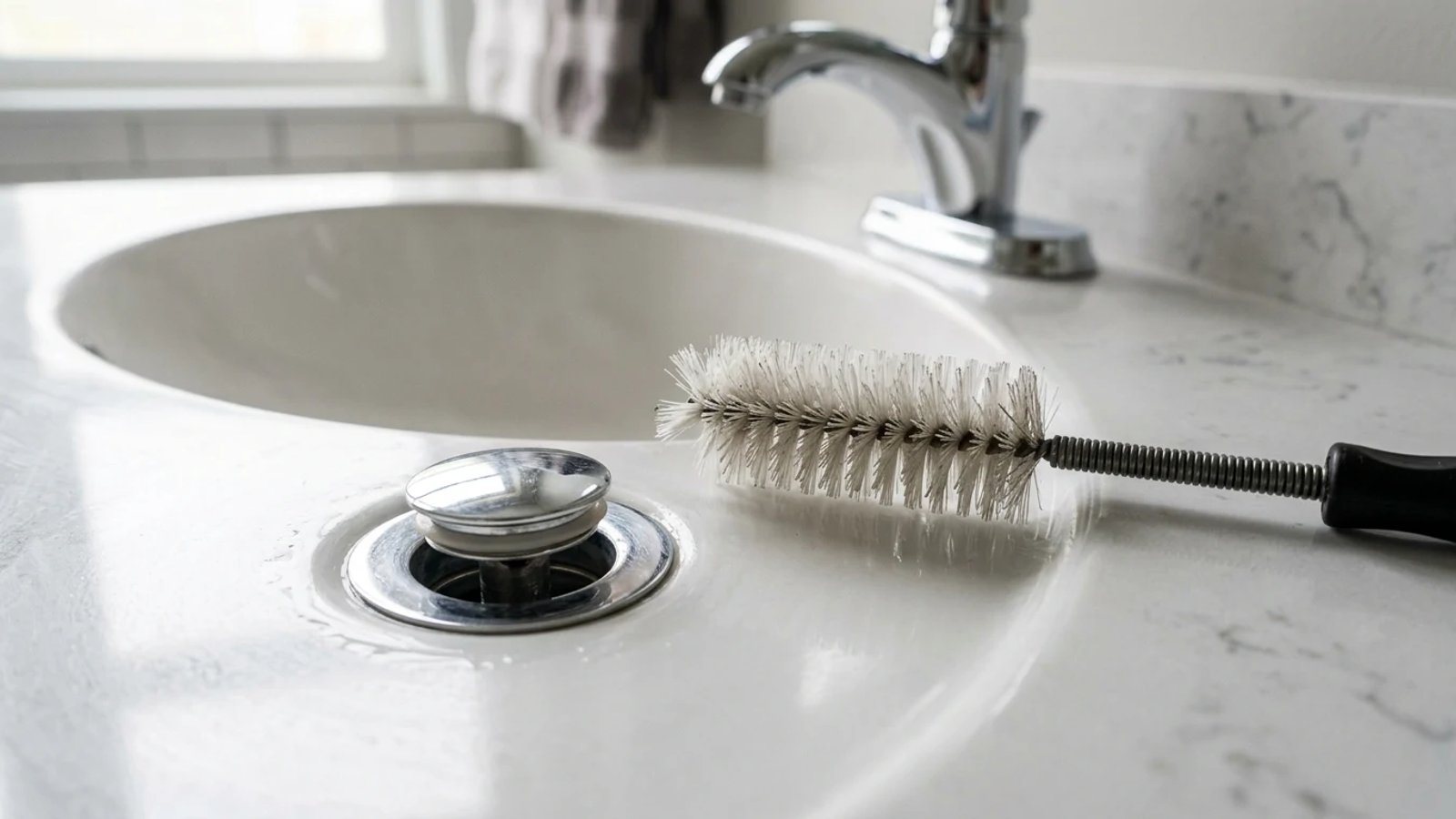
Buy an 18-inch flexible pipe cleaning brush (available at any hardware store for about $5 to $10). Remove your sink stopper or shower grate, insert the brush into the drain, and vigorously scrub the sides of the pipe using an up-and-down motion. Pull the brush out, wipe off the black sludge with a paper towel, and repeat until the brush comes out clean.
The flexible pipe cleaning brush is crucial. It allows you to reach deep into the P-trap and beyond, physically dislodging the thick biofilm that liquids alone can't penetrate. Don't be shy with the scrubbing; you're aiming to scrape the pipe walls clean. This physical removal is the most critical step in ensuring drain flies don't return quickly, as it eliminates the bulk of their food source and breeding ground.
After you have scrubbed the pipe, finish the job with an enzymatic drain cleaner. Unlike harsh chemical drain openers, enzymatic cleaners contain natural bacteria that literally eat the remaining organic matter. Pour the recommended dose down the drain right before you go to bed, so the enzymes have 8 hours to work undisturbed.
Following up with an enzymatic drain cleaner is a smart move. These aren't harsh chemicals that eat through pipes; instead, they contain beneficial bacteria and enzymes that 'digest' the remaining microscopic organic matter. This deep cleaning action ensures that even the most stubborn, unseen bits of sludge are broken down, leaving no food source for new drain fly larvae. It's an eco-friendly and pipe-safe way to maintain a truly clean drain.
Common Mistakes When Dealing with Drain Flies
Many homeowners instinctively reach for chemical drain cleaners or bleach when they see drain flies. However, this is often a mistake. Harsh chemical drain openers can damage your pipes over time and often fail to completely remove the thick, gelatinous sludge that drain flies thrive in. Bleach, while a disinfectant, is thin and tends to flow right over the biofilm, leaving the breeding ground largely intact.
Another common error is treating only one drain. Drain flies can emerge from any drain with a suitable breeding ground. If you've only treated your bathroom sink, but still see flies, check your shower, bathtub, and any utility sinks. A comprehensive approach to all potential breeding sites is essential for complete eradication.
How Do I Keep Drain Flies from Coming Back?
Once your drains are clear and the flies are gone, keeping them away requires minimal but consistent effort. Drain flies love stagnant water and neglected plumbing.
If you have a guest bathroom or a basement shower that rarely gets used, make it a habit to run the water for 60 seconds once a week. This keeps the P-trap full of fresh water, which prevents sewer gases from entering your home and flushes out minor organic buildup before it turns into sludge.
Beyond just regular flushing of unused drains, consider a weekly quick inspection. Look for any persistent dampness around the base of toilets, under sinks, or near floor drains. Even a small, slow leak can create a moist environment perfect for drain fly larvae. Addressing these minor plumbing issues promptly can prevent future infestations.
For heavily used drains, consider doing a routine baking soda and vinegar flush once a month. Pair that with a monthly dose of enzymatic cleaner, and your pipes will stay completely free of the biological slime that attracts pests. A clean pipe is a bug-free pipe, and with these simple tools, you can easily maintain a hygienic, welcoming bathroom.
Consistent maintenance is your best defense. Marking a monthly reminder in your calendar for a baking soda/vinegar flush and an enzymatic treatment for all your drains can make a huge difference. Think of it as preventative care for your plumbing, much like changing your air filter. It keeps your home healthier and free of unwelcome guests.
- Do not rely on bleach; it passes over the sludge without destroying the drain fly breeding ground.
- Use a flexible 18-inch pipe brush to physically break up the gelatinous grime inside your pipes.
- Apply an enzymatic drain cleaner overnight to digest the remaining organic matter.
- Keep drains flowing freely and clean them monthly to prevent future infestations.