How to Clean a Shower Head (And Fix Low Water Pressure)
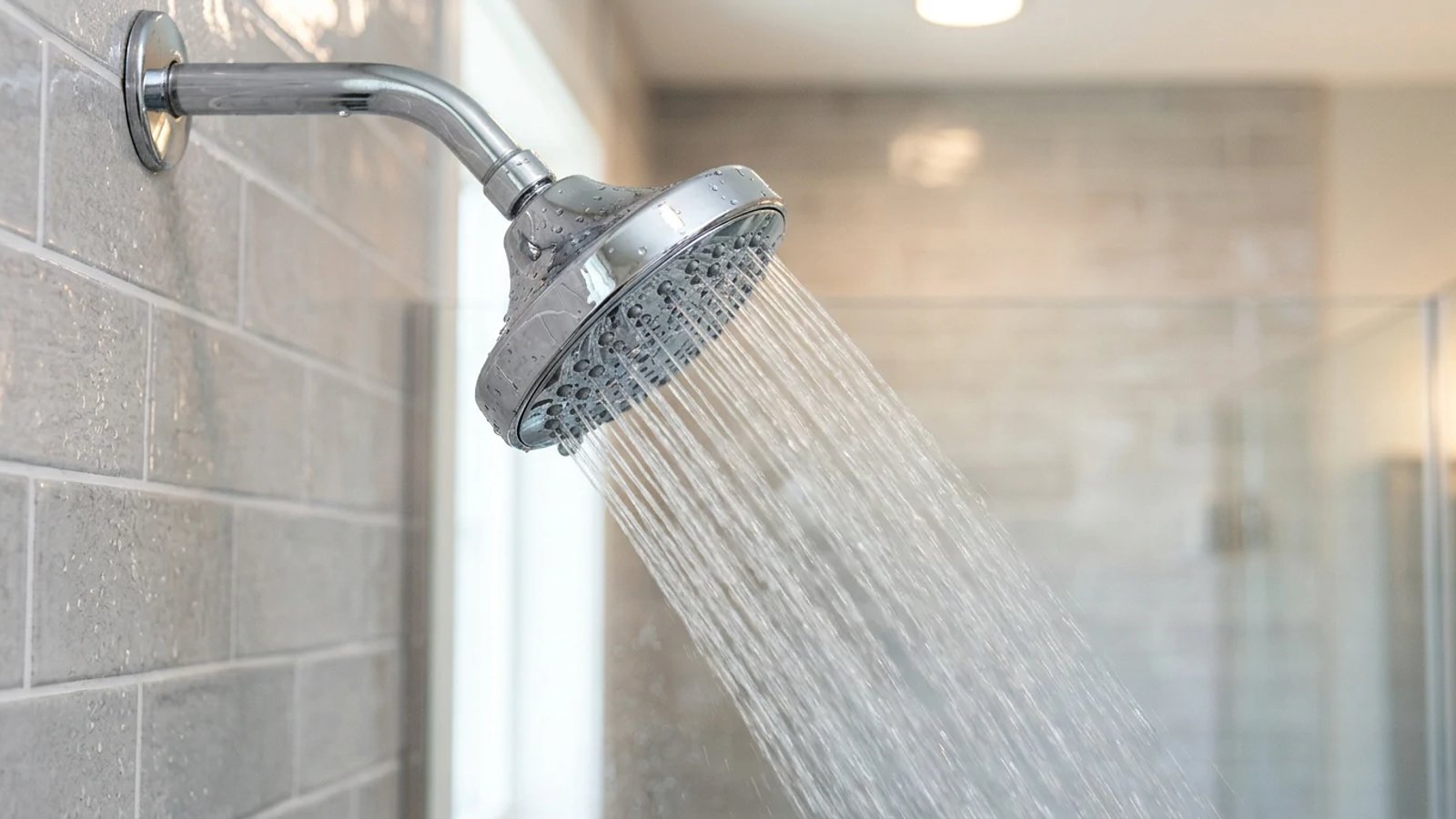
Fix a sputtering, weak shower head without calling a plumber. Learn how to dissolve hard water scale and restore water pressure using just a plastic bag and white vinegar.
Full guide Plumbing Learn how your home plumbing works and how to stop leaks before they ruin your house.You step into the shower expecting a strong, hot stream of water, but instead, you get a weak trickle. Worse, half the nozzles are spraying sideways directly into the shower curtain. If you're wondering how to clean shower head, look closely at the tiny rubber nozzles. If you see crusty white or green buildup, you are dealing with hard water scale.
Learning how to clean a shower head is one of the easiest, highest-reward maintenance tasks you can do. It requires zero special skills, costs less than two dollars in household supplies, and usually restores your water pressure to factory condition in a few hours.
The Problem: Why Your Shower Head is Sputtering
Most homes in the United States have hard water. According to the USGS, about 85% of homes in the U.S. have hard water. As water flows through your plumbing, it carries dissolved minerals—primarily calcium and magnesium. When that water exits the tiny holes in your shower head and dries, it leaves those minerals behind.
Over months and years, this microscopic scale builds up into hard, chalky deposits. These deposits act like tiny rocks blocking the flow of water. The result is a drop in water pressure, uneven spray patterns, and a fixture that looks dirty even after you scrub the bathroom.
The 5-Minute Check: Is It the Shower Head or Whole-House Pressure?
Before you start cleaning, you need to verify that the shower head is actually the culprit. Sometimes, low pressure is a larger plumbing issue.
To test this, walk over to the bathroom sink and turn both the hot and cold water on full blast. Does the sink have strong, normal pressure? Next, flush the toilet and watch how fast the tank refills. If the rest of the bathroom has great water pressure but the shower is weak, the problem is isolated to the shower fixture.
How to Clean Shower Head Without Removing It
If you rent your home or simply do not own a wrench, this is the method for you. You can dissolve the mineral buildup right on the wall using standard household white vinegar. The mild acetic acid in the vinegar safely eats through the calcium.
When I moved into my current house, the guest bathroom shower was barely a trickle. I tested this exact bag method using standard 5% white vinegar from the grocery store, and it completely cleared the nozzles by the next morning.
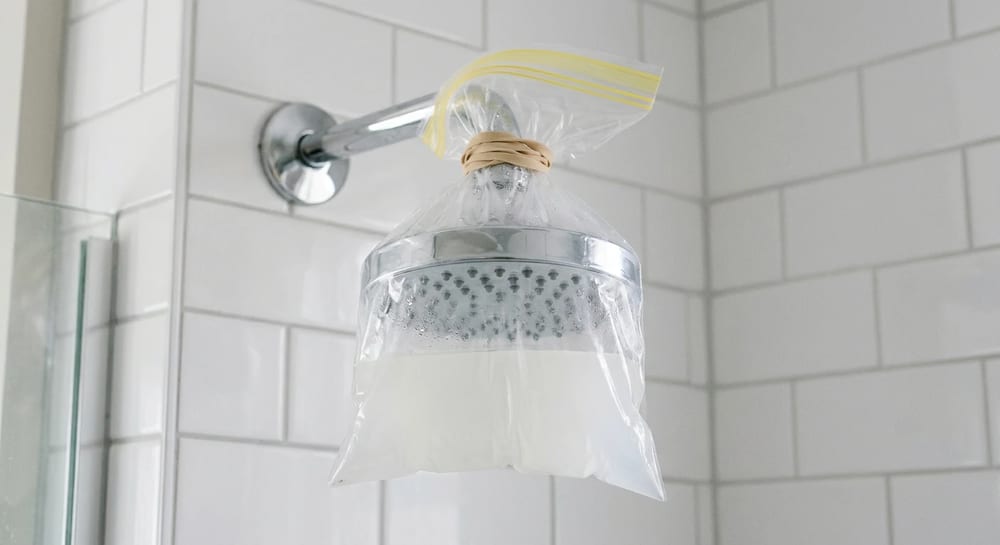
- Find a sturdy plastic bag. A quart-sized or gallon-sized heavy-duty ziplock bag works best, depending on the size of your fixture.
- Fill the bag with white vinegar. Pour enough standard white vinegar into the bag to fully submergethe shower head. Do not dilute it with water.
- Submerge the fixture. Lift the open bag up and over the shower head so the entire face of the fixture is resting in the liquid.
- Secure the bag. Wrap a thick rubber band, a hair tie, or a zip tie tightly around the top of the bag and the shower arm pipe to hold it in place.
- Let it soak. Leave the bag attached for at least 4 hours, or overnight for severe buildup. Note: If your fixture is brass, gold, or oil-rubbed bronze, only soak for 30 minutes to protect the finish.
- Remove and flush. Carefully take the bag off and dump the vinegar down the drain. Turn the shower on full blast for two minutes to flush out the dissolved minerals.
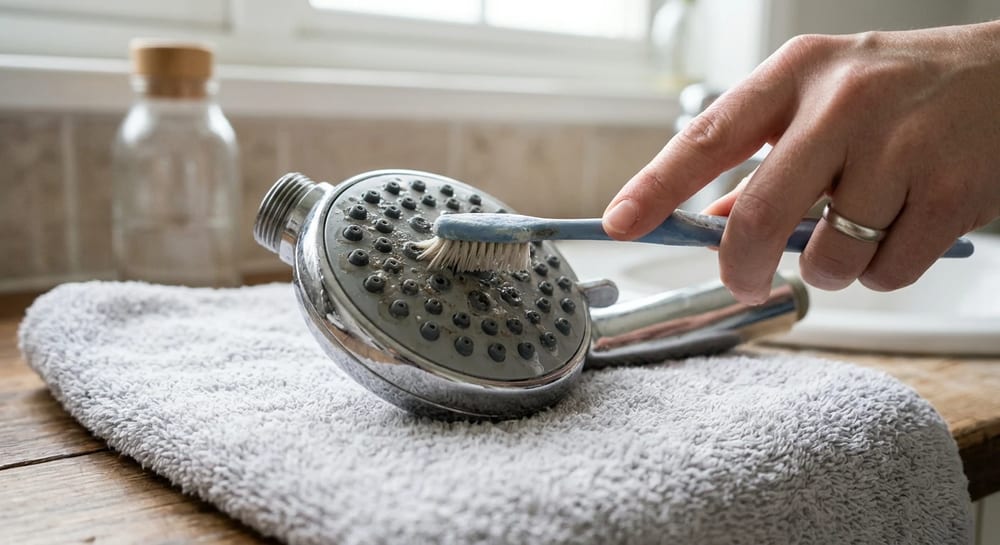
How to Clean a Shower Head: The Deep Clean for Stubborn Scale
Sometimes the plastic bag trick is not enough. If your shower head is still sputtering, the clog might be trapped inside the internal filter screen, located behind the threaded connection. To fix this, you need to take the fixture off the wall.
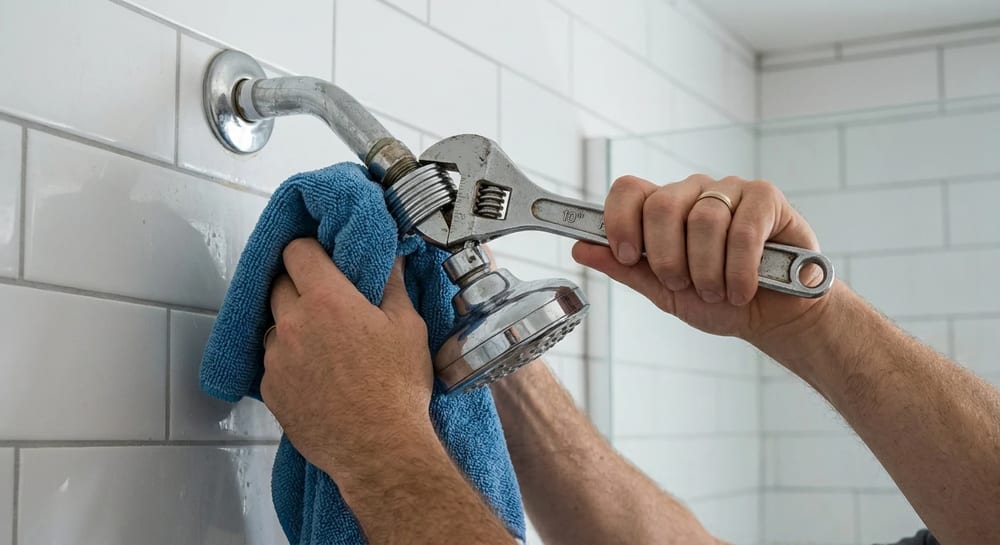
You will need a 10-inch adjustable wrench, a thick microfiber cloth or rag, an old toothbrush, and some plumber's tape (Teflon tape).
- Protect the finish. Wrap the thick cloth around the metal nut connecting the shower head to the wall pipe. This prevents the metal teeth of your wrench from scratching the finish.
- Loosen the nut. Grip the cloth-covered nut with your wrench and turn counter-clockwise. Once it breaks loose, you can usually unscrew it the rest of the way by hand.
- Locate the filter screen. Look inside the threaded end of the shower head. You will usually see a small rubber washer and a wire or plastic mesh screen.
- Clean the screen. Carefully pull the screen out with tweezers or needle-nose pliers. Rinse it under the sink and scrub it gently with an old toothbrush to remove trapped grit and sediment.
- Soak the whole head. While the fixture is off, drop the entire unit into a bucket or large bowl of warm white vinegar for a few hours. Scrub the face with the toothbrush afterward.
- Reapply plumber's tape. Before reattaching, clean the old tape off the wall pipe. Wrap fresh plumber's tape around the threads two or three times in a clockwise direction.
- Reattach the fixture. Screw the shower head back on by hand until tight, then give it one final quarter-turn with the cloth and wrench. Turn on the water and check for leaks at the joint.
Simple Habits to Prevent Hard Water Buildup
Once you restore your water pressure, you will want to keep it that way. If you live in an area with extremely hard water, scale will naturally return over time, but you can slow it down.
First, keep a daily shower cleaning spray in the bathroom. A quick mist over the tiles and the shower head after you turn off the water helps prevent minerals from hardening as they dry. Second, simply wiping the face of the shower head with your towel after you dry off removes sitting water before it can evaporate and leave calcium behind.
Beyond the immediate relief of a strong shower stream, consistent attention to hard water buildup offers broader benefits for your home. Hard water doesn't just affect shower heads; it can silently degrade many of your home's most essential systems and appliances. Consider your dishwasher, washing machine, and even your water heater – all are susceptible to mineral accumulation. Over time, these deposits can reduce efficiency, increase energy consumption, and shorten the lifespan of these expensive units. For instance, scale buildup in a water heater can create an insulating layer, forcing the unit to work harder and consume more energy to heat water. In dishwashers, it can lead to cloudy glassware and less effective cleaning cycles, while in washing machines, it can leave clothes feeling stiff and dull.
Proactive maintenance, like regularly cleaning your shower head, is a microcosm of good home care. By preventing mineral scale in one area, you're practicing habits that can extend to other parts of your plumbing system. Regular descaling of faucets and aerators, for example, can prevent similar issues to those seen in shower heads. It also reduces the likelihood of leaks caused by corroded seals or blocked lines. Think of it as preventative medicine for your house – a small effort now can save you significant repair costs and headaches down the road. Clean fixtures aren't just about functionality; they also contribute to the aesthetic appeal of your bathroom, making it a more inviting and hygienic space. Embracing these simple habits ensures that your home not only functions optimally but also retains its value and comfort for years to come.
Another often-overlooked aspect is the impact on your skin and hair. Hard water can prevent soaps and shampoos from lathering effectively, leaving behind a residue that can make skin feel dry and hair look dull. A clean shower head ensures better water flow, which can improve the rinsing process, leading to a more refreshing and beneficial wash. So, while you're focused on the mechanics of water pressure, remember the personal benefits too!
If hard water is ruining your appliances and fixtures constantly, consider testing your water hardness. You may want to look into installing a whole-house water softening system. According to the EPA WaterSense program, keeping your fixtures clean and running efficiently not only improves your shower experience, but prevents the plumbing strain that leads to leaks.
For now, grab a plastic bag and some vinegar. You are just a few hours away from a much better shower.
- Test your bathroom sink first to confirm the low pressure is isolated to the shower.
- Use standard 5% white vinegar, not bleach, to safely break down calcium scale.
- Always wrap a rag around the shower arm before using a wrench to avoid scratching the metal finish.
- Soak standard metal shower heads for 4 to 12 hours, but limit brass or gold finishes to 30 minutes.