What Is a P-Trap?
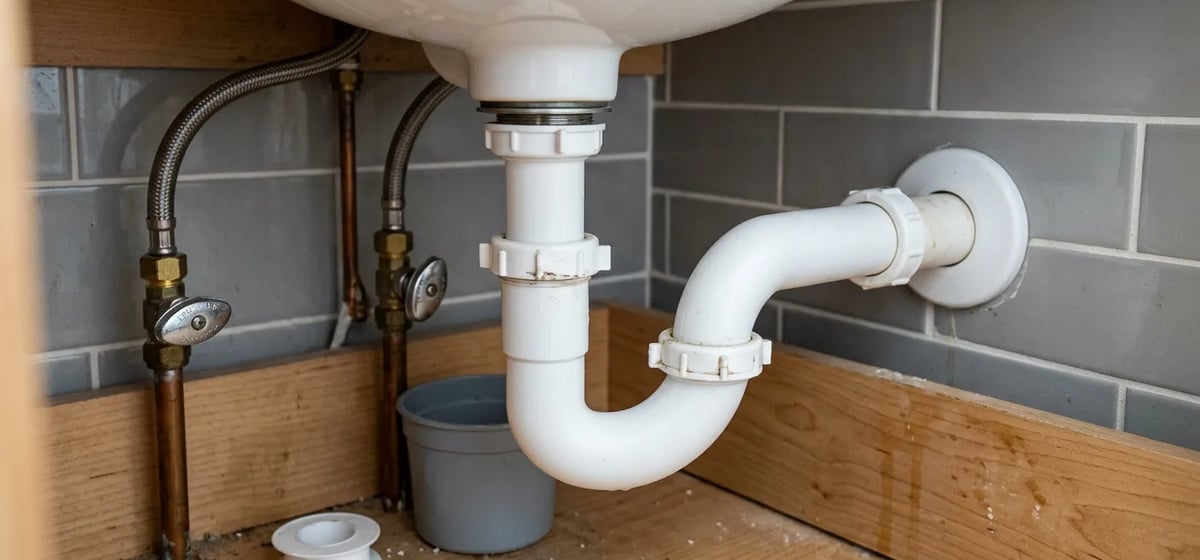
If you look under your kitchen or bathroom sink, you will see a curved pipe. This is the p-trap. Plumbers named this pipe shape in the 1800s because it looks exactly like the letter P when viewed from the side. The design goes back even further. Alexander Cumming invented the first curved version in 1775. That early design eventually evolved into the shape we use today.
The curve is not just for looks. It does a very specific job. Every time you run the water, a small amount stays behind in the bottom of the curve. This standing water creates a seal. It completely blocks your home from the sewer system.
Why It Matters to You
The main job of a p-trap is to keep sewer gases out of your house. Without that small barrier of water, nasty smells and dangerous gases would rise straight up from the sewer lines and into your rooms. If you ever notice a foul smell coming from a drain, you might just have a dry trap. You can learn more about tracking down bad scents in our guide to Smells & Odors.
This curved pipe also acts as a safety net. If you accidentally drop a wedding ring or a small toy down the drain, it usually stops right at the bottom of the curve. The heavy item sinks into the trapped water instead of washing away into the main sewer line. You can easily open the pipe and get your item back.
Where You Find Them
You have a p-trap under almost every drain in your house. You will see them clearly under your kitchen and bathroom sinks. They also hide under your bathtubs, showers, and washing machine drains.
Most modern homes use white or black plastic pipes. Older homes might have metal pipes made of brass or chrome. Both types do the exact same job. You can read more about your home pipes in our Plumbing section.
Older houses might have a pipe shaped like an S instead of a P. Building codes don't allow S-traps anymore. They drain water too fast and often leave the curve completely dry. If an inspector points out an S-trap when you buy a house, you will usually need to replace it.
How to Clean It
Cleaning this pipe is a basic homeowner skill. You don't always need harsh chemicals to fix a slow drain. The process only takes a few simple steps:
- Put a bucket under the pipe to catch any dirty water.
- Loosen the two large nuts by hand. If they are stuck, you can use a wrench.
- Pull the curved piece straight down and away from the sink.
- Dump the water and gunk into your trash can.
- Wash the pipe out, put it back in place, and tighten the nuts.
- Run the water to check for leaks.
What to Watch For and Costs
Because of its shape, the p-trap is a prime spot for clogs. Hair, soap scum, and food bits easily get stuck in the curve. When water drains slowly, this pipe is usually the culprit.
Leaks are another common issue. The nuts holding the pipe together can loosen over time. The rubber washers inside can also dry out and crack. If you see water pooling under your sink, check these connections first.
Fixing or replacing this part is very affordable. A brand new plastic kit at the hardware store costs 5 to 20 dollars. It's an easy job for most homeowners. If you prefer to hire a plumber, expect to pay 150 to 250 dollars for the labor and parts. Keep in mind that price ranges vary based on where you live. If you want to know if you should tackle this yourself, check out our DIY vs. Hiring a Pro guide.