How to Put Out a Grease Fire (And What Never to Do)
A kitchen grease fire can double in size in seconds. Learn the exact steps to safely smother the flames, what never to do, and when to evacuate.
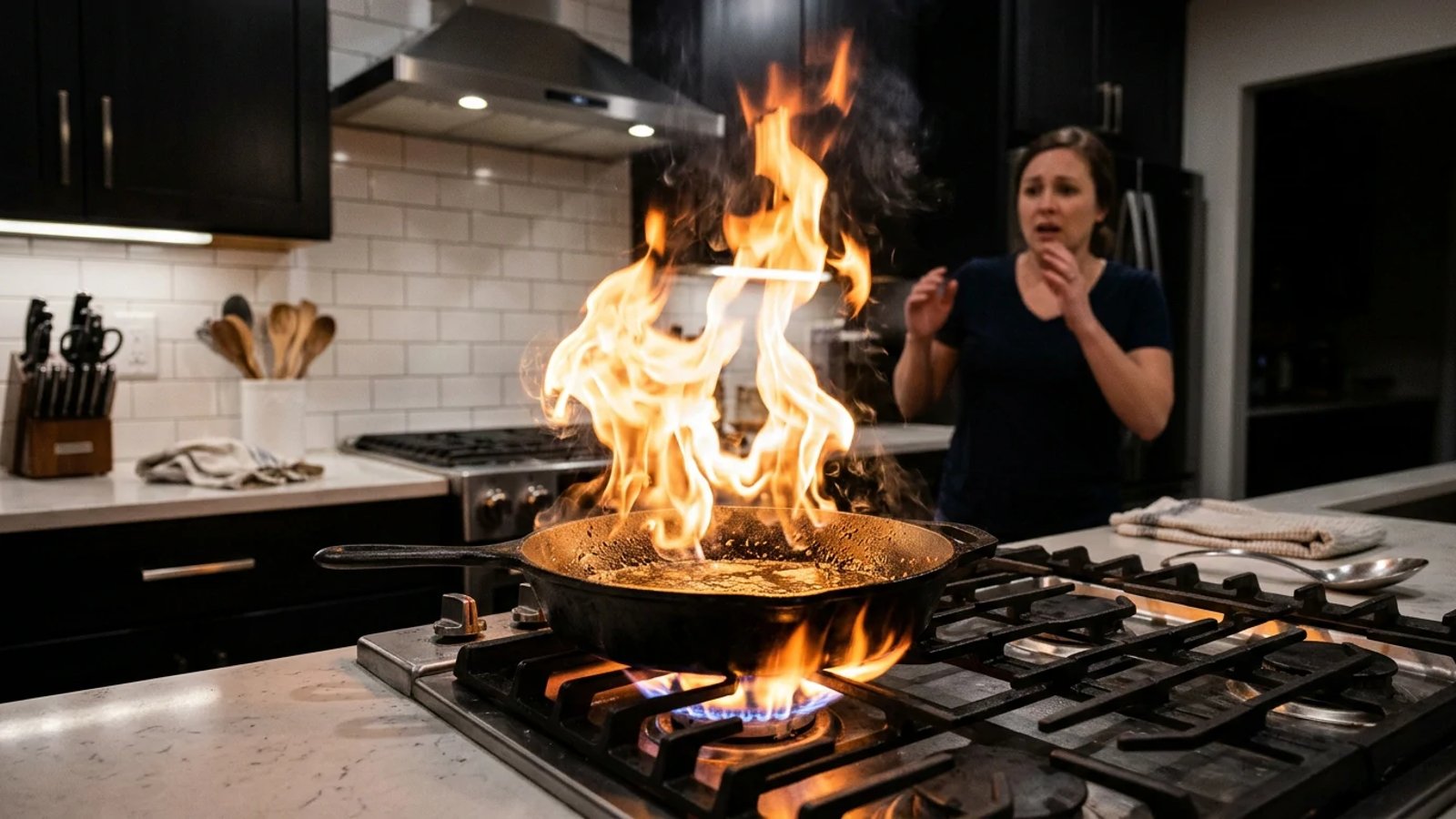
Full guide Home Emergencies Learn exactly what to do and what to shut off during water, gas, power, and fire emergencies in your home.A grease fire is one of the most terrifying events a homeowner can face. It happens in an instant: you turn your back on a heating pan of oil, the oil reaches its auto-ignition temperature (usually around 600°F), and suddenly flames are reaching toward your range hood.
The panic that sets in is intense, and human instinct often drives us to do the exact wrong thing. Knowing how to put out a grease fire safely requires overriding that panic with a few cold, hard facts. You have seconds to act before a contained stovetop flare-up turns into a structural house fire.
Why Must You Never Throw Water on a Grease Fire?
The golden rule of kitchen safety is to keep water far away from burning oil. If you take away only one piece of information from this guide, let it be this.
Water and oil do not mix. Because water is heavier than oil, throwing water onto a grease fire causes the water to sink straight to the bottom of the screaming-hot pan. The moment the water hits the bottom, it flash-boils, instantly turning just one cup of water into 1,700 cups of steam.
A cup of water thrown on a grease fire instantly turns into 1,700 cups of steam, creating a devastating fireball.
That massive, instantaneous expansion of steam violently ejects the burning oil out of the pan. It will spray onto your cabinets, your clothes, and your face. What was previously a small fire contained to a skillet is now a catastrophic room-wide inferno.
How to Put Out a Grease Fire Safely
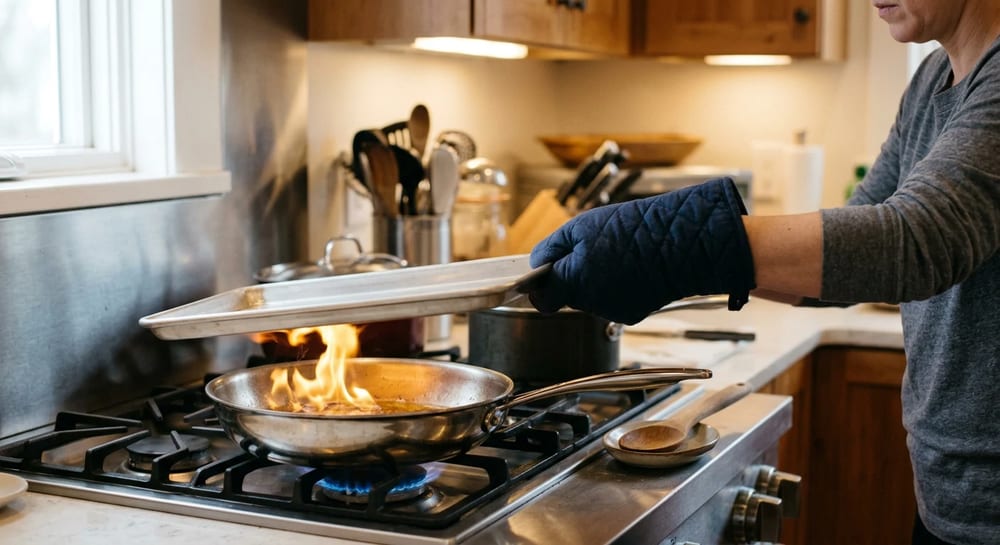
In my experience, if you are standing in front of a burning pan, your goal is to remove two of the three elements the fire needs to survive: heat and oxygen. Here is the exact sequence you should follow.
- Protect your hands and arms. Grab an oven mitt if one is immediately within reach, but do not waste time searching for one if the flames are growing.
- Turn off the burner. Reach for the knob and kill the heat source immediately. If you have an electric stove, the coil will remain hot, but cutting the power is still the mandatory first step.
- Find a metal lid or baking sheet. Grab the pan's matching lid, a larger lid from a stockpot, or a standard aluminum baking sheet.
- Slide the cover over the pan. Do not drop the lid straight down from above, as the rush of air can fan the flames or splash the burning oil. Slide it horizontally from the side until the pan is completely covered.
- Leave it alone. Starved of oxygen, the fire will suffocate. Do not lift the lid to check on it. Introducing fresh oxygen to oil that is still above its ignition temperature will cause the fire to instantly reignite. Let the pan sit until it is completely cool to the touch.
What If You Don't Have a Lid?
If you cannot safely reach a lid or a baking sheet, you can use specific pantry staples to smother the flames. However, you must use the correct powders, or you risk making the situation much worse.
Use Baking Soda or Salt
Baking soda (sodium bicarbonate) releases carbon dioxide when heated, which helps smother the fire. Heavy, coarse kosher salt is also effective because it absorbs heat and creates a physical barrier over the burning oil.
You will need a lot of it. A small pinch will do nothing. You need to dump the entire box of baking soda or canister of salt directly onto the flames to completely cover the surface of the oil.
When to Use a Fire Extinguisher?
If the lid method isn't possible, or if the flames have begun to lick the grease filter on your range hood, it is time to use a fire extinguisher. According to the National Fire Protection Association (NFPA), you should only attempt to fight a fire if it is small, contained, and you have a clear escape route behind you.
You need a Class B rating (for flammable liquids) or a Class K rating (specifically for cooking oils and fats). A standard ABC dry chemical extinguisher, which most homeowners have, will work perfectly.
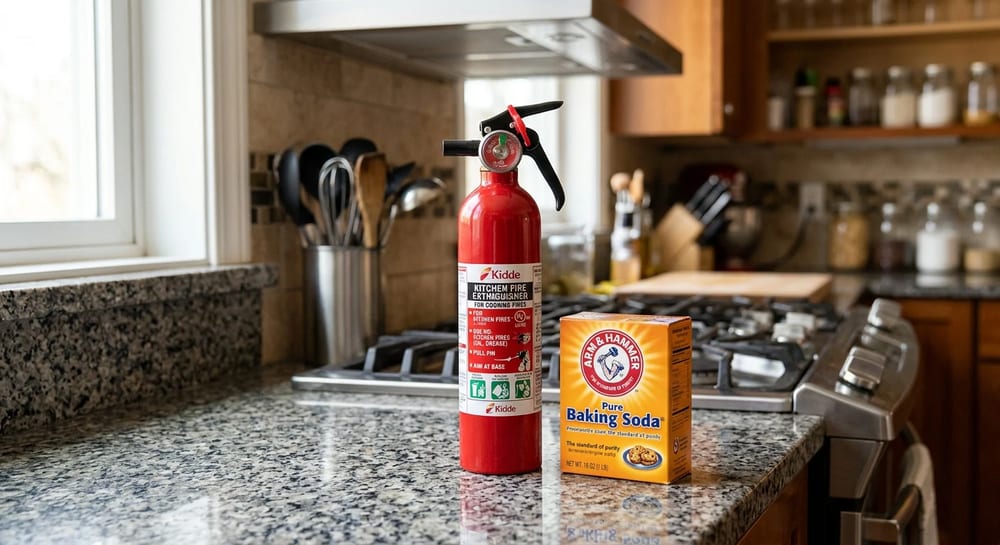
When deploying the extinguisher, stand back about 6 to 8 feet and use the PASS method:
- Pull the pin on the extinguisher handle.
- Aim the nozzle low, pointing directly at the base of the fire (the pan), not at the flames in the air.
- Squeeze the trigger in a controlled manner.
- Sweep from side to side until the fire is completely completely smothered.
When to Evacuate and Call 911?
Fire moves faster than you think. You have roughly 30 seconds to gain control of a stovetop fire. If the flames spread to the cabinets, the curtains, or the ceiling, your window for being a hero has closed.
Never hesitate to call the fire department if you feel overwhelmed. It is far better to have a fire engine show up to a smothered pan than to wait too long and lose your home.
Post-Fire Cleanup and Prevention
A few years ago, I dealt with a minor flare-up while searing steaks in a cast-iron skillet. I remembered to slide the lid on and kill the heat, but the adrenaline rush lasted all night. The lingering smoke meant I had to thoroughly clean the kitchen the next day, which prompted me to completely overhaul my stove-area maintenance.
If you used a dry chemical ABC fire extinguisher, your kitchen will be coated in a fine, yellow-white powder (monoammonium phosphate). It is slightly corrosive and needs to be cleaned up promptly.
- Put on an N95 mask and gloves. The dust irritates the lungs and skin.
- Sweep up the bulk of the dry powder with a dustpan. Do not use your standard household vacuum, as the fine dust will ruin the motor and blow right through standard filters.
- Wash all countertops, cabinets, and the stovetop with a solution of warm water and dish soap.
- Wipe down the surfaces a second time with a 50/50 mix of white vinegar and water to neutralize any remaining chemical residue.
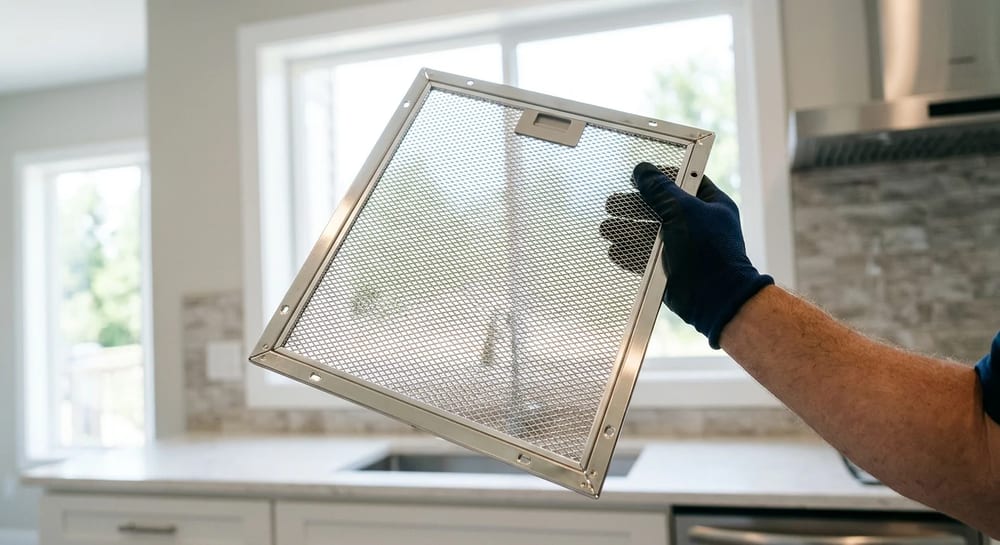
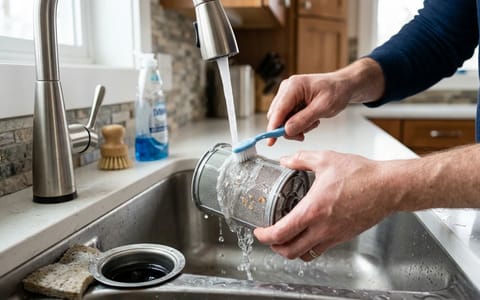
To prevent future grease fires, keep your stovetop and range hood meticulously clean. Oil splatters accumulate on the metal mesh filters under your microwave or hood. If a pan flares up, that sticky, grease-laden filter acts as a ladder, pulling the fire directly into your exhaust ductwork. Run those metal filters through your dishwasher once a month.
Finally, never leave heating oil unattended. Whether you are deep-frying a turkey or just warming two tablespoons of olive oil for onions, stay in the kitchen. A watched pot might never boil, but an unwatched skillet will absolutely catch fire.
- Turn off the burner immediately to remove the heat source.
- Slide a metal lid or baking sheet over the pan to starve the fire of oxygen.
- Keep a Class B or Class K fire extinguisher in the kitchen, but away from the stove.
- Never move a burning pan—carrying it outside will likely result in severe burns and spread the fire.
- If you cannot extinguish the flames within 30 seconds, get everyone out of the house.