What is an ABC fire extinguisher?
An ABC fire extinguisher is the most common safety tool you'll buy for your house. It uses a dry chemical powder to put out three different types of fires. The letters stand for the kinds of fires it fights. "A" is for ash, which means ordinary things like wood, paper, and cloth. "B" is for barrel, covering flammable liquids like grease, oil, and gasoline. "C" is for current, which means it works on live electrical fires.
This makes it a perfect all-in-one choice. You don't need to guess what kind of fire you're looking at. You just grab it and use it. The yellow powder inside is monoammonium phosphate. When you spray it, it coats the burning material and smothers the flames. It stops the chemical reaction that keeps the fire going. It leaves a messy, sticky dust behind, but it saves your house.
Why you need one in your house
Fires spread fast. Having the right extinguisher nearby can stop a small problem from destroying your home. You should buy your first extinguishers during Your First Week as a Homeowner. A standard 5-pound ABC extinguisher costs 40 to 60 dollars, though prices vary by brand and store.
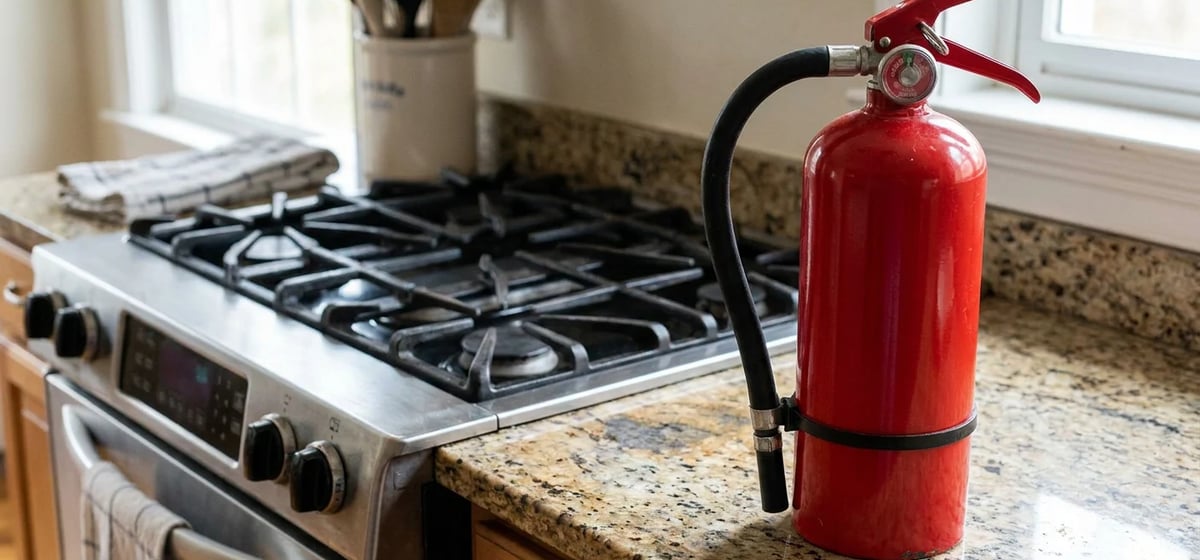
You'll want to keep one on every level of your house. Make sure you place one in the kitchen, one in the garage, and one near your bedrooms. A bigger 10-pound model costs 70 to 100 dollars. This larger size is great for a garage or a workshop where you might store gas or paint. Don't hide your extinguisher under the sink behind a bunch of cleaning supplies. Mount it on the wall near an exit door. This way, you're always moving toward a safe escape route when you grab it. Sometimes, having proper fire safety gear mounted visibly can even help lower your premiums for Home Insurance.
How to use it correctly
You need to know how to use your extinguisher before you face Home Emergencies. Stand about 6 to 8 feet back from the fire when you start spraying. If you stand too close, the high pressure from the nozzle might blow burning grease or embers around the room. Fire safety experts teach a simple memory trick called PASS.
- Pull the pin on the handle.
- Aim the nozzle low at the base of the fire.
- Squeeze the handle to spray the powder.
- Sweep the nozzle from side to side until the fire goes out.
If the fire is already spreading to the walls or ceiling, leave the house right away and call 911. Don't try to fight a large fire yourself.
Maintenance and expiration
Fire extinguishers don't last forever. They lose pressure over time. You should check the pressure gauge on your extinguisher once a month. The needle must point in the green zone. If the needle drops into the red zone, the extinguisher won't work.
Most disposable household models last 10 to 12 years. After that, you need to replace them. You can check the bottom of the metal tank for a stamped manufacturing year. The chemical powder inside can also settle and pack down at the bottom of the tank over the years. Take the extinguisher off the wall once every six months. Turn it upside down and hit the bottom firmly with the heel of your hand. This keeps the powder loose so it sprays correctly when you need it.