
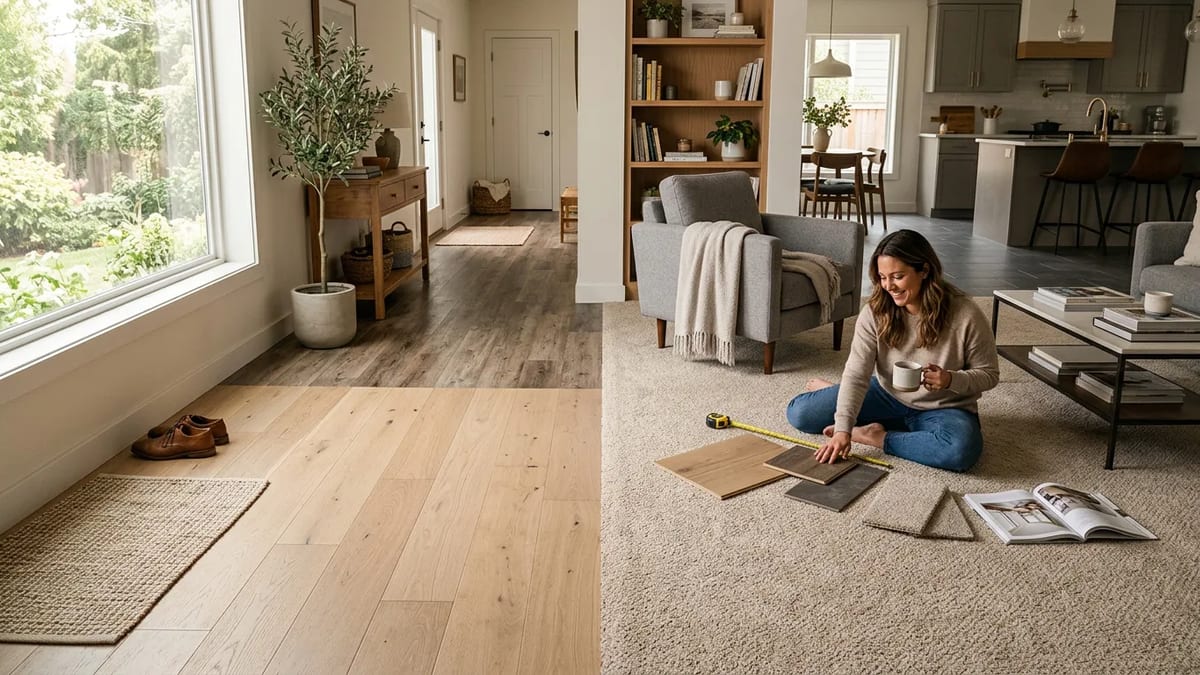
The Big Four Flooring Types
Your floor takes a beating every single day. You walk on it in dirty shoes, spill drinks on it, and drop heavy pots on it. Choosing the right material matters. You want something that looks good, fits your budget, and handles the way your family actually lives.
We will look at the four main types of flooring found in US homes. All cost ranges in this guide are rough estimates for materials and installation. Keep in mind that actual costs always vary by region, project scope, and home age.
Hardwood Floors: Beautiful and Pricey
Hardwood is classic. It adds real value to your house and looks great in almost any room. Solid wood lasts a lifetime because you can sand it down and refinish it multiple times.
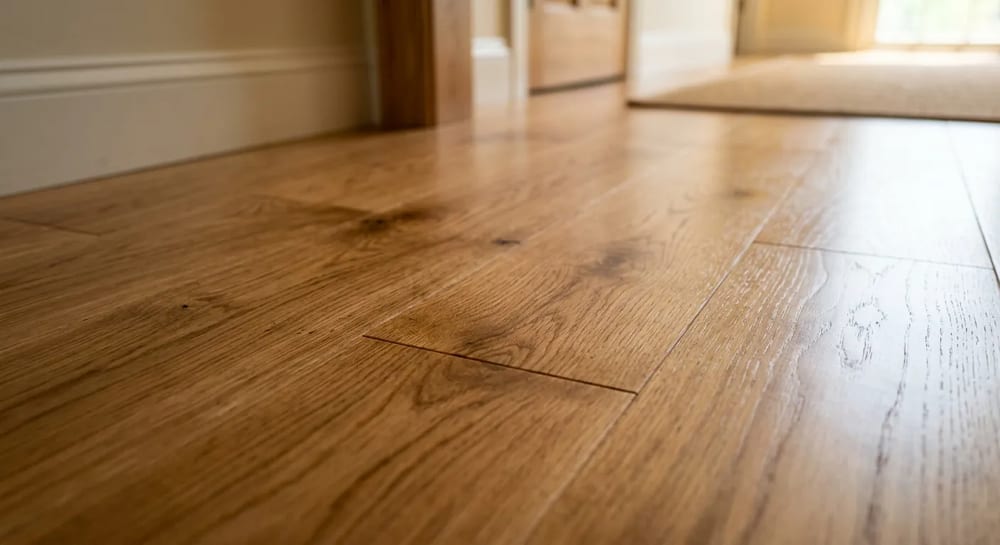
You also have the option of engineered hardwood. This is a thin layer of real wood glued to a plywood base. Engineered wood handles slight moisture changes better than solid wood. It is a smart choice if you live in a humid area or want wood floors in a basement.
Hardwood is expensive. Expect to pay $8 to $15 per square foot to have it installed. It also scratches easily. Dog claws and moving furniture will leave marks over time.
Luxury Vinyl Plank: The Waterproof Workhorse
Luxury Vinyl Plank is known as LVP. It is a massive hit with homeowners today. LVP looks like real wood but is made entirely of durable plastics. It is highly water resistant and very hard to scratch.
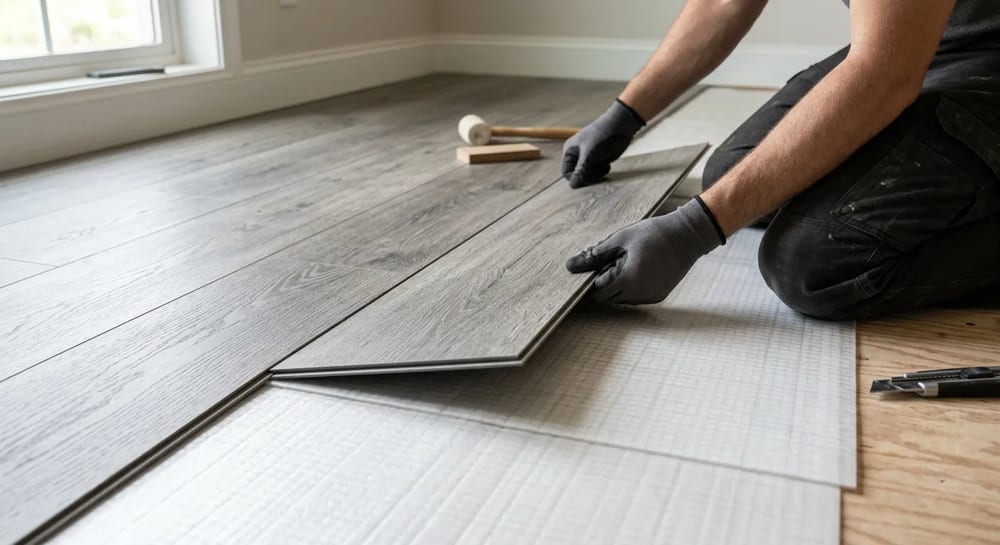
Most LVP is a "floating" floor. The planks click together and sit directly on top of your subfloor without nails or glue. If you have a concrete slab under your floor, check out our guide to Foundation & Structure to understand moisture barriers.
LVP costs around $4 to $8 per square foot installed. It is cheaper than wood but will not add the same resale value to your home. It usually lasts 15 to 25 years before the top wear layer breaks down.
Tile Floors: Tough but Cold
Ceramic and porcelain tile will outlive you if you treat them right. They shrug off water completely. This makes tile perfect for bathrooms and kitchens.
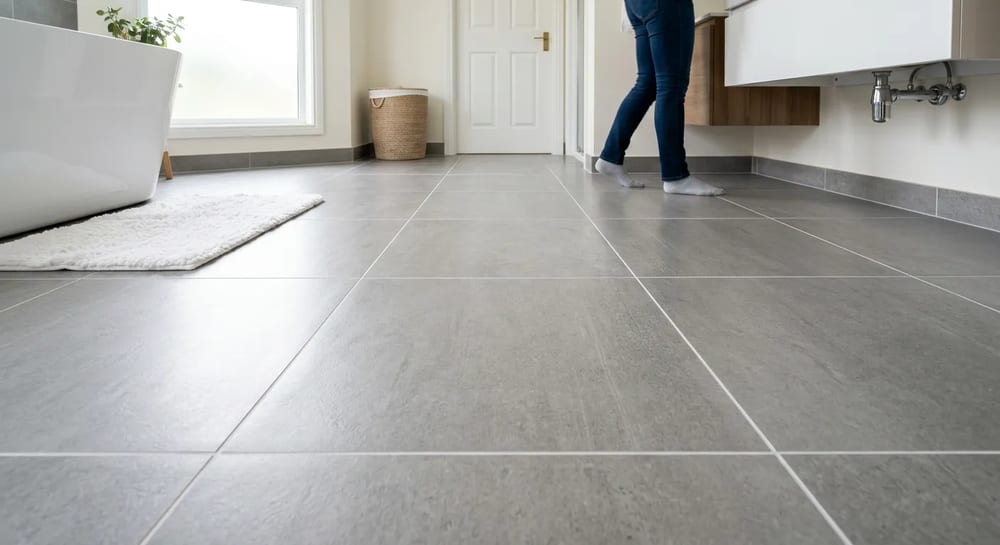
Tile is great for wet spaces where a Plumbing leak might ruin other floors. But tile is cold on bare feet. It is also very hard, so dropping a glass on a tile floor guarantees the glass will shatter. Dropping something very heavy, like a cast iron pan, can crack the tile itself.
Tile is labor intensive to install. You can expect to pay $10 to $20 per square foot for a professional job.
Carpet: Soft but High Maintenance
Carpet is warm, soft, and cheap. Bedrooms and stairs are the most common spots for it. It absorbs sound well, making second-floor rooms much quieter.
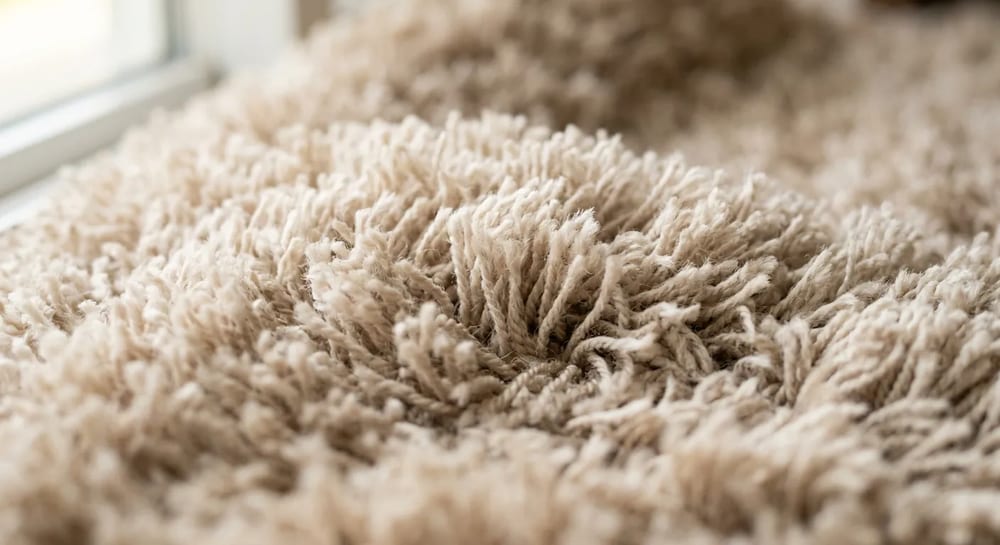
The big downside is dirt. Carpet traps dust, pet hair, and allergens. Spills soak in quickly and cause permanent stains. Carpet usually needs replacing every 10 to 15 years.
What Moisture Does to Your Floors
Water is the enemy of most floors. If a pipe bursts or a window leaks, your flooring is usually the first thing destroyed.
- Solid Wood: Absorbs water quickly. The boards will swell, warp, and cup at the edges.
- Carpet: Soaks up water like a sponge. If it stays wet for more than 48 hours, mold will grow in the padding.
- LVP and Tile: The materials themselves survive water fine. But water can still seep through the cracks.
Should You DIY Your Floors?
Some floors are easy weekend projects. Others require special tools and years of practice.
LVP is the easiest floor to install yourself. You just need a saw, a tape measure, and a tapping block. You can cover a whole room in a single day. Carpet is cheap to buy, but stretching it correctly requires special tools. It is usually better to hire a pro for carpet.
Hardwood and tile are difficult. Tile requires mixing messy thinset mortar, keeping grout lines perfectly straight, and cutting pieces with a wet saw. Read more about deciding when to hire out work in our DIY vs. Hiring a Pro guide.
Remember that changing your floors usually means removing your baseboards first. You can learn more about handling trim work in our Interior: Paint, Drywall & Trim guide.
Comparing Costs and Lifespans
Use this table to compare the basic facts of the four main flooring types.
| Material | Average Lifespan | Water Resistance | DIY Friendly |
|---|---|---|---|
| Solid Hardwood | 50 to 100 years | Low | No |
| Luxury Vinyl Plank | 15 to 25 years | High | Yes |
| Porcelain Tile | 50 plus years | Very High | Moderate |
| Carpet | 10 to 15 years | Low | No |
Here is a quick look at the average installed cost per square foot for each material. Prices fluctuate based on the quality of the materials you pick.