The Worst Case Scenario Test
You want to save money. We all do. But before you grab a sledgehammer or a wrench, you need a simple way to decide if a job is safe to tackle yourself. Ask yourself one question. What happens if I get this totally wrong?
If the answer is a flooded kitchen, a house fire, or a collapsed roof, put the tools down. You need a professional. If the answer is an ugly wall or a crooked shelf, you can safely try it yourself. We call this the worst case scenario test. It strips away your ego and forces you to look at the real risk.
Keep in mind that all price ranges mentioned in this guide are rough estimates. Costs always vary by your region, the scope of your project, and the age of your home.
High Risk Zones: Leave It To The Pros
Some home systems have zero margin for error. A mistake here can destroy your house or get someone hurt. You should almost always hire a licensed professional for these jobs.
- Main Electrical Panels: You can easily swap a light fixture. But if you need a new breaker or a panel upgrade, call a pro. A bad wiring job can burn your house down. Learn more in our Electrical guide.
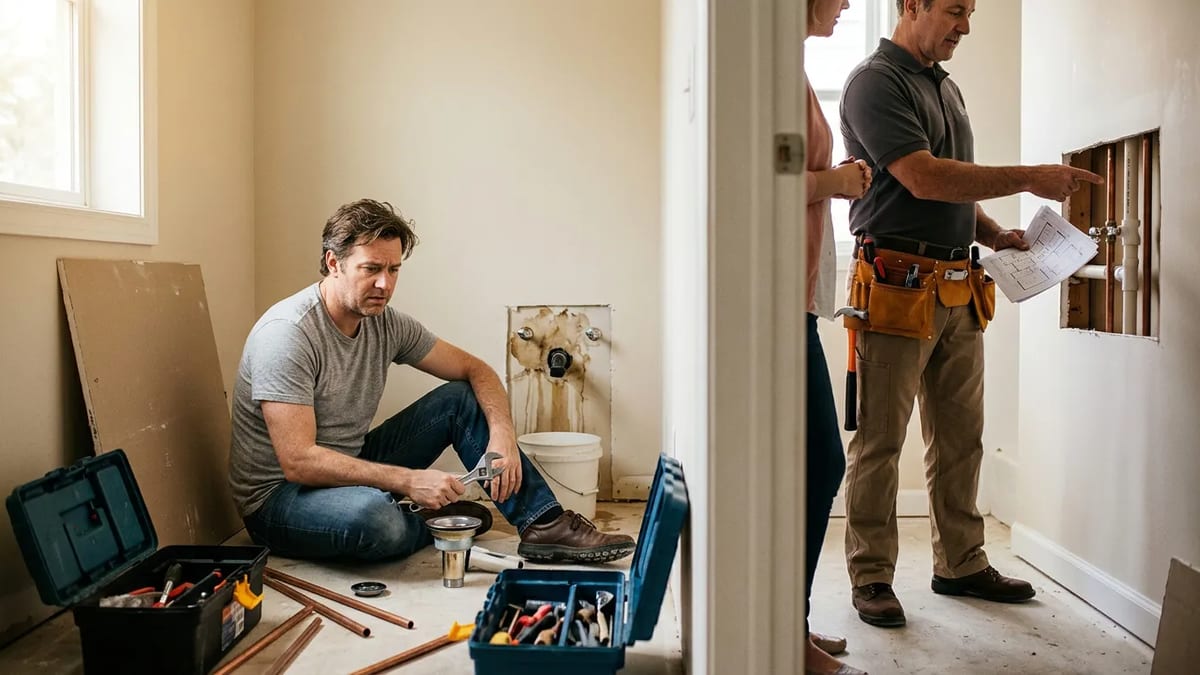
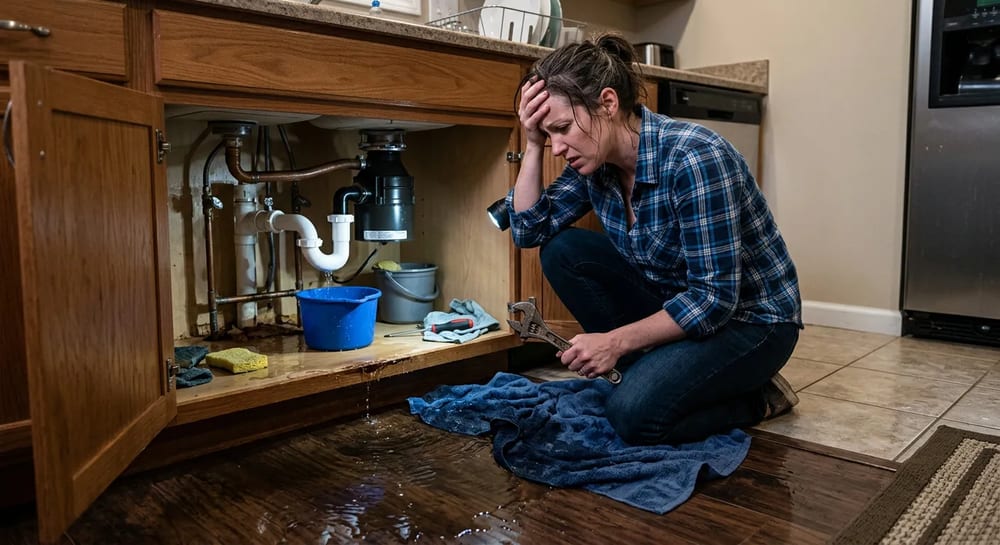
- Deep Plumbing and Gas Lines: Replacing a toilet flapper is easy. Moving a drain line or installing a gas stove is not. Gas leaks are deadly. Water leaks rot your framing and cause mold. Check our Plumbing guide for details on what is safe to touch.
- Structural Changes: Never remove a wall unless you know for a fact it does not hold up your roof. A structural engineer or a licensed contractor needs to make that call.
Medium Risk Zones: Proceed With Caution
Medium risk projects will not burn your house down. But if you mess them up, you will waste a lot of time and money fixing the mistakes. You can do these jobs yourself if you are patient and willing to learn.
Tile work is a great example. Laying a tile floor looks easy on video. In reality, getting the floor perfectly level takes skill. If you do it poorly, the tiles will crack under your feet in a few months. Then you have to pay a pro to rip it all out and start over. If you want to learn about proper subfloors, read our Flooring guide.
Hanging drywall is another medium risk job. A bad drywall job will not hurt anyone, but you will stare at ugly, lumpy seams for the rest of your life. If you want a perfectly smooth wall, hire a pro. If you are okay with a few bumps in a garage, do it yourself.
Low Risk Zones: Great For DIY
Low risk jobs are the best place to build your skills. The worst case scenario is usually just a bruised ego or an ugly finish. You can easily fix these mistakes without spending a fortune.
- Painting Rooms: Paint is cheap. If you hate the color or leave brush marks, you just sand it down and paint it again. See our Interior: Paint, Drywall & Trim guide for prep tips.
- Basic Landscaping: Planting bushes, laying mulch, and building raised garden beds are fantastic DIY projects. It is hard work, but the risk of property damage is almost zero.
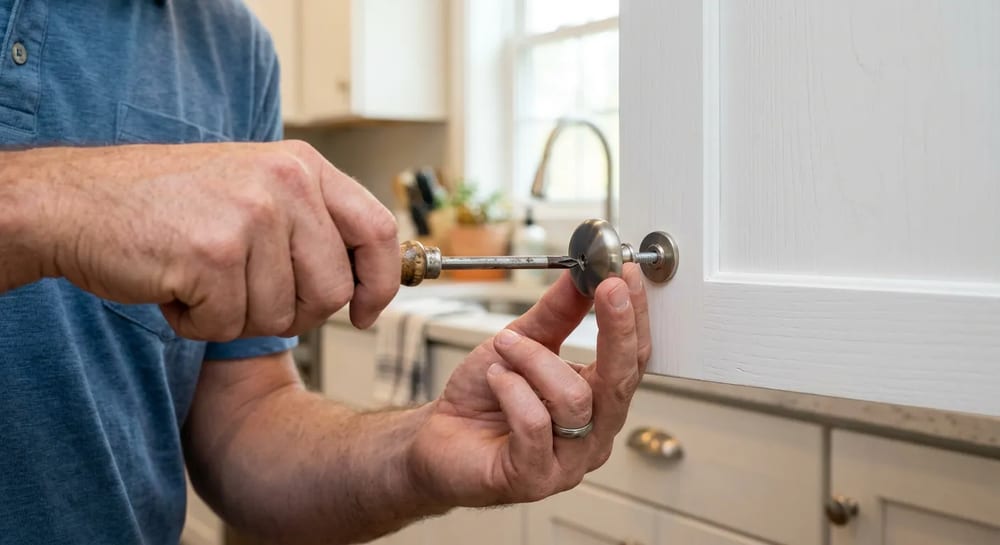
- Swapping Hardware: Changing cabinet knobs, interior door handles, and faucet aerators takes basic hand tools and very little time.
How to Plan a DIY Home Project
Most botched projects do not fail because the work was too hard. They fail because the homeowner started before they had a plan. A good plan turns a scary weekend into a series of small, easy steps. Before you buy a single thing, sit down and answer the questions in the table below. This is true whether you are tackling a small craft project or a full bathroom refresh.
Planning is also where you catch the dealbreakers early. If your project touches wiring, gas, or a load-bearing wall, you want to know that on day one, not after the demo is done. Pull permits before you start any work that needs an inspection. A permit feels like a hassle, but it protects your insurance and your home's resale value.
| Planning Step | What to Ask Yourself | Why It Matters |
|---|---|---|
| Define the goal | What does "done" actually look like? | Vague goals lead to half-finished rooms. |
| Set a real budget | Materials plus tools plus a 20% buffer. | Surprises always cost money you did not plan for. |
| Check the rules | Do I need a permit or HOA approval? | Unpermitted work can block a future home sale. |
| Estimate the time | How many free weekends will this take? | A torn-up kitchen for a month is miserable. |
| List the tools | What do I own, rent, or need to buy? | Missing one tool can stall the whole job. |
A Simple Five Step DIY Plan
Use this order for almost any do it yourself project. It keeps you from buying the wrong materials or painting yourself into a corner.
- Measure twice. Write down every dimension before you shop. Returning a box of the wrong-size tile wastes a whole day.
- Watch three videos. Find people doing your exact job. Note where they struggle, because you will struggle there too.
- Gather everything first. Lay out all tools and materials before you start. A mid-project hardware store run kills your momentum.
- Do a test piece. Cut one board or paint one small patch first. Mistakes on scrap are free.
- Clean as you go. A tidy workspace is a safe workspace and helps you spot problems early.
DIY Home Security and Alarm Systems
Home security is one of the best DIY wins for any homeowner. Modern do it yourself alarm systems are wireless, renter-friendly, and need no drilling or electrician. You peel and stick the sensors, connect them to an app, and you are protected in an afternoon. The worst case scenario of a bad install is usually just a sensor that falls off the wall, not a fire or a flood.
The big choice is professional monitoring versus self monitoring. A self-monitored system pings your phone when a door opens and costs nothing per month. A professionally monitored plan adds a call center that dispatches police, usually for a monthly fee. Many of the best DIY security systems let you switch between the two without a contract.
| Component | What It Does | DIY Difficulty |
|---|---|---|
| Door and window sensors | Alerts you when an entry point opens. | Very Easy (peel and stick) |
| Motion sensors | Detects movement inside a room. | Very Easy |
| Wireless cameras | Records video and sends clips to your phone. | Easy (battery or plug-in) |
| Smart video doorbell | Shows who is at the door from anywhere. | Medium (may need existing wiring) |
| Smart locks | Lets you lock and unlock by phone or code. | Easy (swaps your old deadbolt) |
How to Set Up a DIY Alarm System
- Map your weak points. Walk the outside of your home and note every door and ground-floor window a burglar could use.
- Place the base station centrally. Put the hub near your router so it keeps a strong signal to every sensor.
- Stick sensors on entry points. Mount a contact sensor on each exterior door and accessible window.
- Add cameras at choke points. Cover the front door, back door, and driveway first. These see the most useful footage.
- Test every device. Trigger each sensor and confirm the alert reaches your phone before you trust the system.
DIY Pest Control and Waterproofing: Know the Line
Two of the most searched DIY topics are pest control and basement waterproofing. Both have a safe, cheap homeowner zone and a deeper zone where one mistake costs you thousands. The trick is knowing exactly where that line sits before you start spraying or sealing.
DIY Termite and Pest Control
You can absolutely handle ants, the occasional mouse, and spiders yourself with store-bought bait and good sealing. Do it yourself termite treatment is the gray area. You can treat a small, early spot with liquid termiticide or bait stations, but termites that have reached your framing are a structural threat. If you see mud tubes on the foundation or hollow-sounding wood, get a professional inspection. A pro carries a bond that pays for repairs if the treatment fails, which a hardware store bottle never will.
| Pest Problem | Safe to DIY? | When to Call a Pro |
|---|---|---|
| A few ants or spiders | Yes, with bait and sealing. | If they keep coming back monthly. |
| One or two mice | Yes, snap traps and gap sealing. | Droppings everywhere or you hear them in walls. |
| A small termite spot | Maybe, with bait stations. | Mud tubes, swarms, or soft wood: call now. |
| Wasp nest up high | Risky. | Anyone in the home is allergic. |
DIY Basement and Crawl Space Waterproofing
Most basement moisture is fixable from the outside without digging. Before you spend a dollar inside, do the free work first: clean your gutters, extend your downspouts at least four feet from the foundation, and regrade the soil so it slopes away from the house. These three steps solve a huge share of damp basements. Sealing foundation cracks and painting on waterproof coating are reasonable DIY jobs for minor seepage.
Crawl space encapsulation, which means lining the space with a heavy vapor barrier, is also doable for a patient homeowner. What is not a DIY job is standing water, water pushing up through the floor, or cracks that are getting wider. Those point to a high water table or a failing foundation, and you need a pro with a sump pump or drainage system. For the structural side of this, read our Foundation & Basement guide.
The Hidden Costs of DIY
People often compare the cost of materials to the quote from a contractor. That math is incomplete. You also have to factor in the tools, the time, and the cost of fixing a mistake.
Let us look at a simple example. A contractor might quote you 400 to 600 dollars to install a new kitchen faucet. The faucet itself costs 150 dollars. You think you can save 350 dollars by doing it yourself. But you do not own a basin wrench, plumber tape, or a good work light. Now you spend 75 dollars on tools. You also spend four hours watching videos and struggling under the sink. The savings shrink quickly.
Comparing The Costs: Pro vs Botched DIY
The real danger of DIY is the cost of failure. If you try to save a few hundred dollars on a high risk job, a mistake can cost you thousands in emergency repairs. Here is a look at what happens when common jobs go wrong.
The Decision Matrix
If you are still on the fence about a project, use this table to make your choice. We break down common jobs by their risk level and the worst case scenario. If you decide to hire out, read our guide on Hiring Contractors & What Things Cost to avoid getting scammed.
| Project Type | Potential DIY Savings | Worst Case Scenario | Verdict |
|---|---|---|---|
| Painting a Bedroom | $300 to $600 | Paint drips on the floor or messy lines. | Do It Yourself |
| Installing LVP Flooring | $500 to $1,500 | Gaps in planks or a bouncy floor. | Try It (If Patient) |
| Replacing a Roof | $3,000 to $8,000 | Massive water leaks and a voided warranty. | Hire a Pro |
| Upgrading an Electrical Panel | $1,000 to $2,500 | House fire or fatal shock. | Hire a Pro |
| Swapping a Light Fixture | $100 to $200 | Tripped breaker or minor sparking. | Do It Yourself |