What Is a Subfloor?
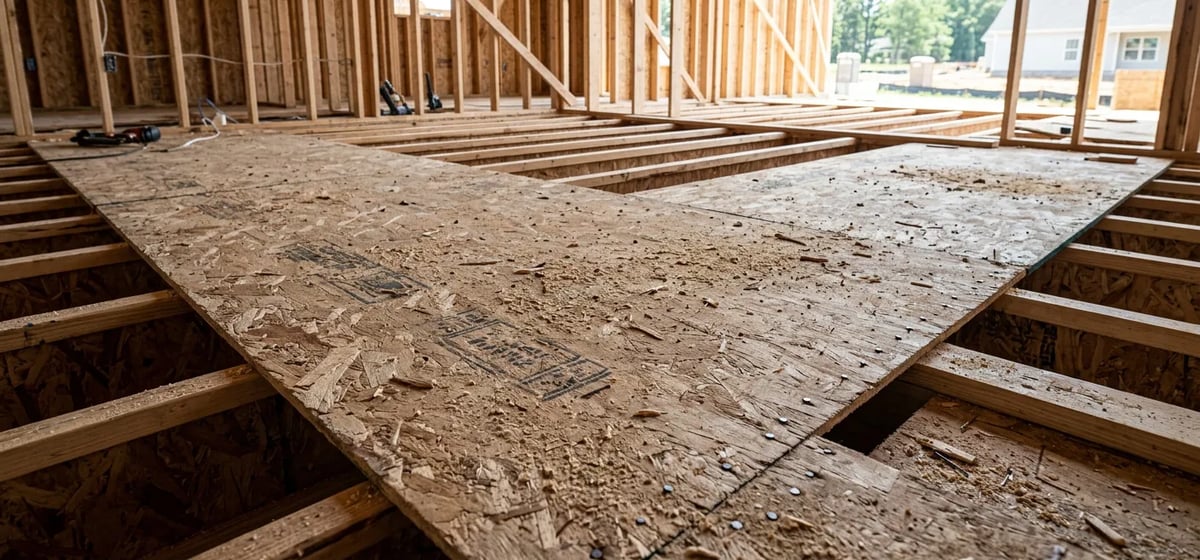
Think of your home as a layered cake. Your finished floor is the frosting on top. Below that frosting sits the subfloor. This thick layer of wood rests directly on your floor joists. Joists are the heavy wooden beams that make up your home framing. You can learn more about how joists hold up your house in our Foundation & Structure guide.
Builders usually make subfloors out of plywood or oriented strand board. Oriented strand board is also called OSB. Both materials come in large sheets. These sheets are very strong and flat. They create a solid base for whatever flooring you decide to put on top. Without a good subfloor, you'd just fall right through the joists into your basement or crawlspace.
Why Your Subfloor Matters
Your subfloor does a lot of heavy lifting. It holds the weight of your furniture, your appliances, and your family. A strong subfloor keeps your finished floors looking great and lasting a long time. If you plan to read our Flooring guide before a remodel, you will see that a flat subfloor is vital.
Different finished floors need different types of support. Hardwood floors need a thick wooden base so the nails have something to grab. Tile floors are very stiff and heavy. If the subfloor flexes or bends under a tile floor, the grout will crack. The tiles might even break. Carpet is more forgiving, but a bad subfloor will still squeak every time you walk across the room.
Common Problems to Watch For
Most subfloors last the entire life of a house. However, they are made of wood. Wood and water don't mix. Water damage is the biggest enemy of your subfloor.
- Squeaks and groans: Wood shrinks and expands as the weather changes. Over time, the nails holding the subfloor to the joists can come loose. When you step on a loose spot, the wood rubs against the nail and makes a squeak.
- Soft or spongy spots: If your floor feels bouncy or dips when you walk, the wood underneath might be rotting. This often happens near bathtubs, toilets, and dishwashers.
- Cupping floors: If your hardwood floorboards start to curl up at the edges, moisture is likely trapped in the subfloor below.
If you have a major leak, you need to dry the area fast. Check out our Plumbing guide to learn how to spot early signs of water leaks before they rot your wood.
What It Costs to Fix
Fixing a subfloor can be messy. A contractor has to tear out your carpet or tile just to reach the damaged wood. Because of this, the final price tag depends heavily on what kind of finished floor you have on top.
If you just need to fix a few squeaks, a handyman might charge 100 to 200 dollars. They can often drive special screws right through your carpet to secure the loose wood. Replacing a small rotted section in a bathroom usually costs 500 to 800 dollars. If you need to replace the subfloor in an entire room, expect to pay 1,500 to 3,000 dollars. Remember that local prices vary widely based on where you live and the cost of lumber at the time.