What is Thinset?
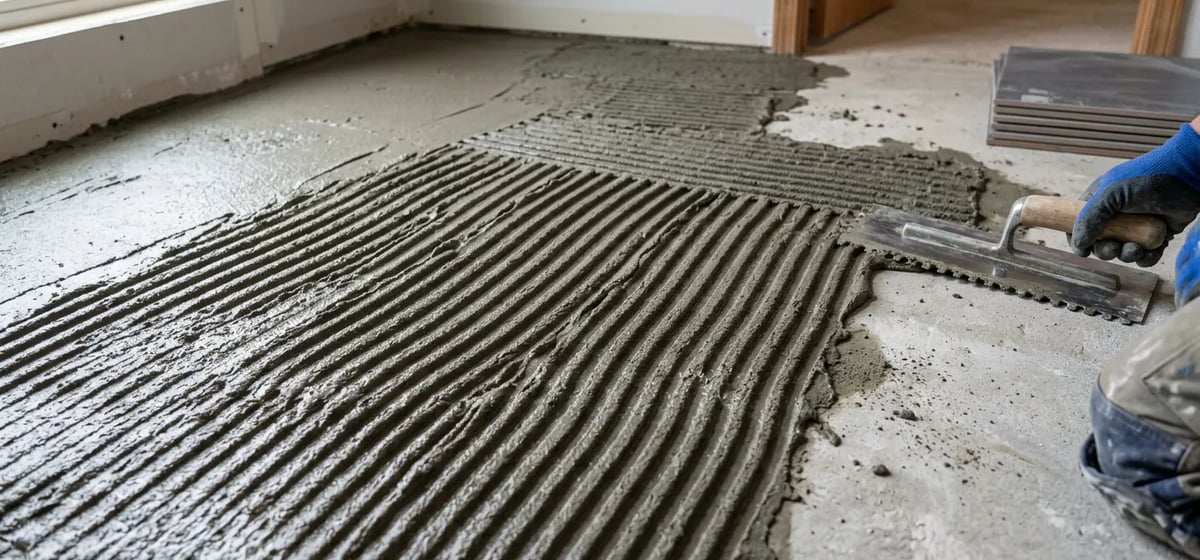
Thinset is a specialized type of sticky cement used to attach heavy floor and wall tiles to a bare surface. You spread it on the floor or wall with a notched trowel before pressing your tile firmly into place. Once it cures, it dries hard like a rock and keeps your tiles from cracking when you walk on them.
The name comes from the way the mortar is applied. You spread it in a very thin layer compared to the thick mud beds builders used many decades ago. Thinset became the standard way to install tile in the 1950s. Today, you usually buy it as a dry powder in large paper bags. You mix this powder with water in a bucket until it feels like thick peanut butter. You can also buy it premixed in plastic tubs, though pros rarely use the tub version for big jobs.
Why It Matters for Your Home
Thinset does much more than just glue your tiles down. It creates a solid, structural base that handles the weight of people walking on your Flooring. If a tile floor does not have a solid layer of thinset underneath it, the tiles will pop loose or crack under pressure.
This cement also fills in tiny dips and bumps in the floor so your tile sits perfectly flat. It stands up very well to water and moisture. That makes it the perfect choice for wet areas like showers, bathroom floors, and kitchen backsplashes. Unlike wood glue or regular construction adhesive, thinset will not rot or melt away when it gets wet.
Thinset vs. Mastic
Many homeowners get confused between thinset and mastic. Mastic is a sticky tile adhesive that comes ready to use in a bucket. It looks a lot like thinset, but it is actually an organic glue.
- Thinset: This is cement based. It dries through a chemical reaction, not just by air drying. It is highly waterproof and can hold heavy floor tiles.
- Mastic: This is a water based glue. It dries when the air hits it. If mastic gets wet again, it turns back into mush. You should only use mastic for small wall tiles in dry areas.
If a contractor tries to use mastic on your shower floor, stop them immediately. It will fail and cause water damage.
What to Watch Out For
Mixing thinset takes some practice. If you add too much water, the mixture gets soupy and your wall tiles will slide right down to the floor. If you add too little water, the cement gets dry and crumbly. It will not stick to the tile at all.
You also have a short window of time to use it once it is mixed. Usually, you get about 30 to 45 minutes before it starts getting hard in the bucket. This is called the pot life. You only want to mix as much as you can spread in that short time. Once it starts to harden, you cannot just add more water to save it. You have to throw it away and start over.
Costs and Hiring Help
A 50 pound bag of dry thinset powder costs 15 to 35 dollars at most hardware stores. One bag covers about 40 to 50 square feet of floor, depending on the size of the notches on your trowel. If you buy the premixed tubs, expect to pay around 30 to 50 dollars for a much smaller amount.
If you hire a contractor to install your tile, the thinset is included in their overall material fees. A professional tile job usually costs 10 to 25 dollars per square foot for labor and materials. Keep in mind that price ranges vary by location and the type of tile you choose. Tiling is a very common project to think about when you look at the DIY vs. Hiring a Pro debate. Small jobs like a kitchen backsplash are easy for beginners to tackle. Large floors take a lot of skill to get perfectly flat without creating trip hazards.