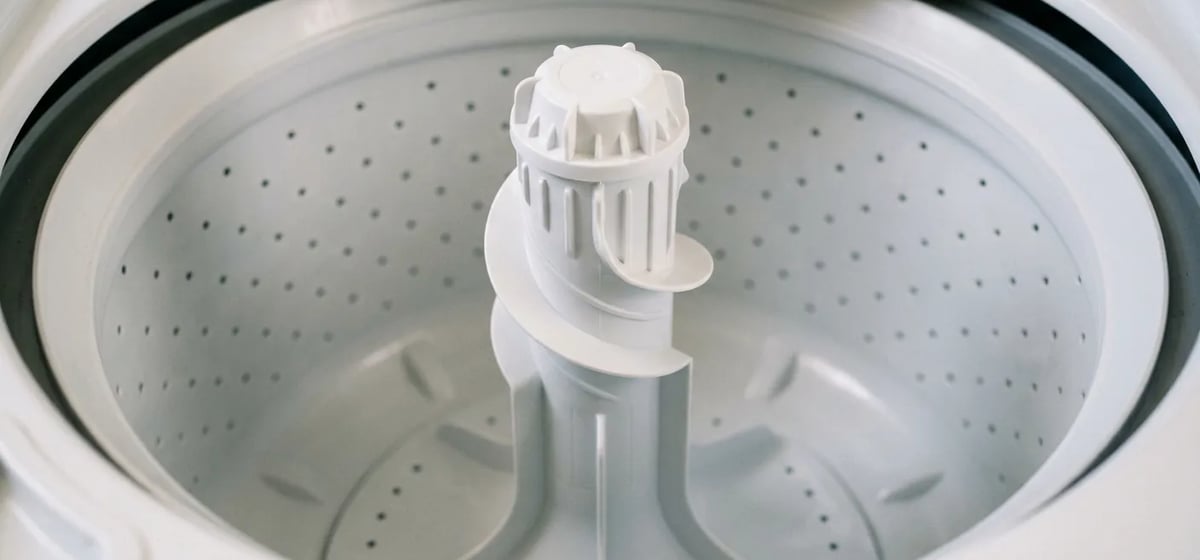
What is an Agitator?
An agitator is the tall plastic spindle standing right in the middle of a top loading washing machine. It's the part that does the heavy lifting when you do laundry. When you start a wash cycle, this spindle twists back and forth. This motion rubs your clothes against each other and against the spindle itself. The friction breaks apart tough stains and pushes the laundry down into the soapy water for a deep clean.
Appliance makers started using this term in the early 1900s for the first motorized washing machines. The word comes from the Latin word agitare. That means to put in constant motion. And constant motion is exactly what this part brings to your laundry day.
How It Cleans Your Clothes
Agitators have fins or vanes wrapped around the main post. These fins grab the fabric and pull it down to the bottom of the tub. Then the clothes cycle back up the sides of the drum. This creates a rollover effect. Your clothes get a thorough scrubbing as they move through the water.
You might wonder if every washer has one. Front loading machines don't use them at all. Even some modern top loaders use a different part called an impeller. An impeller is a low profile cone or disc at the bottom of the tub. Agitators are generally better at removing heavy dirt like mud or grease. Impellers are gentler on delicate fabrics and leave more room in the tub for bulky blankets. If you are shopping for new Appliances, you'll have to choose between these two styles.
Signs of a Broken Agitator
Like any moving part, an agitator can wear out over time. You'll usually notice it's broken when your clothes come out dirty. Sometimes the top half of the spindle stops moving while the bottom half still spins. Other times, the whole piece just sits there while the motor hums.
Here are a few common signs of trouble:
- Your clothes are tangled in a tight knot at the end of the wash.
- You hear loud grinding or clicking noises during the wash cycle.
- You can spin the top half of the spindle freely in both directions with your hand.
- Your clothes still have soap or dry spots on them after the cycle ends.
Repair Costs and Fixes
A broken agitator doesn't mean you need a whole new washing machine. The fix is often quick and affordable. The most common problem is worn out agitator dogs. These are tiny plastic pieces inside the spindle that lock the gears in place. Over the years, the plastic teeth just wear down from normal friction.
Replacing the dogs is a very cheap repair. A new set of agitator dogs costs 5 to 15 dollars at a hardware store. Many homeowners handle this swap themselves in about ten minutes. If the entire spindle is cracked or broken, you'll need to buy a complete replacement assembly. A full replacement part usually costs 50 to 150 dollars.
If you prefer not to fix it yourself, you can call an appliance repair tech. Hiring a professional will add labor fees to the bill. You can expect to pay 150 to 300 dollars total for a pro to diagnose and fix the issue. Prices and ranges vary based on where you live and the brand of your washer. You can read more about deciding when to call a pro in our DIY vs. Hiring a Pro guide.
How to Protect Your Agitator
You can help this part last longer by changing how you load your laundry. The biggest mistake homeowners make is wrapping large items around the spindle. Never take a heavy towel or a pair of jeans and twist it around the center post. This puts massive strain on the plastic gears when the motor starts turning.
Instead, drop your clothes loosely into the tub. Build a loose ring of clothing around the outside edge. The water and the motion of the spindle will pull the items toward the center naturally. You also want to avoid overloading the machine. If you pack the tub to the very top, the spindle can't move the clothes at all. The motor will strain, and the plastic gears will strip out much faster.