What Is An Air Admittance Valve?
Every time you empty a sink, the water needs air behind it to flow smoothly down the pipes. Without air, the falling water creates a vacuum. This vacuum can suck the water right out of your drain trap. If the trap goes dry, nothing stops foul sewer gases from floating up into your home. In most houses, standard vent pipes run inside the walls and poke through the roof to let air in. But sometimes a roof vent is impossible to build. That is where an air admittance valve steps in.
An air admittance valve is a small mechanical device that acts as a one-way door for air. When water flows down the drain, negative pressure pulls the valve open. Room air rushes into the pipe to help the water move. As soon as the water stops, gravity and a spring snap the valve shut. This tight seal keeps the nasty sewer smells trapped inside the pipe where they belong. Plumbers often call these devices Studor vents after the brand that made them popular in the 1980s.
Where You Will Find Them
You will not see these valves out in the open. They are almost always hidden inside cabinets. The most common place to find one is under a kitchen island sink. Kitchen islands do not have tall walls to hide a traditional vent pipe, so builders use these valves instead. You might also spot them in a few other places around your house.
- Under a bathroom vanity sink where a window blocks a normal wall vent.
- Next to a washing machine drain in a finished basement.
- Near a wet bar sink in a living room or basement entertainment area.
- On a drain line added during a remodel where running a new pipe to the roof was too hard.
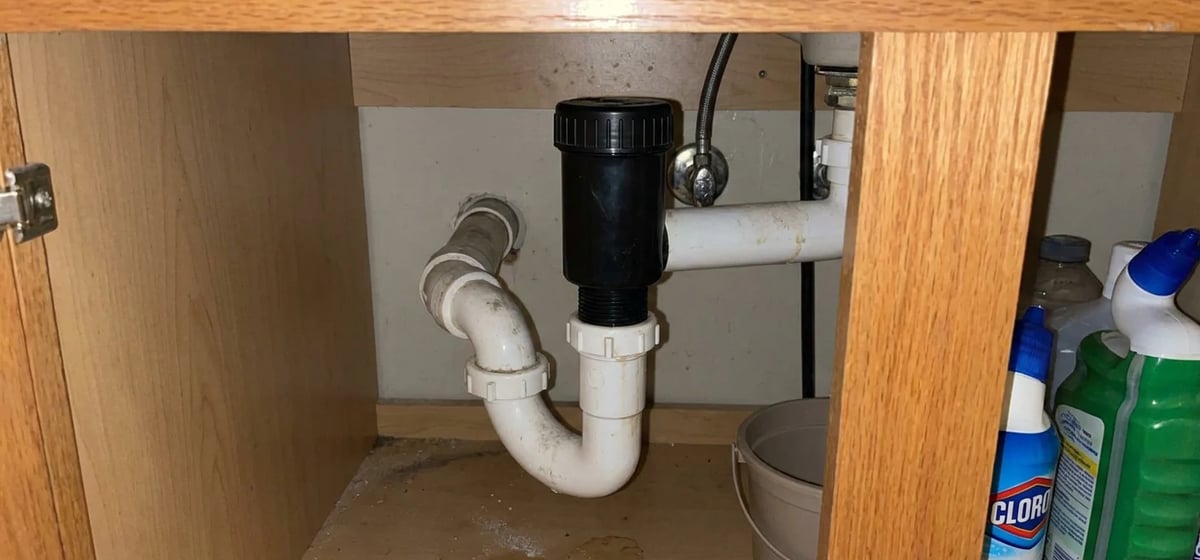
If you look under your sink, you will see the curved drain trap. Just past that trap, a straight piece of pipe will point up toward the counter. The air admittance valve is the plastic cap screwed onto the very top of that pipe.
Why It Matters To You
This little valve plays a huge role in your daily comfort. If it stops working, you will know almost immediately. A failing valve usually gets stuck in one of two ways. It can get stuck open, or it can get stuck closed. Both cause annoying problems for your home Plumbing system.
If the valve sticks open, it fails to block the sewer gases. You will start noticing terrible Smells & Odors every time you open the cabinet door. If the valve sticks closed, air cannot enter the pipe. Your sink will start draining very slowly. You might also hear a loud gurgling noise from the drain as the water struggles to go down. Ignoring a broken valve can lead to a completely dry drain trap, which makes the smell even worse.
What To Watch For And Costs
These valves contain a small rubber seal that eventually dries out or wears down. Most of them will last anywhere from 15 to 20 years before they need a replacement. If you smell a rotten egg odor under your kitchen island, the valve is the most likely culprit. Luckily, fixing it is usually a fast and affordable project.
If you enjoy simple home projects, you can usually replace the valve yourself. You just unscrew the old plastic valve by hand and screw a new one onto the threaded pipe. You can buy a replacement valve at any local hardware store for 20 to 45 dollars. If you prefer to hire a professional plumber, expect to pay between 150 to 300 dollars for the parts and labor. Keep in mind that these price ranges vary based on your local area and the plumber you choose.