What it means for your home
The acronym AFUE stands for Annual Fuel Utilization Efficiency. The United States Department of Energy created this measurement standard in the late 1970s. It helps you compare heating costs when you shop for a new furnace or boiler. This rating tells you how efficiently a gas or oil furnace turns fuel into heat for your home.
Think of it like miles per gallon for your car. A rating of 90 percent means the furnace turns 90 percent of the gas into usable heat. It wastes the other 10 percent by sending it up the chimney as exhaust. A higher number means you get more heat for your money.
How the rating impacts your wallet
Your heating system is a big part of your home energy bill. Upgrading from an old furnace to a new one with a higher rating can save you a lot of money over time. Older systems from the 1990s often have ratings around 60 to 70 percent. That means they waste up to 40 percent of the fuel you buy.
Modern furnaces must meet a minimum rating of 80 percent in the United States. High efficiency models start at 90 percent and can go up to 98 percent. The equipment costs more upfront when you choose a higher rating. A standard 80 percent furnace usually costs 3,000 to 4,500 dollars to install. A high efficiency model with a 95 percent rating usually costs 5,000 to 8,000 dollars to install. Keep in mind that these ranges vary based on your location and the size of your home. You can learn more about managing these systems in our HVAC & Climate Control guide.
Where you will see this number
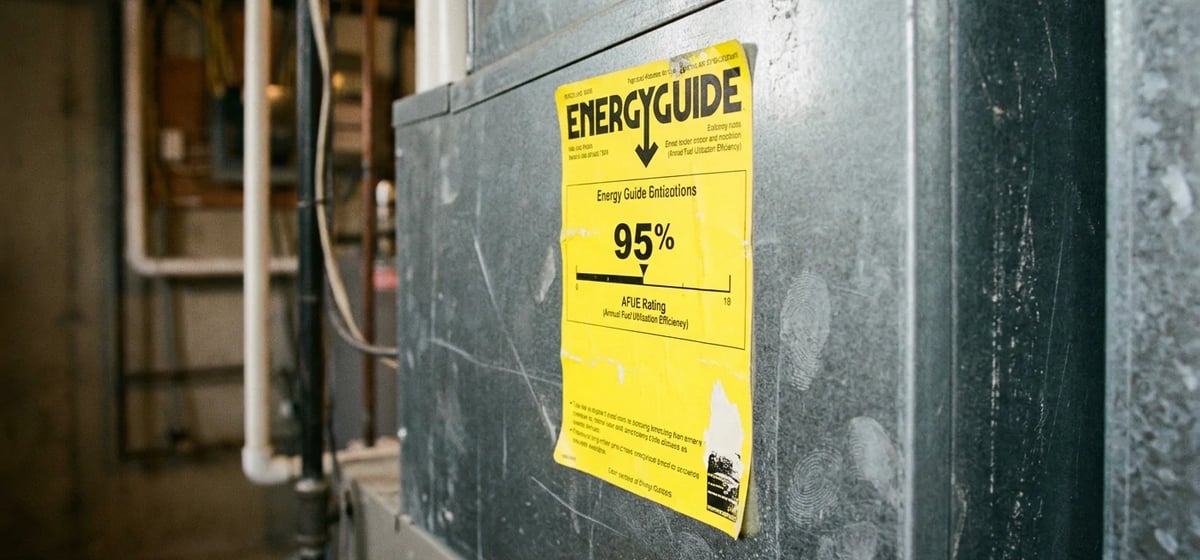
You will run into this term in a few common places. The most obvious spot is the bright yellow EnergyGuide label glued to the front of a new furnace. The label shows the efficiency percentage in large black text. It also shows a scale comparing that model to similar ones on the market.
You will also see this rating on estimates from heating contractors. When a pro gives you a quote to replace your system, they will list the model number and its efficiency percentage. Home inspectors also look for this rating. If you are Buying a Home, the inspection report will usually note the age and estimated efficiency of the current heating system.
What to watch for when upgrading
You might think you should just buy the highest rating possible. However, a 98 percent furnace is not always the best choice for every house. If you live in a mild climate, the money you save on gas might never pay back the extra thousands of dollars you spent on the premium equipment.
High efficiency furnaces also need special venting. Standard 80 percent models vent exhaust gases up a traditional metal chimney. Models with a rating of 90 percent or higher produce a lot of condensation. They require special PVC plastic pipes that vent directly out the side of your house. They also need a drain line to handle the water they create.
Before you buy, ask your contractor to calculate your estimated payback period. This tells you how many years it will take for your monthly gas savings to cover the higher installation price.