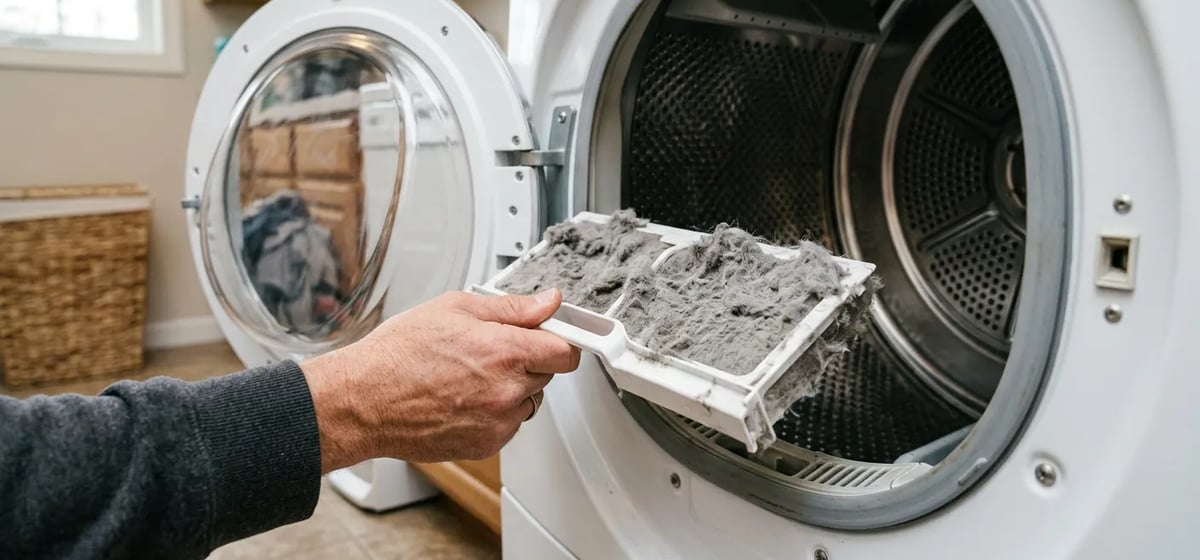
What is a lint trap?
A lint trap is a removable mesh screen inside your clothes dryer. It catches loose fabric fibers before they blow into your exhaust vent. The word lint comes from the Latin word linum, which means flax. Appliance makers added these screens in the mid 1900s to stop fabric dust from clogging exhaust pipes. Today, you will find a lint trap in every standard clothes dryer.
You usually find the trap right inside the dryer door or on top of the machine. You just pull it straight out. The screen holds a layer of fuzz that builds up while your clothes tumble dry.
Why it matters to you
Your dryer heats up air and blows it through your wet laundry. The hot air carries moisture and fabric dust out of the machine. The lint trap catches most of that dust. If you do not clean the screen, the hot air cannot escape. This causes two big problems.
First, a blocked screen makes your dryer work much harder. Your clothes take longer to dry, which wastes electricity and drives up your utility bills. It also wears out your dryer faster. You can learn more about replacing machines in our guide to Appliances.
Second, a dirty lint trap is a major fire hazard. Lint catches fire very easily. If the hot air backs up inside the dryer, the heating element gets dangerously hot. This heat can ignite the fuzz trapped in the screen or the exhaust vent. Dryer fires cause millions of dollars in damage every year. Keeping the screen clean is one of the easiest ways to prevent Home Emergencies.
How to maintain it
You must clean the lint trap every single time you use the dryer. Check the screen before you press start. Slide the screen out, wipe the fuzz off with your fingers, and throw the lint in the trash.
You also need to deep clean the screen every few months. Dryer sheets and fabric softeners leave a clear, sticky film on the mesh. This film blocks airflow even when the screen looks clean. Take the trap to your sink and scrub it with warm water, dish soap, and an old toothbrush. Let it dry completely before you put it back in the dryer.
What to watch for
Lint traps do not last forever. The mesh screen can tear, or the plastic frame can crack. If you see holes in the mesh, you need to buy a new trap right away. A torn screen lets lint blow past it and into your exhaust vent. A replacement lint trap usually costs 15 to 50 dollars. You can order one online using your dryer model number.
You should also look into the slot where the trap goes. Lint often falls off the screen and builds up in the cavity below. Use a vacuum hose to pull that extra fuzz out. If your clothes still take a long time to dry after cleaning the trap, your main exhaust duct might be clogged. Hiring a pro to clean your main dryer vent usually costs 100 to 250 dollars, though ranges vary based on where you live.
Signs of a larger problem
Sometimes keeping the trap clean is not enough. Lint can still sneak past the screen and stick inside your exhaust hose. Watch for these warning signs that your dryer vent needs a deep cleaning:
- Your clothes take more than one cycle to dry.
- The outside of your dryer gets very hot.
- Your laundry room feels extremely humid.
- You notice a burning smell.
- The outside vent flap stays closed when the dryer runs.
If you notice these signs, stop using the dryer. You or a pro must clean the entire vent line from the back of the machine to the outside of your house. A clean lint trap cannot work if the pipe behind it is blocked.