What Is a Fill Valve?
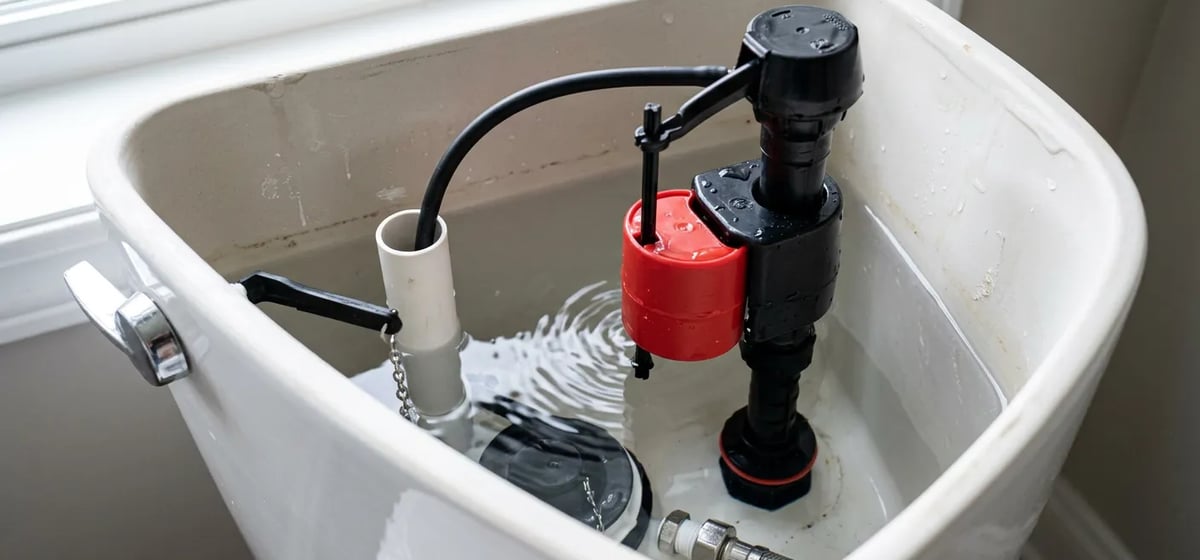
You'll find the fill valve inside your toilet tank. It's the tall plastic mechanism that usually sits on the left side of the tank. When you flush the toilet, this valve opens up to let fresh water refill both the tank and the toilet bowl. Once the water gets to the exact right height, a float attached to the valve automatically shuts the water off. The word valve comes from the Latin word valva, which means a folding door. The modern floating fill valve was invented in the early 1900s to automate the toilet refilling process. Before that, toilets were much harder to operate. Today, every standard gravity toilet uses some version of this clever device.
How It Works
The fill valve connects directly to the water supply line coming out of your bathroom wall or floor. Water sits under pressure in that pipe, waiting for the valve to open. When you press the flush handle, a different part called the flapper lifts up. This lets all the tank water dump into the bowl. As the water level drops, the float on the fill valve drops with it. This downward movement pulls open the valve. Fresh water rushes in through a small tube to refill the bowl and through the main valve base to refill the tank. As the tank fills back up, the float rises. Once the float reaches the top, it snaps the valve shut. The water stops flowing, and the toilet is ready for the next use.
Why It Matters to You
A working fill valve keeps your toilet ready for action. It also stops water from flowing endlessly. If this part breaks, your toilet might run all day and night. That wastes a massive amount of water. A running toilet can easily waste hundreds of gallons a day. This will add a huge surprise charge to your next water bill. Catching this issue early is a great habit to build during Your First Month as a Homeowner. You want to fix a broken valve right away to save money and prevent water damage to your bathroom floor.
Signs Yours Is Failing
Fill valves wear out over time. The plastic parts get brittle, and the internal rubber seals break down. Minerals in hard water make them fail even faster. You'll usually hear or see the signs when it's time for a new one. Watch out for these common clues:
- Your toilet keeps running long after you flush it.
- You hear a loud hissing, clicking, or squealing noise when the tank refills.
- The water level in the tank is too high and spills constantly into the open overflow tube.
- The flush is very weak because the tank doesn't fill up enough to push the waste down.
- It takes several minutes for the tank to refill completely.
Replacement Costs and DIY
Replacing a fill valve is a very common homeowner task. You can buy a universal replacement kit at any hardware store for 10 to 25 dollars. It's an easy project if you want to tackle it yourself. You just need a bucket, a sponge, and a pair of adjustable pliers. If you decide to hire a plumber instead, expect to pay 125 to 250 dollars for the parts and labor. Keep in mind that costs vary based on your local market.
If you aren't sure whether to try this yourself or call a local expert, check out our guide on DIY vs. Hiring a Pro to help you decide. Learning how your Plumbing works will save you a lot of money over the years.