What is a capacitor?
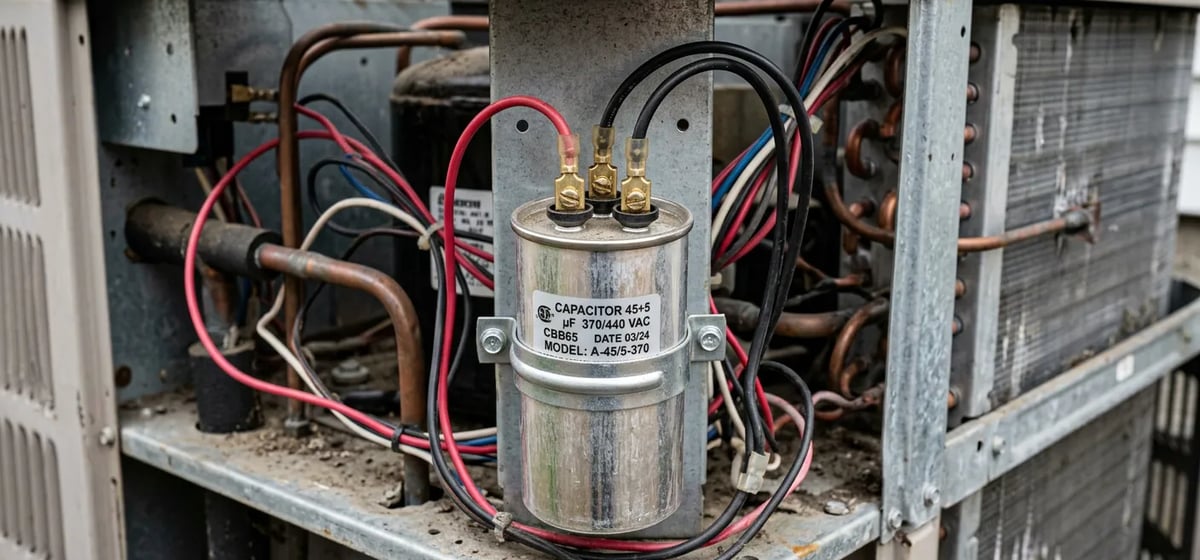
A capacitor is a small metal cylinder inside your air conditioner or furnace. It acts just like a temporary battery. It stores up electricity and gives the motor a big jolt of power to start running. The word comes from the Latin word capacitas. This means the ability to hold or contain something. People first used the term in the 1920s to describe a device that holds an electrical charge. Today, you will find these small parts doing heavy lifting in many home appliances.
There are two main types of capacitors in your home heating and cooling setup. A start capacitor gives the initial push to get a motor turning. A run capacitor stays on and helps the motor run smoothly while it operates. Many modern air conditioners use a dual run capacitor. This is a single cylinder that powers both the compressor and the fan motor at the same time. If one side of a dual capacitor fails, the whole unit stops working properly.
Why it matters to you
Your air conditioner needs a massive amount of energy to start. Your home electrical system cannot supply that huge burst of power all at once. The capacitor solves this problem. It stores energy while the system is off. When the thermostat calls for cool air, the capacitor releases all that stored energy in one second. This kicks the heavy compressor motor into gear. Once the motor is running, the capacitor gathers another charge for the next time.
If this part fails, your system will just hum or click, but the fan or compressor will not spin. This is the most common reason a cooling system stops working on a hot summer day. Without a working capacitor, the motor tries to pull too much electricity directly from your home wiring. This causes the motor to overheat. Over time, trying to start without that extra jolt of power will burn out the compressor entirely. A compressor is the most expensive part of your system. Replacing a cheap capacitor on time can save you thousands of dollars in major repairs. You can learn more about how these parts work together in our HVAC & Climate Control guide.
Signs your capacitor is failing
Capacitors wear out over time. Heat and heavy use make them fail faster. You can often spot a bad capacitor before it completely dies. Here are the most common warning signs:
- Your air conditioner makes a low humming or clicking noise but the fan does not spin.
- The system takes a long time to start after you hear the click from the thermostat.
- Your energy bills suddenly go up because the motor struggles to turn on.
- The air coming from your vents feels warm instead of cold.
- The top of the metal cylinder looks swollen or bulged out like a bad tin can.
Sometimes, a technician will use a long stick to push the fan blades while the unit is humming. If the fan starts spinning after getting a manual push, it means the motor is fine but the start capacitor is dead. You should never try this trick yourself because the spinning blades are very dangerous.
How much it costs to replace
Replacing a bad capacitor is a fast and common repair. The part itself is very cheap. A new capacitor usually costs 15 to 40 dollars at a hardware store. However, most homeowners pay an HVAC technician to do the work. If you hire a professional, expect to pay 150 to 400 dollars for the part and the labor combined. Keep in mind that prices vary based on where you live and the time of year. Emergency weekend calls will cost much more.
When a technician comes to your house, they will test the capacitor with a special meter. This meter measures microfarads. If the reading is too low, the technician will swap the part out in just a few minutes. The quick fix will get your house cooling again almost instantly.
Because of the extreme danger of electrical shock, this is a job most people should leave to an expert. Read our DIY vs. Hiring a Pro guide to help you decide if you are ready to handle high voltage repairs safely.