What is a cantilever?
A cantilever is a structural beam or floor section that sticks out past its support base. It allows a balcony, a bay window, or an upper floor to hang over the ground without any posts underneath. The exact origin of the word is unknown, but it likely comes from combining the word cant, which means an angle, with the word lever. Architects began using the term in the seventeenth century for projecting structures.
Think of a diving board. One end is bolted firmly to the ground, and the other end hangs out over the water. A cantilever works the exact same way. The weight and structure inside the house hold down the inner part of the beam. This keeps the outer part completely stable even though it floats in the air.
Why this design matters to you
This design creates extra living space without forcing you to expand your concrete foundation. Expanding a foundation is very expensive and requires major excavation. A cantilever lets you add a few feet to a bedroom or build a floating deck for much less money.
If you build a new home or add an extension, a cantilever bump-out is a popular choice. Adding a two-foot cantilevered bump-out to a room usually costs between 4,000 and 15,000 dollars. Costs vary widely based on your location and the materials you choose. This is often cheaper than pouring a new foundation, which can easily add tens of thousands of dollars to your project.
Where you will find them
You probably walk past cantilevered structures every day without noticing them. They are very common in residential home building. Here are the most typical places you will see them:
- Bay windows: Many bay windows float above the ground. The floor joists extend past the outer wall to support the window seat.
- Second-story bump-outs: Sometimes an upstairs bedroom or bathroom is slightly larger than the room below it. The floor simply sticks out a foot or two past the first floor.
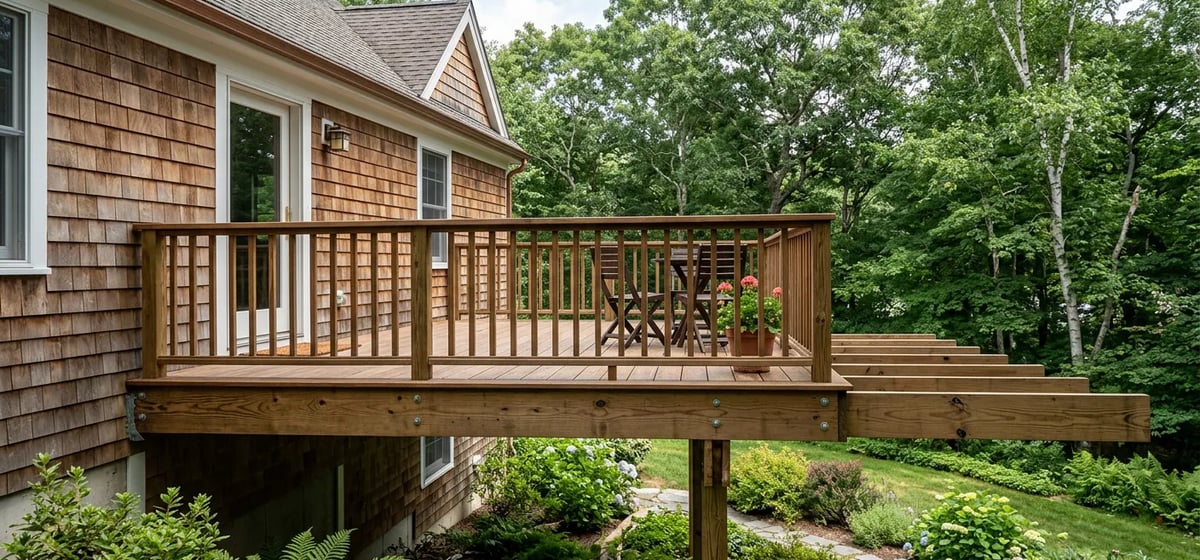
- Balconies and decks: A floating deck attached to a second story often uses cantilevered joists instead of wooden support posts. You can learn more about deck structures in our guide to Exterior: Siding, Garage & Decks.
What to watch out for
Because these sections hang in the air, they face unique challenges. The biggest issue is poor insulation. The underside of a cantilever is exposed to outside air. If the builder did not insulate the floor joists properly, the floor inside that room will feel very cold in the winter. You might even feel drafts.
Fixing a cold cantilevered floor is a common home improvement project. A contractor will typically remove the exterior paneling from the underside of the bump-out. They will then pack the cavity with spray foam insulation. Spray foam is usually the best option because it seals air leaks effectively.
Moisture is another common problem. The exposed underside is vulnerable to rain and snow. If the protective covering rots, water can get into the wood framing. This leads to wood rot and can attract termites. If you notice soft wood under your bump-out, you should check our Pest Control guide and call a professional.
Watch for sagging: If you see a balcony or bump-out tilting downward, call a structural engineer immediately. This means the internal supports are failing. You can read more about structural warning signs in our Foundation & Structure guide.
When you inspect the outside of your house, pay close attention to the seams where the cantilever meets the main wall. The caulking in these corners can dry out and crack over time. You should scrape out old caulk and apply fresh exterior silicone caulk every few years. This simple maintenance step stops water from seeping into the wall cavity.
Finally, always check your local building codes before adding a cantilever. Most cities limit how far a structure can hang over your property line. They also have strict rules about how much of the beam must remain anchored inside the house. A general rule is that two thirds of the beam must sit inside the house to support the one third that hangs outside.