What Is a Condensate Pump?
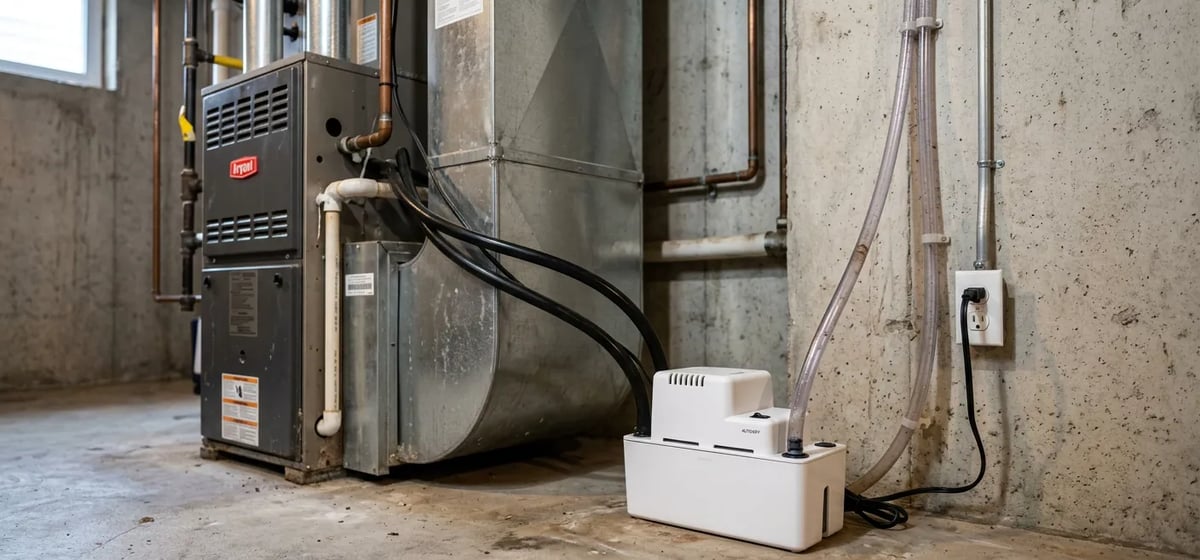
A condensate pump is a small electric device that sits on the floor next to your indoor air conditioner or high efficiency furnace. When your cooling or heating system runs, it pulls moisture out of the air. This moisture turns into liquid water. The water drips off the coils inside your unit and falls into a small pan. From there, it drains into the condensate pump.
The pump has a float switch built inside. As the water level rises in the plastic tank, the float goes up. Once the water hits a certain level, the pump turns on. It pushes the water up and out through a clear plastic tube. This tube usually goes outside your house or into a nearby drain. You need one of these pumps if your HVAC unit is in a basement or a spot where water cannot drain away using regular gravity.
Why It Matters to You
This little box protects your home from water damage. If your air conditioner runs all day during a hot summer, it can create several gallons of water. If the pump fails, that water has nowhere to go. It will overflow the small plastic tank and spill all over your floor.
A broken pump can quickly ruin nearby drywall, baseboards, and flooring. It can also create a damp environment where mold loves to grow. Many modern pumps have a safety switch wired directly into your HVAC & Climate Control system. If the pump stops working and fills up with water, this safety switch will shut off your air conditioner completely. This stops the water from overflowing, but it also means your house will get hot until you fix the pump.
Maintenance and Replacement Costs
Condensate pumps are simple machines, but they deal with standing water. This means they get dirty. Dust and dirt from the air mix with the water. Over time, this creates a slimy algae buildup inside the tank and the clear plastic drain tube. This slime can clog the pump or make the float switch stick.
You should check the pump a few times a year. You can clean it by pouring a cup of white vinegar into the tank to kill the algae. It is also smart to look at the clear plastic tube to make sure it is not kinked or clogged.
Eventually, the small motor inside the pump will burn out. Most condensate pumps last between 5 and 10 years. If you need to replace yours, the part itself is very cheap. You can buy a new pump at a hardware store for 50 to 80 dollars. If you hire a professional heating and cooling technician to supply and install the new pump, you will pay between 150 to 300 dollars. Keep in mind that prices vary based on where you live and how busy the contractors are.
Signs Your Pump Is Failing
It is easy to forget about your condensate pump until something goes wrong. Here are a few clear signs that your pump is struggling or about to fail.
- Loud noises: The pump should make a quiet humming sound when it runs. If you hear loud grinding or rattling, the motor is dying.
- Water on the floor: If you see a puddle forming around the base of your furnace or air conditioner, the pump is likely overflowing. This could quickly turn into one of those minor Home Emergencies if you do not catch it early.
- Air conditioner refuses to turn on: If your house is hot and your thermostat is set to cool, check the pump. The safety switch might have shut the system down because the tank is full of water.
- Constant running: The pump should only turn on for a few seconds at a time. If it runs nonstop, the drain tube might be clogged or the float switch is stuck.
Replacing a failing pump early saves you from a messy cleanup later. Taking five minutes to check it during the summer will give you peace of mind.