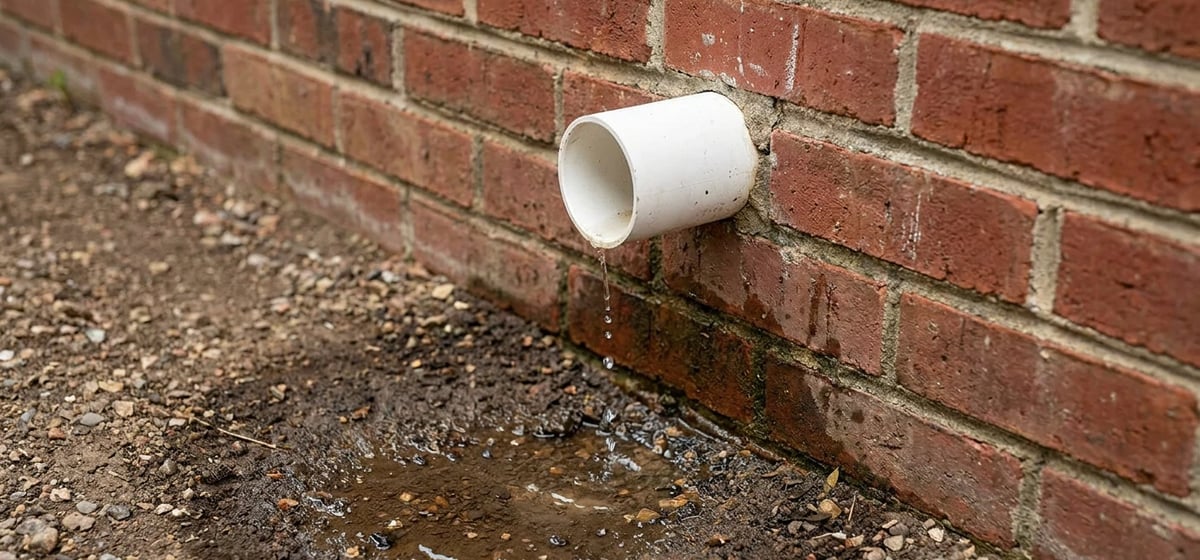
What is a condensate drain line?
A condensate drain line is a small plastic pipe connected to your indoor air conditioning unit. The term condensate comes from the Latin word condensare which means to make thick. It describes how invisible water vapor turns into liquid water drops. When your air conditioner cools your home, it pulls humidity out of the air. This moisture drips into a drain pan and flows outside through the condensate drain line. Most homes use standard white PVC pipe for this job. You will usually see it running from your indoor unit to the outside of your house.
Why it matters to you
This little pipe does a massive amount of work during the hot summer months. A standard air conditioner can pull 5 to 20 gallons of water out of your air every single day. All that water needs a safe place to go. If the pipe does its job, you stay cool and dry. If the pipe fails, that water ends up inside your house. Water damage from a backed up AC unit can ruin ceilings, warp floors, and cause mold to grow. Keeping this line clear is a critical part of maintaining your HVAC & Climate Control system.
Where you run into it
You will find the start of the condensate drain line right next to your indoor AC unit. This unit might sit in your attic, a hallway closet, or your basement. The pipe usually drops down into the floor or runs along a wall to reach the outside. You will see the other end of the pipe sticking out of your exterior wall near the ground. It usually drips water onto a splash block or into a garden bed when the AC is running. Sometimes, the line ties directly into your home Plumbing system under a bathroom sink.
What to watch out for
Because the pipe stays dark and damp, it is the perfect home for algae, mold, and dirt. Over time, this slime builds up and forms a clog. When the pipe clogs, the water backs up into the drain pan. Here are a few signs that you have a problem.
- Your air conditioner suddenly shuts off and will not turn back on.
- You see a puddle of water around your indoor unit.
- Water spots appear on the ceiling right below your attic AC unit.
- The pipe outside stops dripping water while the AC runs.
- You smell a musty odor coming from your air vents.
Costs and repairs
You can often clear a simple clog yourself with a wet vacuum. You just attach the vacuum hose to the outside pipe and suck the slime out. If you need to hire a professional, the cost is usually not too bad. A basic service call to clear a clogged condensate drain line costs 100 to 200 dollars. If the pipe is broken or needs to be completely replaced, you can expect to pay 200 to 400 dollars. Keep in mind that prices vary based on where you live and how hard it is to reach the pipe. Ignoring a clog can lead to major water damage that costs thousands of dollars to fix, turning a small issue into one of those stressful Home Emergencies you want to avoid.