What Drywall Is
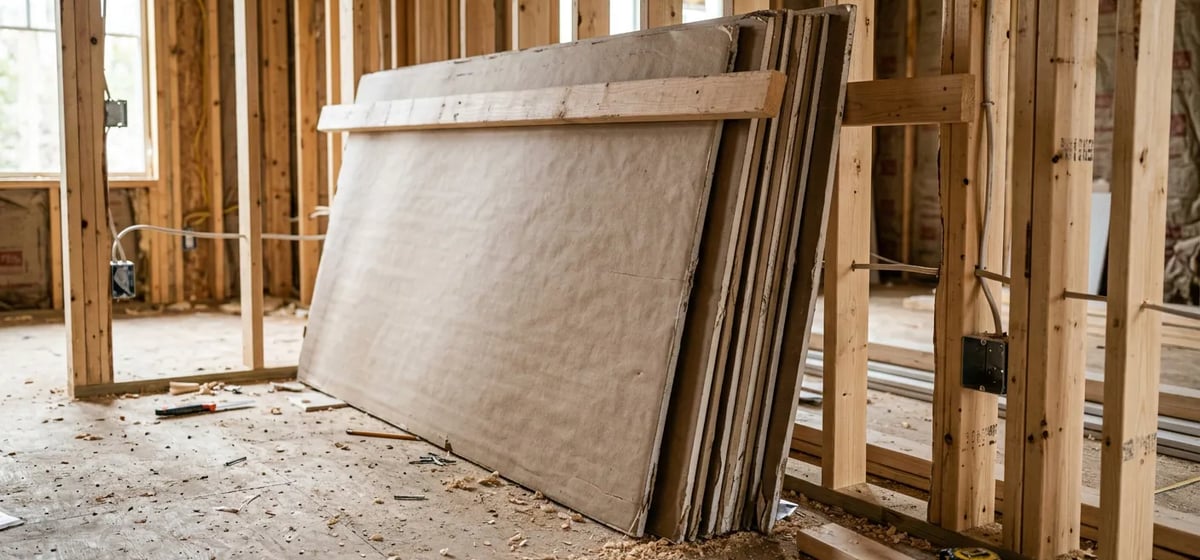
Drywall is the flat building material that makes up almost every interior wall and ceiling in your house. It has a hard plaster core made of crushed gypsum rock. This core is tightly sandwiched between two thick sheets of heavy paper. The US Gypsum Company invented this material in 1916 to replace old fashioned wet plaster. Builders loved it because they could put it up completely dry. This saved weeks of waiting for wet plaster walls to cure before painting. Today, you might also hear contractors call it wallboard, gypsum board, or Sheetrock.
Installing drywall takes multiple steps. First, workers screw the heavy panels directly to the wooden studs that frame your house. Next, they cover the joints between the panels with paper tape and a wet compound called mud. They let the mud dry, sand it smooth, and repeat the process several times. This makes the seams disappear so the wall looks like one solid piece.
Why It Matters to You
Drywall does much more than just give you a smooth surface to paint. It acts as a crucial fire barrier between rooms. The gypsum core naturally holds small amounts of water. If a fire starts in a room, that trapped water turns to steam and slows the flames down. Drywall also hides all the messy wires, insulation, and pipes running through your home.
If you want to hang heavy things like floating shelves, large mirrors, or a big television, you need to understand your drywall. Standard residential drywall is half an inch thick. This material isn't strong enough to hold heavy items on its own. The heavy object will simply rip the screws right out of the crumbly gypsum core. You always have to use special wall anchors or find the solid wooden studs behind the drywall to secure heavy things safely.
Different Types You Might See
Not all drywall is exactly the same. Builders use different specialized types for different rooms in your house.
- Regular drywall: This is the standard white board used in living rooms, hallways, and bedrooms.
- Moisture resistant drywall: Contractors often call this green board because of its green paper facing. They use this in bathrooms and kitchens where humidity is high.
- Fire resistant drywall: Known in the trades as Type X. This board is thicker and much denser. Building codes usually require it on the wall shared between your house and an attached garage.
- Soundproof drywall: This is a specialty board made with extra layers of gypsum and special glue to block noise between rooms.
What to Watch For
Drywall is tough, but it has two main enemies. The first enemy is water. If your roof leaks or a pipe bursts, your ceiling and walls will act like a sponge. The gypsum core will swell, crumble, and grow mold very quickly. You can learn more about handling active leaks in the Plumbing section. Once drywall gets thoroughly soaked, you usually have to cut it out and replace it.
The second enemy is structural shifting. As your house settles over the years, the wood framing moves slightly. This movement can cause thin, jagged cracks in your walls. You will usually see these cracks form above the corners of doors and windows. Small hairline cracks are totally normal. However, large gaps might mean you have an issue with your Foundation & Structure.
Costs and Repairs
Fixing wall damage is a very common homeowner task. Small holes from picture nails or thumbtacks are easy to patch yourself with a cheap tub of spackle. Larger holes, like damage from a doorknob swinging open too hard, require cutting out the bad section and putting in a patch piece.
If you hire a professional handyman to fix a doorknob hole and paint it to match, expect to pay 150 to 300 dollars. If you are finishing a basement or building out a new room, a standard sheet of drywall costs 15 to 25 dollars at a local hardware store. Labor to hang, tape, and finish new drywall usually costs 1.50 to 3.00 dollars per square foot. Keep in mind that prices vary based on where you live, so you won't always see the exact same rates. For bigger renovation projects, it helps to review the Interior: Paint, Drywall & Trim guide.