What It Is
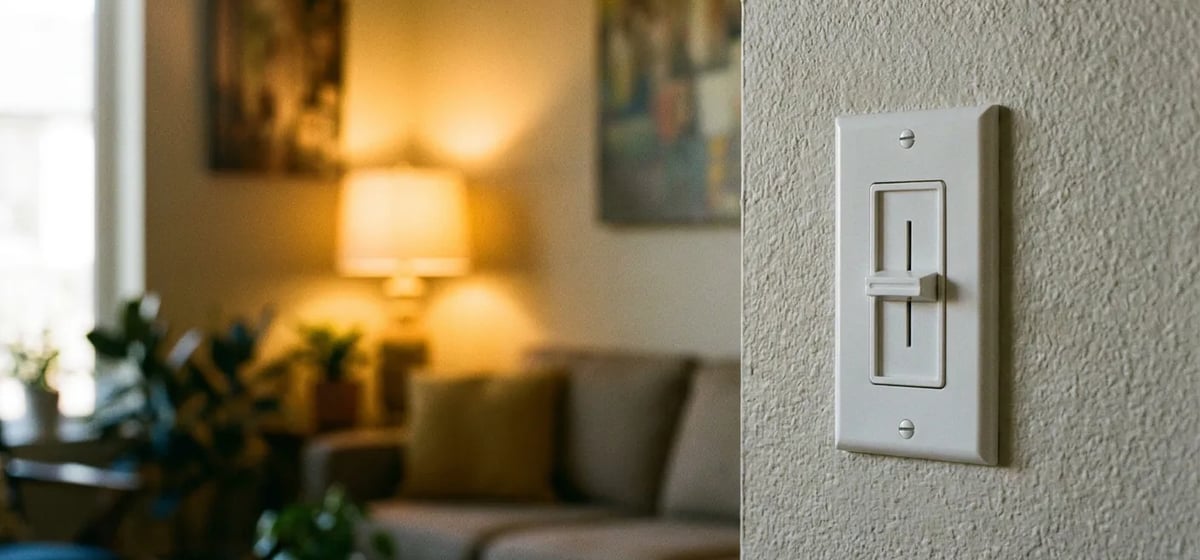
A dimmer switch is a wall dial or slider that lets you control how bright your lights are. It easily replaces a standard light switch in your wall box. Instead of just turning the power completely on or off, it adjusts the flow of electricity to the fixture. It actually works by rapidly turning the electrical current on and off hundreds of times a second. Your eyes cannot see this fast switching, so the light just looks softer and less intense.
The word dim comes from Old English meaning dark or obscure. The first modern rotary versions were invented in 1959 by a man named Joel Spira. He later founded Lutron Electronics, a major lighting brand you will still see in every hardware store today.
Why It Matters to You
A dimmer switch gives you total control over the mood and feel of a room. You can turn the lights all the way up when you need to clean, cook, or read a book. Later in the evening, you can lower them to watch a movie or eat a quiet dinner. This simple change makes your living spaces much more flexible and comfortable.
Using these switches also saves you money. When you lower the brightness, your lights use less electricity. This small daily change adds up on your monthly power bill. Running your lights at a lower power level also makes the bulbs last a lot longer. You will not have to drag out the heavy step ladder to replace high ceiling bulbs nearly as often. This is a great, low-cost project to tackle during Your First Month as a Homeowner.
Common Types and Costs
You can find a few different styles at any home improvement store. The prices below are typical US ballpark costs, though local ranges vary based on the brand and finish you choose.
- Rotary dials: This is the classic round knob you push to turn on and spin to adjust the brightness. They usually cost 10 to 20 dollars.
- Sliders and rockers: This style features a small lever you push up and down. Many have a separate wide switch to turn the power on and off. These run 15 to 30 dollars.
- Smart switches: These connect to your home internet router. You can control them with your smartphone or a voice assistant. They cost 30 to 60 dollars each.
If you want to install one yourself, make sure you understand basic Electrical safety. Always turn off the breaker at the main panel first. If you hire a licensed electrician to put in a few new switches, expect to pay 75 to 150 dollars an hour for their labor, plus the cost of the parts.
What to Watch For
The biggest issue homeowners face is matching the switch to the lightbulb. Older switches were made for hot incandescent bulbs. Today, most of us use LED bulbs because they save a lot of energy. If you put a standard LED bulb on an old dimmer, the light will probably flicker, buzz, or flash like a strobe light.
You also need to make sure the switch itself is rated for modern LEDs. If you are moving into an older house, the existing dials might be decades old. You might need to swap them out to stop the lights from buzzing. Finally, pay close attention to three-way switches. If two different wall switches control the exact same hallway light, you need to buy a specific three-way dimmer to make the setup work safely. Do not try to wire a standard single-pole switch into a three-way circuit.