What is a fixture?
A fixture is any item that's permanently attached to your house or the land it sits on. The word comes from the Latin word fixus, which means fastened or fixed. People have used this term in real estate law for centuries to decide what actually belongs to a property. If you need tools to remove an item, or if taking it down causes damage to the wall or ceiling, it's almost certainly a fixture. This includes things like ceiling fans, built-in bookshelves, bathroom vanities, and towel bars. Items that just plug into the wall or sit on the floor, like a freestanding microwave or a living room sofa, are called personal property. You can easily pack up personal property and take it with you, but a fixture stays put.
Why it matters when buying or selling
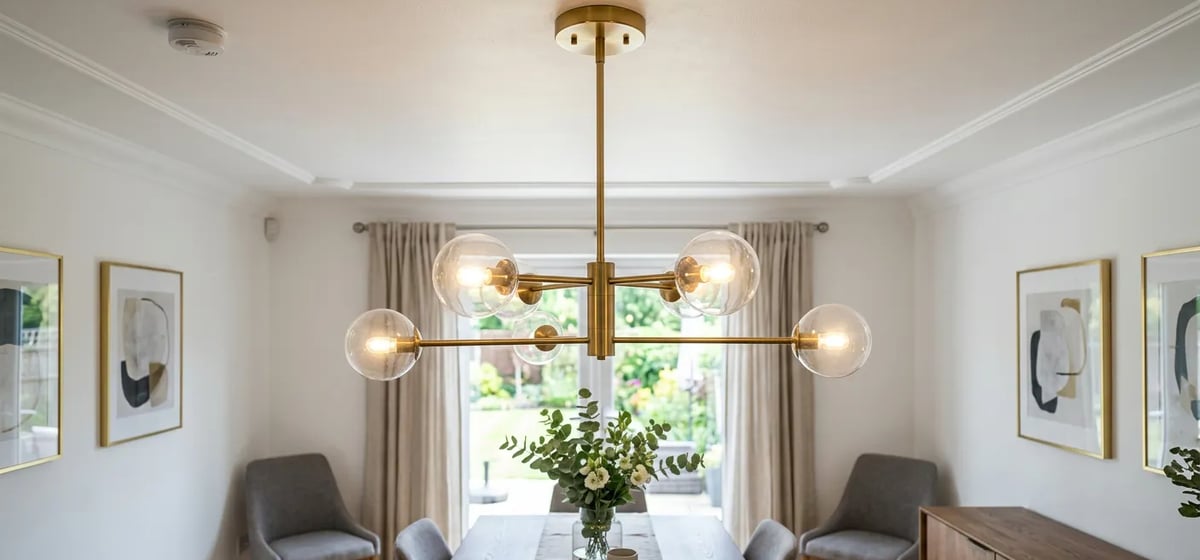
You'll run into this word a lot if you're exploring Selling Your Home. In real estate, the law expects all fixtures to stay with the house when you move out. If you take your favorite dining room chandelier with you without telling the buyer, you could face legal trouble. Buyers expect to get the house exactly as they saw it, complete with all attached items. If you want to keep a specific attached item, you must replace it before you list the house. You can also clearly state in the sales contract that the item doesn't stay. Communication is key to avoid delays at the closing table.
Common types around your home
Fixtures exist in every room of your house. They aren't just decorative. They are the permanent features that make a house function.
- Electrical items: Hardwired ceiling lights, wall sconces, ceiling fans, and smart thermostats.
- Plumbing parts: Toilets, sinks, bathtubs, and faucets.
- Kitchen features: Built-in dishwashers, custom cabinets, and kitchen islands fastened to the floor.
- Outdoor elements: In-ground plants, fences, and attached deck lighting.
How to tell if something is a fixture
Courts and real estate agents use a simple test to decide if an item is a fixture. First, they look at how the item is attached. If it's nailed, screwed, glued, or wired into the property, it's a fixture. Second, they look at adaptation. If an item is custom built for a specific spot, like custom window blinds or a built-in window seat, it counts as a fixture even if it's easy to remove. Finally, they look at the agreement between the buyer and seller. The written contract always has the final say. If you ever have a doubt, write it down in your paperwork.
Replacing and upgrading
Upgrading fixtures is a great way to update your home. Swapping out old bathroom faucets or dining room lights can make a space feel brand new. Costs to replace these items vary widely based on your location and the quality of the materials. A basic ceiling light might cost 50 to 150 dollars for the part. Hiring a professional to install it adds another 100 to 250 dollars. A new bathroom vanity could cost 300 to 1,500 dollars, plus installation labor. If you plan to hire someone to do the work, you can learn more about Hiring Contractors & What Things Cost to help you budget. Keep in mind that replacing hardwired electrical or plumbing parts often requires a permit from your city.