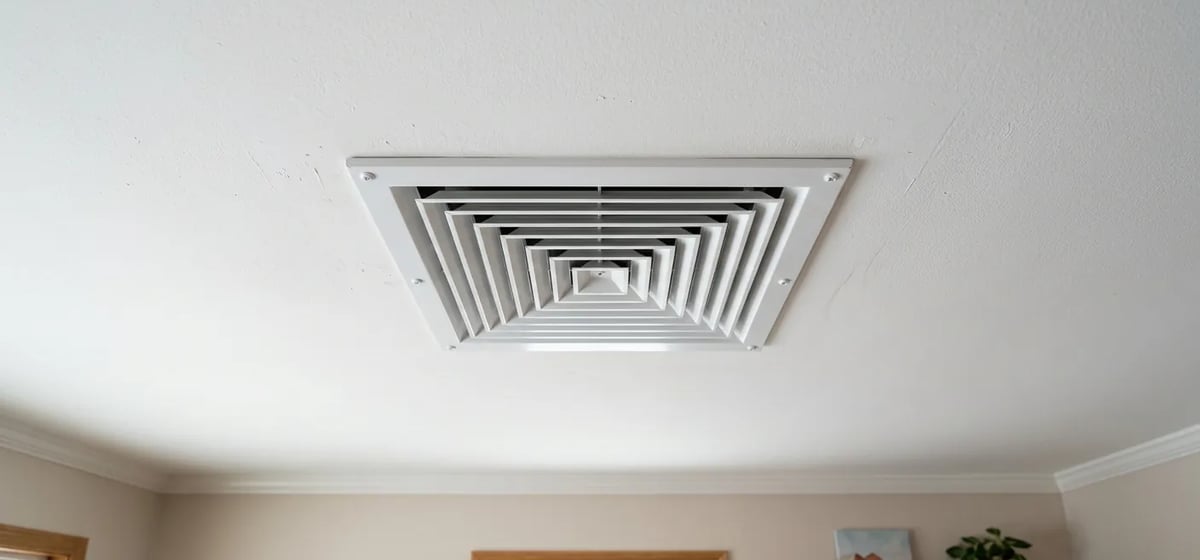
What Is a Diffuser?
A diffuser is a specific type of vent cover that sits over the duct openings in your home. Its main job is to spread warm or cool air evenly across a room. Unlike a basic register that just shoots air straight out, a diffuser has angled fins. These fins point in multiple directions to scatter the airflow. The word actually comes from the Latin word diffundere, which means to pour out or scatter. Builders started using them heavily when forced air heating became popular in American homes. You'll usually see them mounted flat against your ceiling. They act as the final step in your home heating and cooling cycle.
Why Diffusers Matter to You
If your home has central air conditioning or heating, you rely on a good HVAC & Climate Control system to stay comfortable. The diffuser is the final piece of that puzzle. It mixes the new conditioned air with the existing air in the room. This mixing action prevents hot and cold spots from forming in different corners. A good diffuser also keeps the air from blowing directly onto your head while you sit on the couch or sleep in bed. It makes your system run much quieter by reducing the loud whistling sound that sometimes comes from narrow vents. When air flows smoothly, your system doesn't have to work as hard to keep you comfortable.
Where You Find Them in Your Home
You will spot diffusers mostly on ceilings. They're very common in finished basements with drop ceilings. You also see them in modern homes where the main ductwork runs through the attic space. Sometimes you might find them placed high up on a wall instead. They come in round, square, or rectangular shapes to match different room designs. You can buy them in both metal and plastic materials. Metal covers are much stronger and look nicer. Plastic covers are great for wet areas because they will never rust if you put them in a damp bathroom or a laundry room.
What to Watch For
Over time, diffusers can get dirty or damaged. Paying attention to them helps keep your air clean. Here are a few things to keep an eye on around your house:
- Dust buildup: The angled fins catch dust, cobwebs, and pet hair easily. You should vacuum them with a brush attachment every few months.
- Condensation: In the summer, cold air hitting warm room air can make the metal sweat. This sometimes leads to water drips or mold spots on the ceiling.
- Rust: Metal diffusers in bathrooms or kitchens can rust from high humidity. Once they rust, it's usually better to replace them than to paint them.
- Stuck dampers: Many diffusers have a small lever inside to control how much air comes out. These levers can get stuck if they rust or fill with heavy dust.
Cost to Replace a Diffuser
Replacing a broken or ugly diffuser is a very easy project. You just need a basic screwdriver and a sturdy step ladder. The parts themselves are cheap and easy to find. If you are updating your Interior: Paint, Drywall & Trim, putting in fresh white diffusers makes the whole room look newer. A standard white steel diffuser costs about 15 to 35 dollars at a local hardware store. Decorative metal covers or heavy duty commercial styles can cost 50 to 120 dollars each. If you hire a local handyman to swap out all the old diffusers in your house, expect to pay 200 to 400 dollars for the labor alone. Keep in mind that prices vary based on your exact location and the materials you choose. Always measure the actual hole in your ceiling before you go to the store, and do not just measure the outside edge of the old cover.