
Map Your House
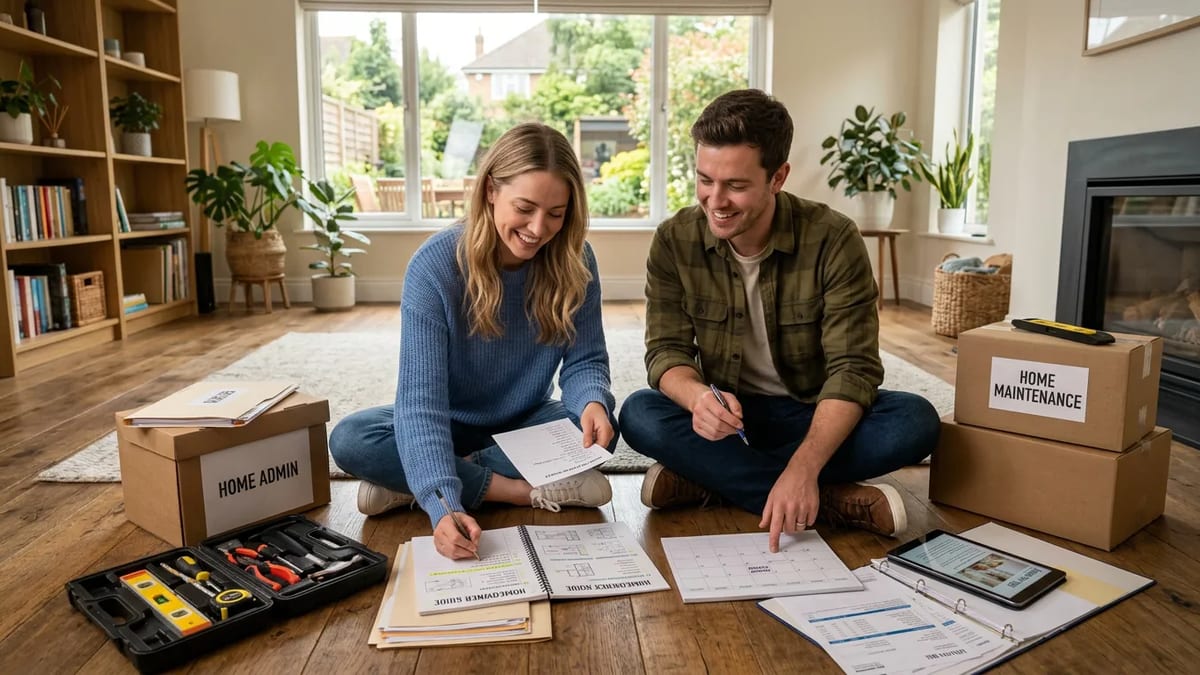
You unpacked the boxes. You changed the locks. Now you need to learn the bones of your house. Take an afternoon to map out your main utility panels and shutoff valves. If a pipe bursts at 2 AM, you do not want to be running around with a flashlight trying to find the water main. Walk through the house and label your electrical breaker box. Test every switch and outlet to see what breaker controls it. You can buy a cheap outlet tester for about $10 to $15 at any hardware store. Write down the location of your main water shutoff and your gas shutoff.
Establish a Plumbing Baseline
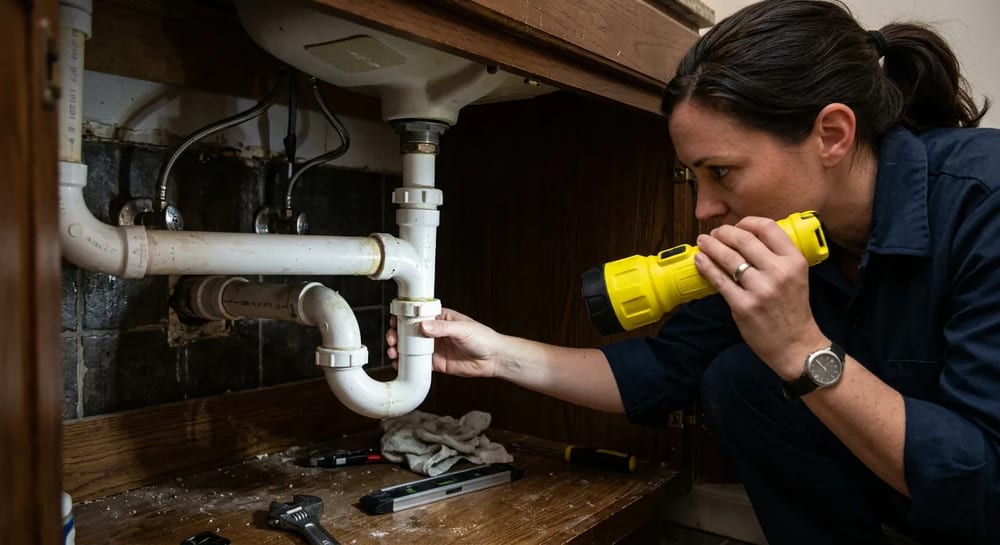
Your house might have hidden water leaks. You want to find them before they rot your floors. Open every cabinet under a sink and shine a flashlight at the pipes. Look for water stains, mold, or active drips. Flush every toilet and listen. If a toilet runs for a long time, you might need a new flapper valve. These cost $5 to $15 and take five minutes to replace. Check the water pressure in your showers. If it feels weak, you might have hard water buildup in the showerhead.
Read more in our guide to Plumbing.
Reset Your Climate Control
You have no idea when the last owner changed the air filters. Start fresh. Find the return vents and the main air handler. Pull out the old filters and put in new ones. Write the date on the edge of the new filter with a marker. A standard pleated filter costs $10 to $20. While you are at it, write down the make, model, and serial numbers of your furnace and AC unit. You will need these numbers when you order parts or call a repair tech. Check the outdoor AC unit. Clear away any dead leaves or bushes so the unit has at least two feet of breathing room.
Learn more about maintaining these units in our HVAC & Climate Control guide.
Upgrade Your Home Security
You probably changed the locks during your first week. Now you should look at the rest of your security setup. Walk around your house at night. Look for dark corners near doors and windows. Installing motion sensor floodlights is a cheap way to deter intruders. You can also add a video doorbell or smart cameras to monitor your driveway and porches.
See our Home Security page for more setup ideas.
| Security Upgrade | Estimated Cost | Time to Install |
|---|---|---|
| Motion sensor floodlights | $40 to $100 per light | 1 to 2 hours |
| Video doorbell | $100 to $250 | 30 to 60 minutes |
| Smart deadbolt lock | $150 to $300 | 1 hour |
| Window security film | $20 to $50 per window | 30 minutes |
Keep in mind that prices vary widely by region, the scope of the job, and the age of your home.
Inspect the Exterior and Drainage
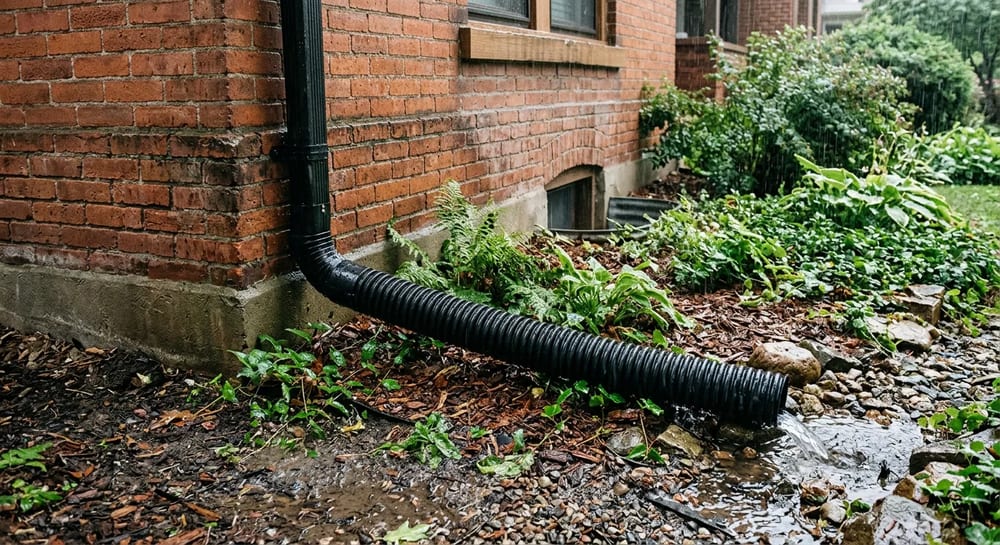
Water is the biggest enemy of your house. The best time to inspect your exterior is during a heavy rainstorm. Grab an umbrella and walk around the outside of your house. Look at your gutters. Are they overflowing? Is water pooling around the foundation? Your downspouts should push water at least four to six feet away from the house walls. If water sits against your foundation, it will eventually find its way into your basement or crawlspace. You can buy plastic downspout extensions for $10 to $20 at a home center.
Read our Landscaping, Drainage & Outdoor guide for tips on fixing bad yard slopes.
Build Your Maintenance Budget
Things will break. Appliances will fail. You need a cash reserve for home repairs. A common rule is to save 1 to 2 percent of your home purchase price every year for maintenance. If you bought a $300,000 house, aim to save $3,000 to $6,000 a year. Put this money in a separate savings account. Do not touch it for groceries or vacations.
Keep in mind that prices vary widely by region, the scope of the job, and the age of your home. If you hire pros, expect to pay more. Read more in our guide to Hiring Contractors & What Things Cost.
Test Your Safety Alarms
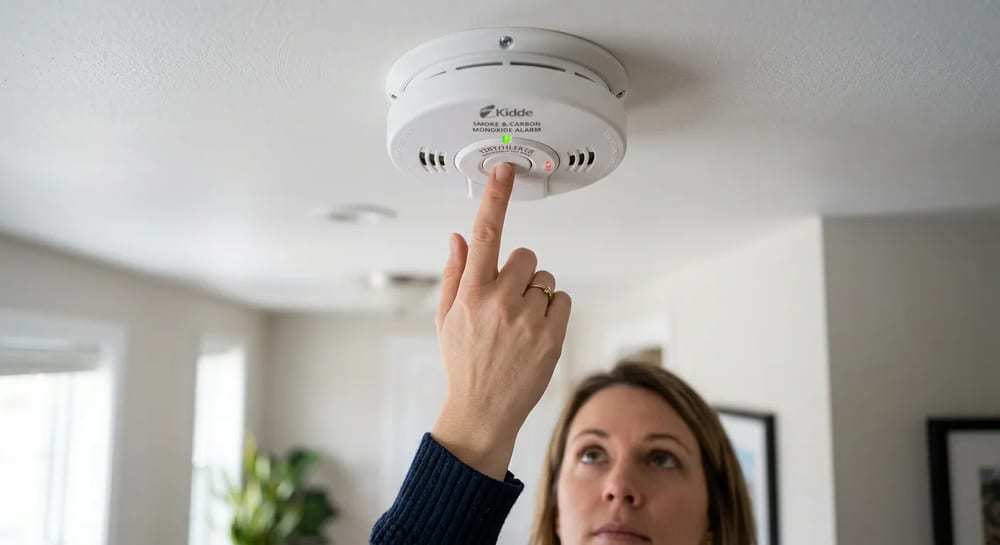
Do not trust the old smoke detectors. Press the test button on every smoke and carbon monoxide alarm in the house. If they do not beep loudly, replace the batteries. Smoke detectors expire after 10 years. Take them down and look at the date printed on the back. If they are older than 10 years, throw them away and buy new ones. A new combination smoke and carbon monoxide detector costs $30 to $50. Place one inside every bedroom, outside every sleeping area, and on every level of the home.
Meet the Neighbors and HOA
A good neighbor is worth their weight in gold. Take a walk down your street and introduce yourself. Neighbors can tell you the history of your house, recommend good local plumbers, and keep an eye on your place when you travel. If you live in a neighborhood with a Homeowners Association, read the rulebook. You need to know the rules before you paint your front door or build a fence.