What It Is
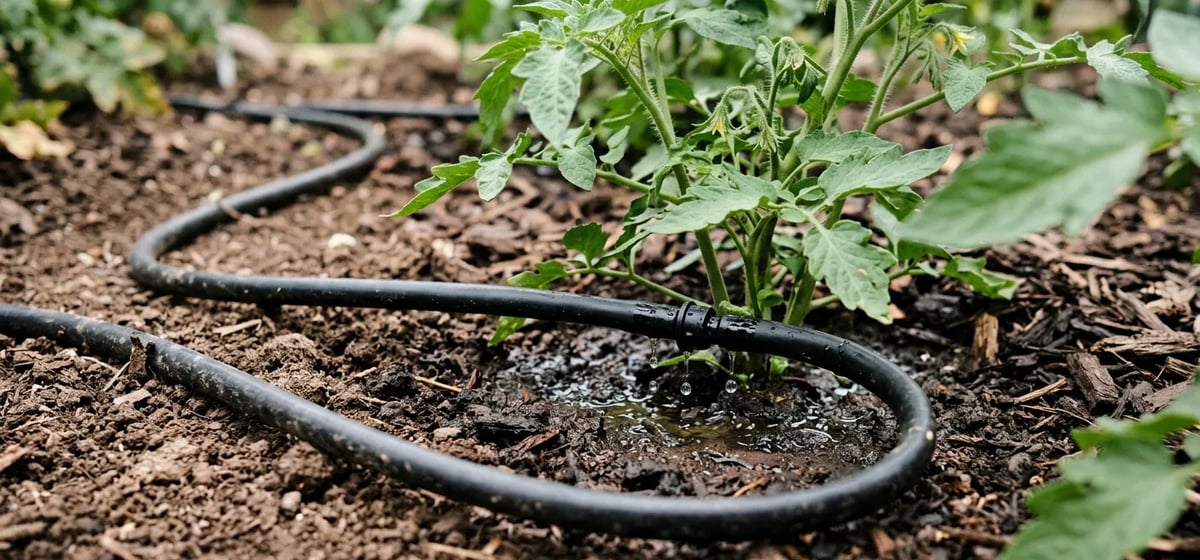
A drip irrigation system is a network of small plastic tubes laid out in your garden beds. The tubes have tiny holes called emitters. These holes slowly leak water directly into the soil right at the roots of your plants. The term perfectly describes the slow, dripping action of the water release. Agricultural engineers developed modern plastic drip systems in the 1950s to grow crops in dry desert climates. Today, they're very common in home gardens across the country.
Instead of spraying water everywhere like a standard lawn sprinkler, a drip system puts water exactly where you need it. You connect the main tube to an outside faucet or a dedicated irrigation valve. You usually attach a simple battery-powered timer to the faucet. This timer turns the water on and off automatically, so you never have to remember to water the garden. The system also uses a pressure regulator. This small part makes sure the water doesn't blast through the tubes too fast and blow the connections apart. The water travels through the main line and branches off into smaller tubes that snake around your bushes, flowers, and vegetables.
Why It Matters to You
Drip irrigation solves several common yard problems at once. First, it saves a massive amount of water. Because the water goes straight into the soil, very little of it evaporates into the air. This lowers your monthly water bill. Second, it keeps weeds from growing. Sprinklers water the empty spaces between your plants, which feeds weeds. Drip tubes only water your actual plants.
It also keeps your plants healthier. When sprinklers get plant leaves wet, it can cause fungal diseases to grow. Drip systems keep the leaves dry. If you want to improve your yard, adding drip lines is a major upgrade. You can learn more about managing your yard on our Landscaping, Drainage & Outdoor page.
How Much It Costs
Setting up a drip system is surprisingly affordable, especially if you do the work yourself. You can buy a basic starter kit at a hardware store for 30 to 75 dollars. This usually covers a small garden bed or a few patio pots. If you have a larger yard, you'll need more tubing and parts.
Some homeowners tie their drip lines directly into their underground sprinkler systems. This costs more upfront but makes watering completely automatic. A plumber or irrigation specialist might charge 75 to 150 dollars an hour for this kind of custom work.
If you hire a professional landscaper to design and install a complete system for your whole yard, you can expect to pay 400 to 1,200 dollars. Keep in mind that prices vary based on where you live and the size of your garden. If you are debating whether to tackle this yourself, check out our DIY vs. Hiring a Pro guide.
Maintenance Tips
Drip systems are easy to run, but they do need a little attention to keep working well. The tiny holes in the plastic tubes can clog with dirt or hard water minerals. You also need to watch out for damage. Animals sometimes chew through the plastic to get a drink, and garden shovels can easily cut the lines.
- Check your lines once a month while they're running to make sure every plant is getting water.
- Clean the main water filter at the start of every spring.
- Look for puddles that might mean a tube has a large crack or a loose connection.
- Flush the lines by opening the ends and letting water run out to clear any trapped dirt.