What is a drip pan?
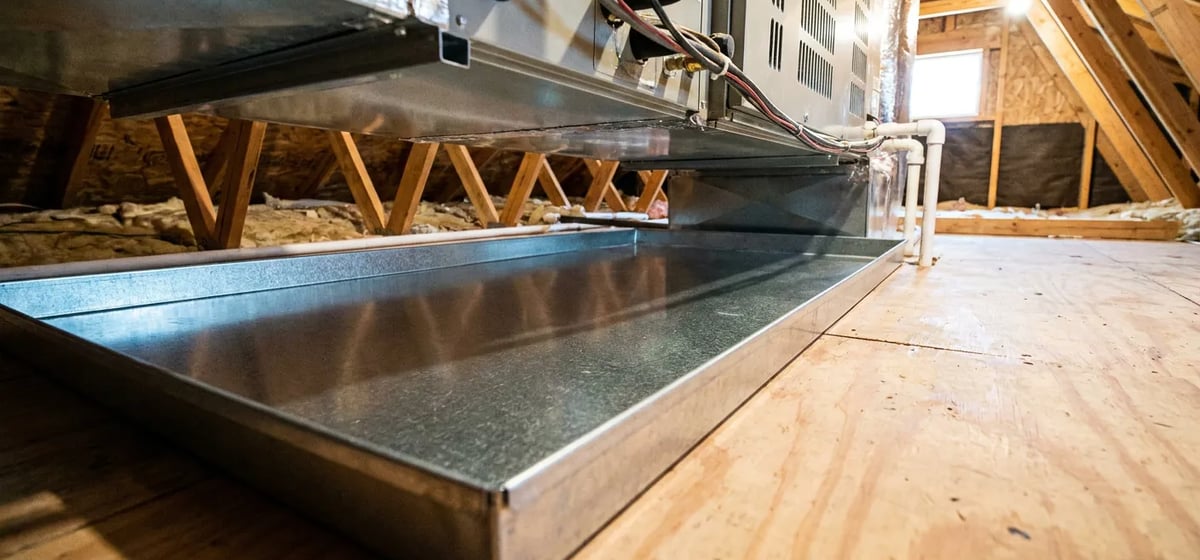
A drip pan is a shallow tray made of metal or plastic. It sits flat under heavy items in your house that use water. The word pan comes from the Old English word panne which means a broad and shallow container. Builders started adding these trays under indoor air conditioners in the mid 1900s to stop water damage. Today, you'll find them under several machines in your home. They act as a safety net. If a pipe leaks or a machine breaks, the tray catches the water before it ruins your floors. Metal pans are often made of galvanized steel so they don't rust. Plastic pans are made of thick material so they don't crack under heavy weight.
Why it matters to you
Water is the worst enemy of a dry house. A slow leak can destroy drywall, warp wood floors, and cause mold to grow behind your walls. If your air conditioner is in the attic, a leak can ruin the ceiling below it. A simple tray catches that water and routes it away. This gives you time to notice the problem and fix it. A tray costs very little but saves you thousands of dollars in home repairs. Home insurance companies hate slow leaks. They might even deny a claim if a leak went unnoticed for months. A drip pan brings the leak to your attention much faster. When you learn about HVAC & Climate Control, you'll see that these pans are a key part of your cooling system.
Where you will find them
You probably have a few drip pans hidden around your house right now. Look under your heavy equipment.
- Air conditioners: The indoor unit creates condensation. A primary pan catches this normal dripping water and sends it outside through a pipe. An emergency drain pan sits under the whole unit just in case the first pan overflows.
- Water heaters: A metal or plastic tray sits under the tank. If the tank rusts and leaks, the water goes into the tray instead of your garage or basement floor.
- Washing machines: Many people place a large plastic tray under their washer. This is very important if your laundry room is on the second floor.
- Refrigerators: A small pan sits at the very bottom of your fridge. It catches defrost water, which then evaporates into the air.
What to watch for
You should check your drip pans a few times a year. Look at the tray under your water heater and your indoor AC unit. These trays should be completely dry. If you see standing water, you have a problem. The machine is leaking, or the drain pipe attached to the pan is clogged.
You can sometimes clear a clogged AC drain pipe yourself. Just attach a wet vacuum to the pipe outside your house and suck out the clog. Also check the pans for rust or cracks. A cracked plastic tray won't hold water. A rusted metal tray will eventually get holes. Clean dirty pans with a rag and vinegar to stop mold.
Costs and replacements
Replacing a drip pan is usually a cheap project. You can buy a new plastic washing machine tray at a hardware store for 20 to 40 dollars. You just slide it under the washer. A new metal water heater pan costs about 20 to 50 dollars. However, lifting a heavy water heater to put a pan under it requires a plumber. This labor can cost 150 to 300 dollars. Replacing an AC drain pan is also harder. The technician has to lift the AC unit to slide the new pan underneath. Expect to pay 200 to 600 dollars for this job. Prices vary based on your location. Checking these pans is a smart habit to build when dealing with your Appliances and Plumbing.