What Is a Drip Loop?
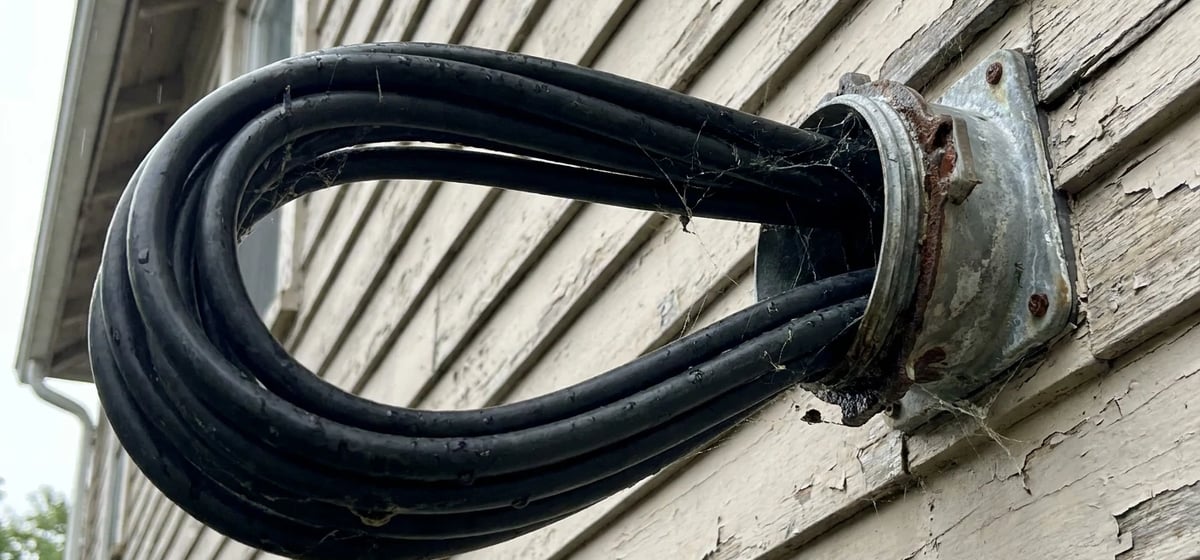
A drip loop is a simple U-shaped bend in an outdoor electrical wire right before it enters your house. This curve forces rainwater to run down to the lowest part of the loop. Gravity takes over from there. The water falls to the ground instead of sliding along the wire and into your home. Electricians coined this descriptive term in the early 20th century when overhead residential power lines became standard. It describes exactly what the wire does by creating a loop where water can drip away.
During a heavy rainstorm, water clings to the outside of the thick rubber casing on your power lines. The wind pushes that water along the wire toward your house. The drip loop stops that forward motion completely. You'll usually see this setup where the main overhead power lines connect to your roof or siding. The wires drop down slightly below the entry point and then curve back up into the metal pipe on your house. This pipe is called the weatherhead. Without this downward curve, water would just follow the straight wire directly into the pipe.
Why It Matters to Your Home
Water and electricity are a dangerous mix. If rain travels down your main power line and enters the weatherhead, it flows straight into your breaker box. This can cause severe damage to your Electrical system. It can rust your breakers, short out your wiring, or even start a fire inside your walls.
A missing drip loop is a major safety hazard. It also leads to expensive repairs if water ruins your panel. The simple act of bending the wire prevents thousands of dollars in water damage. It keeps your family safe and ensures your power stays on during heavy storms.
Where You Will Find It
The most important drip loop is at the electrical service mast on the outside of your house. This is where the utility company connects their wires to your home. However, you'll find this same concept used in a few other places around your property.
- Internet and cable wires: Technicians leave a small loop in coaxial cables or fiber optic lines before they drill through your exterior wall.
- Outdoor outlets: Extension cords plugged into outdoor sockets should drop below the outlet to keep rain out of the plug.
- Air conditioning units: The thick wire connecting your outdoor AC condenser to the power box should have a droop in it to keep rain out of the electrical housing.
- Sprinkler systems: Wires running to outdoor irrigation controllers often have a loop to keep moisture away from the circuit board.
What to Watch For
Over time, extreme weather, falling branches, or heavy ice can pull on your power lines. This tension can pull the drip loop tight, ruining the U-shape. You might also notice the wires sagging too close to your roof or the ground. Take a look at your weatherhead from the ground a few times a year. Make sure the wires still dip below the entry pipe.
If you spot a problem, you need to know who owns the wires. The utility company usually owns the wires coming from the street. They'll fix issues with those specific lines for free. You own the weatherhead, the metal mast, and the wires going into your house. If the mast is bent or the weatherhead is broken, you'll need to hire an electrician.
Expected Repair Costs
If an electrician needs to rebuild your service mast or fix the connection point to restore the drip loop, expect to pay between $300 to $800. Keep in mind that ranges vary based on your location and the cost of local permits. If water has already damaged your breaker box, a full panel replacement costs $1500 to $3000. Catching a missing loop early is one of the best ways to keep your home safe and avoid these high bills. For more details on budgeting for these fixes, check our guide on What Home Repairs Cost.