What a Trap Primer Is
Every drain in your house has a curved pipe underneath it called a trap. This curve holds a small pool of water. That water acts like a plug. It stops gross sewer gases from coming back up the pipe and into your home. Sinks and showers get used every day, so their traps stay full. But a floor drain in your basement, garage, or laundry room might sit dry for months. That is where a trap primer comes in.
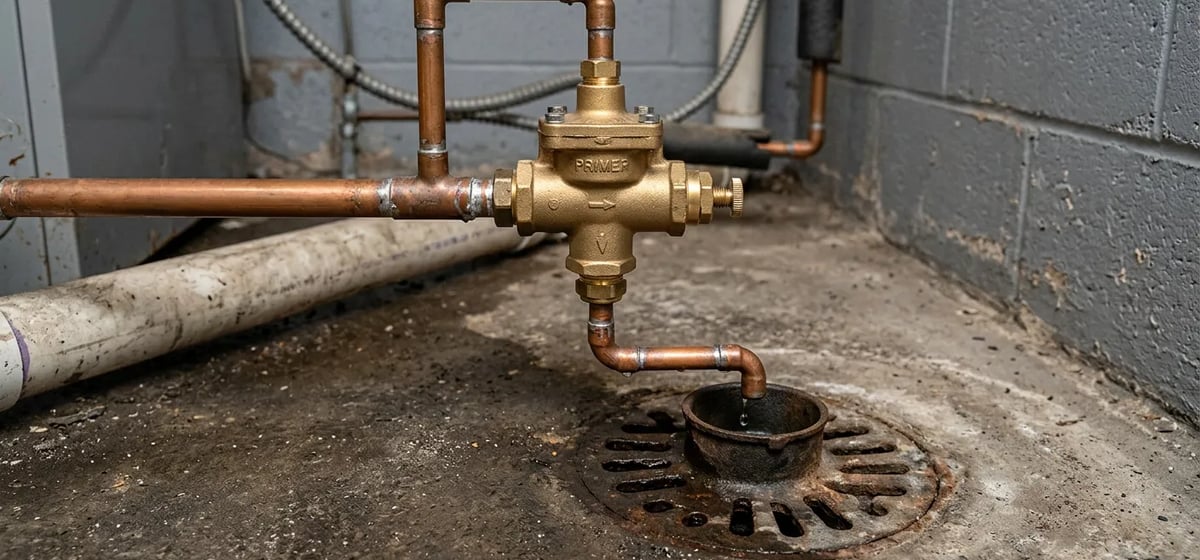
A trap primer is a small plumbing valve. It usually connects to a cold water pipe near the drain. Plumbers install them in a few different ways. The most common type is a pressure drop primer. Every time you turn on a nearby faucet or flush a toilet, the pressure in the water pipe changes. The trap primer feels this change and squirts a tiny bit of water through a small tube into the floor drain. Another type is an electronic trap primer. This uses a timer to shoot water into the drain at set times, like once every 24 hours. Both types do the exact same job. They keep the water seal full so you never have to think about it.
Why It Matters to You
If a floor drain dries out, you will know it. Sewer gas smells like rotten eggs. It can quickly fill your basement and spread through your whole house. If you are dealing with bad Smells & Odors, a dry floor drain is often the culprit.
Sewer gas is not just stinky. It can also carry harmful bacteria, methane, and hydrogen sulfide. Breathing this in can give you a headache or make you feel sick. A working trap primer solves this problem automatically. You do not have to remember to pour a bucket of water down the basement drain every few weeks. It protects your indoor air quality. It also keeps pests like sewer flies and roaches from crawling up the dry drain pipe and getting inside your house.
How to Spot Trouble
Trap primers are mechanical parts, and they eventually wear out. Hard water buildup can clog the tiny valve. A rubber gasket inside can dry out and crack. When a trap primer fails, it usually does one of two things. It either stops squirting water entirely, or it gets stuck open and leaks constantly.
Here is what to watch for:
- A strong rotten egg smell near your floor drain.
- A constant hissing sound coming from the small pipes near your ceiling.
- A puddle of water forming around your basement floor drain when it is not raining.
- A sudden spike in your monthly water bill.
If you suspect a problem, you can test it. Stand near the trap primer and have someone flush a nearby toilet. You should hear a quick spurt of water. If you hear nothing, or if you hear water running nonstop, you probably need a repair.
Repair and Replacement Costs
Replacing a trap primer is a standard job for a licensed plumber. You can find more details about hiring help in our Plumbing guide. The actual part is relatively cheap, but you are mostly paying for the plumber to come out and do the labor.
A new trap primer valve usually costs 30 to 80 dollars at a hardware store. If you hire a professional, expect to pay 150 to 350 dollars for the total job. Keep in mind that prices range widely depending on where you live and how hard it is to reach the pipes. If the primer is hidden behind a finished drywall ceiling, the plumber will have to cut a hole to reach it. That will add to your total cost, since you will need to patch and paint the ceiling later. Some homeowners choose to cap off a broken primer and just pour water down the drain manually, but building codes in many areas require a working primer for safety.