What is an easement?
An easement is a legal right that lets someone else use a specific part of your property. You still own the land, pay taxes on it, and maintain it. But you must allow a specific person or company to use that designated spot. The word traces back to the Old French term aisement. This meant comfort or convenience. In property law, it originally referred to a right that made using a piece of land more convenient for a neighbor or the public.
You will usually find out about easements when you are buying a home. They show up on your title report and your property survey. Most homes have at least one easement. They are very common and usually don't cause any daily problems.
Common types of easements
Easements come in a few basic flavors. Here are the ones you will likely see on your property documents.
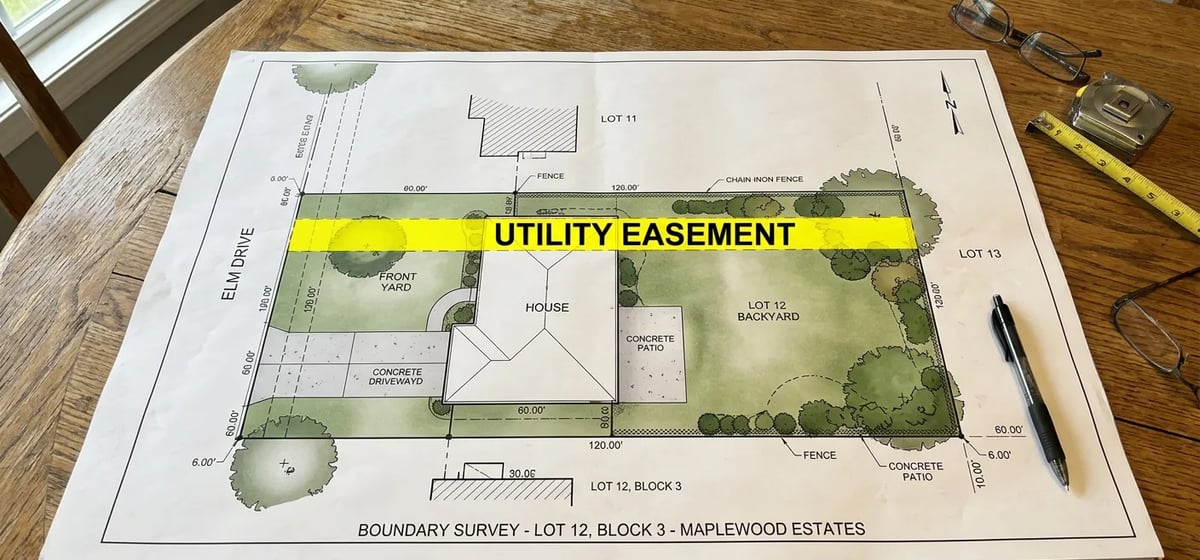
- Utility easements: This is the most common type. It allows utility companies to access buried pipes or overhead wires. For example, the city might have an easement to reach a main sewer line in your backyard. If you have questions about your home pipes, check out our guide to plumbing.
- Right-of-way easements: This lets someone travel across your land to get somewhere else. A common example is a shared driveway. Another example is a walking path that lets your neighbors cross the edge of your yard to reach a public beach or park.
- HOA easements: If you live in a community with a Homeowners Association, they might hold an easement. This lets them step onto your property to maintain shared fences, signs, or landscaping. You can read more about these rules in our guide to neighbors and HOAs.
How easements affect your yard
An easement limits what you can do on that specific piece of dirt. You can't block access to it. You also can't build permanent structures over it.
Fences are a gray area. You can usually build a wooden fence across a utility easement. However, the utility workers can remove sections of the fence if they need to bring in heavy equipment. You will have to pay to put the fence back together. Always check your survey before you pour concrete or start a major outdoor project.
How to find your easements
You don't want to guess where an easement starts and stops. You need to look at your official property survey. You probably received a copy of this survey in your closing documents when you bought the house. It looks like a map of your lot with dotted lines showing the easement boundaries.
If you can't find your survey, you can hire a professional land surveyor to make a new one. A standard boundary survey costs $400 to $1,000. Prices vary based on where you live and how big your lot is. You can also check with your county clerk or local property records office. They keep copies of the deeds and subdivision maps that list all legal easements.
Sometimes, a neighbor might try to claim an easement that isn't on paper. This can happen if they have used a path across your land for many years without permission. If you face this situation, you should talk to a real estate attorney. A lawyer usually charges $200 to $500 an hour to review your documents and help protect your property rights.