

Understanding Your Property Lines
You need to know exactly where your yard ends and your neighbor's yard begins. Guessing can lead to expensive mistakes. Do not trust old fences or mowing lines. Fences are often built a few feet inside the actual property line.
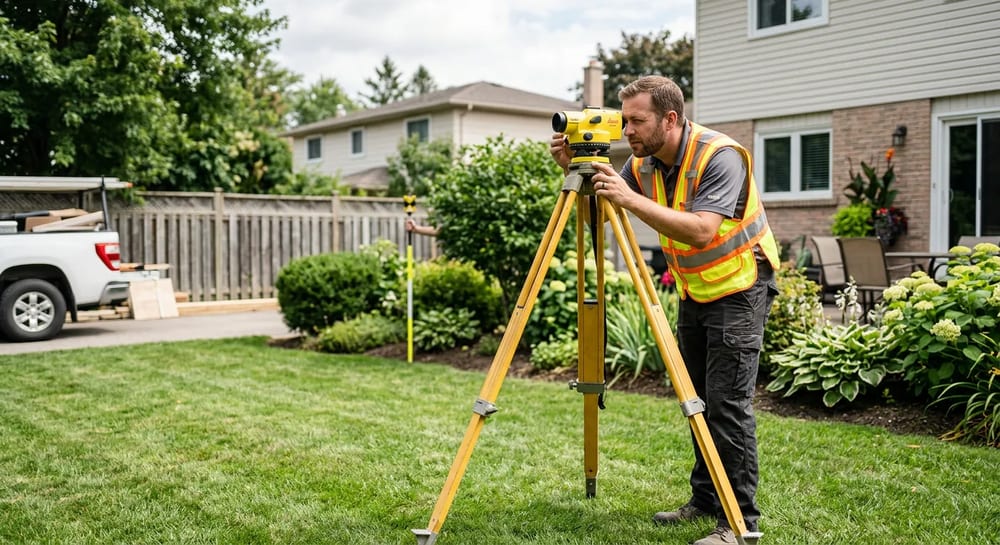
If you plan to build a fence, add a shed, or change your landscaping and drainage near the edge of your yard, get a boundary survey. A professional land surveyor will find your exact corners and mark them with metal pins or wooden stakes.
A typical residential boundary survey costs $400 to $1,000. Keep in mind that all costs vary widely by region, project scope, and the age of your home. Older neighborhoods with missing markers usually cost more to survey.
Fence Rules and Etiquette
Fences make great neighbors, but they also cause a lot of arguments. Before you build a new fence, check your local city codes. Most cities limit backyard fences to six feet tall. Front yard fences are usually capped at three or four feet.
Talk to your neighbor before you start digging. If you build a fence exactly on the property line, it becomes a boundary fence. In many states, both neighbors share the ownership and the maintenance costs of a boundary fence. If you want total control over the fence, build it completely inside your own property line.
Always face the "good" side of the fence outward. The smooth side should face your neighbor or the street. The side with the visible posts and rails should face the inside of your yard. This is standard etiquette and often a strict rule for exterior upgrades in many cities.
| Fence Location | Who Owns It | Who Pays for Upkeep |
|---|---|---|
| Exactly on the property line | Shared by both neighbors | Usually split 50/50 |
| Inside your property line | You own it 100 percent | You pay 100 percent |
| Inside neighbor's property line | Neighbor owns it 100 percent | Neighbor pays 100 percent |
Trees, Branches, and Roots
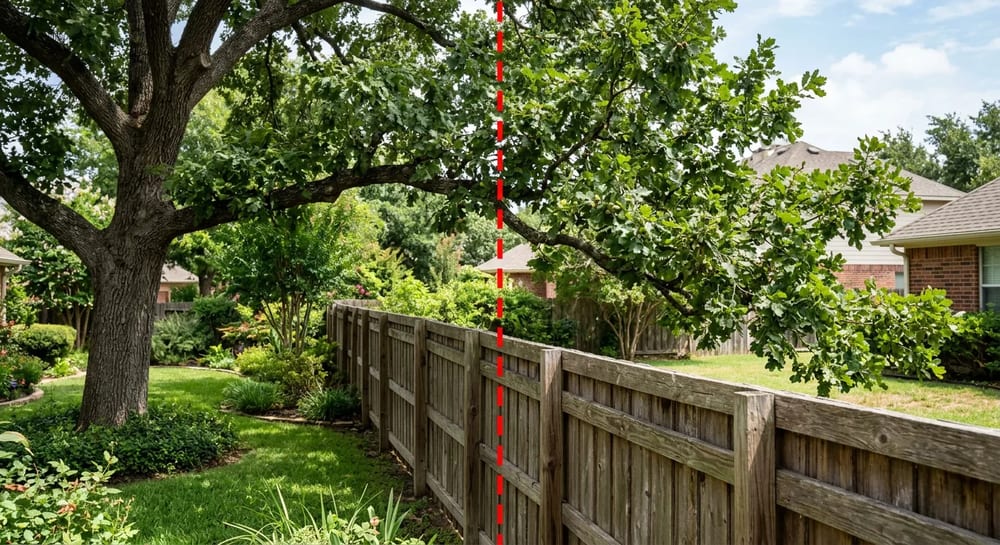
Overhanging tree branches drop leaves in your gutters and block your sunlight. The general rule across the US is simple. You can trim any branches or roots that cross your property line. You have the right to cut them straight up to the invisible boundary in the sky.
If a healthy tree blows over in a storm and lands on your house, your neighbor is not usually at fault. Act of God rules apply. Your own home insurance will pay to fix your roof. Your neighbor is only liable if the tree was clearly dead or rotting and you have proof you warned them about it before the storm.
Managing Noise and Nuisances
Barking dogs, loud music, and bright security lights cause major friction. Every city has noise ordinances. These rules usually set quiet hours from 10 PM to 7 AM. During quiet hours, noise must stay below a certain decibel level at the property line.
If talking fails, document the problem. Keep a log of the dates and times the noise happens. Record video or audio on your phone. You will need this proof if you file a formal complaint with the city or your homeowners association.
How HOAs Actually Work
A homeowners association is a private organization that manages a neighborhood. When you buy a house in an HOA, you automatically become a member. You must pay dues and follow the rules. These rules are called Covenants, Conditions, and Restrictions. Most people just call them CC&Rs.
An elected board of volunteer neighbors runs the HOA. They collect dues to pay for shared things like streetlights, neighborhood pools, and landscaping. If you do not pay your dues, the HOA can charge late fees. If you ignore the debt, they can place a lien on your home. This directly impacts your property taxes and finances.
HOA fines start small but grow quickly if you ignore them. Here is a look at typical starting fines for common violations.
Getting HOA Approvals
You cannot just paint your house purple or build a giant deck if you live in an HOA. You must get permission first. You do this by submitting a request to the Architectural Review Committee. This group reviews your plans to make sure they match the neighborhood style.
Always submit your plans before you buy materials or hire a contractor. Include paint swatches, blueprints, and a copy of your property survey showing where the new project will go. The committee usually has 30 days to approve or deny your request. If you build without approval, the HOA can force you to tear the project down at your own expense.

Handling Fines and Violations
Everyone breaks an HOA rule eventually. Maybe you left your trash cans out a day late or your grass got too tall. The HOA will mail you a violation notice. The first notice is usually just a friendly warning.
Fix the problem immediately. If you ignore the warning, the HOA will start sending fines. If you think the fine is unfair, you have the right to a hearing. You can stand in front of the HOA board and explain your side of the story. Stay calm, be polite, and bring photos to prove your case. Boards are run by your neighbors, and they will often waive a first-time fine if you show you are trying to cooperate.