What is a hacksaw?
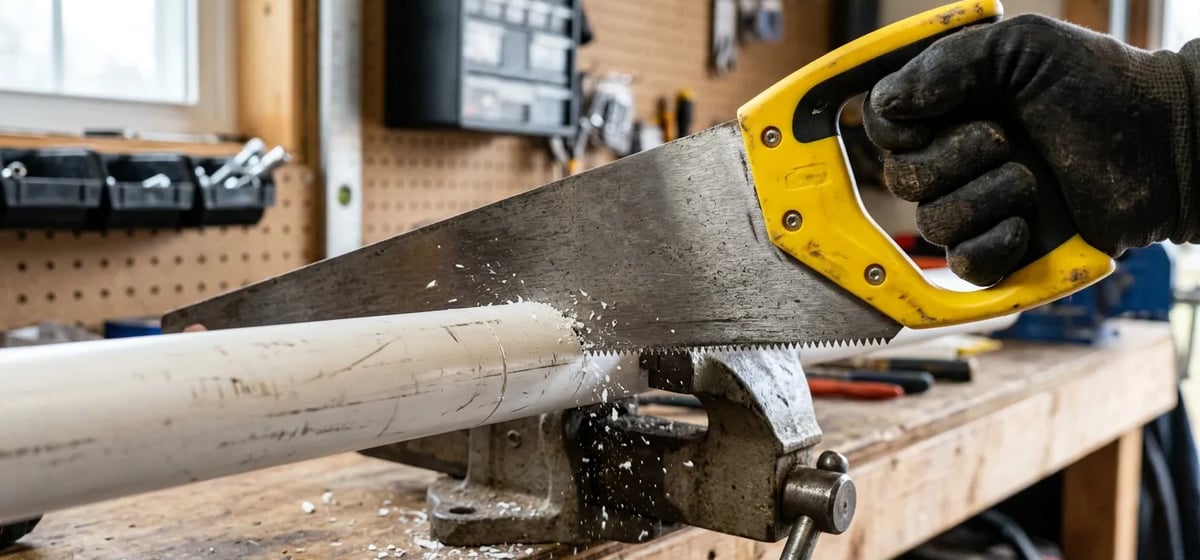
A hacksaw is a hand tool designed to cut through tough materials. It features a C-shaped metal frame with a handle at one end. A thin blade stretches across the open bottom of the frame. You tighten a small wing nut near the handle to keep the blade rigid. This tight tension stops the thin metal blade from bending and snapping while you work.
The word combines hack, meaning to cut with heavy blows, and saw. Builders have used this term since the 1880s to describe saws built to cut through tough metal. Today, it's a staple in almost every home tool kit.
Why you need one
You'll reach for a hacksaw to make precise cuts in hard materials. A regular wood saw has large teeth that will snag and ruin metal or plastic. A hacksaw has tiny, close-together teeth that slowly shave away the hard material instead of tearing it.
Common jobs for a hacksaw include:
- Cutting thick PVC pipes for Plumbing repairs under your sink.
- Trimming metal closet rods or wire shelving to the right length.
- Slicing through rusted bolts or stripped screws that you can't unscrew.
- Cutting small pieces of decorative trim when you need a smooth edge.
Choosing the right blade
The secret to a good cut is using the right blade. Hacksaw blades are measured in teeth per inch, or TPI. A lower number means bigger teeth for faster cuts. A higher number means tiny teeth for smoother cuts on thin metal.
Here's a quick guide to choosing a blade:
- 14 to 18 TPI: Best for thick metal like steel bars and thick plastic pipes.
- 20 to 24 TPI: Good for medium metals like brass and copper pipes.
- 28 to 32 TPI: Perfect for thin sheet metal and thin metal tubes.
Blades get dull over time. When your saw stops cutting easily, it's time for a new blade. You just loosen the tension nut, pop the old blade off the small metal pins, and slide a new one on. Always make sure the sharp teeth point away from the handle. A hacksaw cuts the material when you push it forward, not when you pull it back.
What a hacksaw costs
Buying a hacksaw is a cheap way to handle small home repairs. You can find them in the tool aisle at any local hardware store. A basic hacksaw frame costs 10 to 20 dollars. A heavy-duty frame with a rubber grip and stronger tension controls will run you 25 to 40 dollars.
Replacement blades are also cheap. You can buy a pack of five to ten blades for 5 to 15 dollars. Exact prices vary based on your local store and the brand you choose. Having this simple tool on hand might save you from paying a professional for a quick fix. This is a great point to consider when looking at DIY vs. Hiring a Pro.
Tips for using your saw
Using a hacksaw safely takes patience. Don't press down too hard on the handle. Let the sharp teeth do the actual work. If you force the saw into the metal, the thin blade will bend or break. Take long, smooth strokes. Try to use the entire length of the blade so the teeth wear down evenly.
Always clamp your material down tightly to a workbench before you start cutting. If the pipe or bolt wiggles around while you push the saw, your blade will bind up and stop moving.