What is a gutter guard?
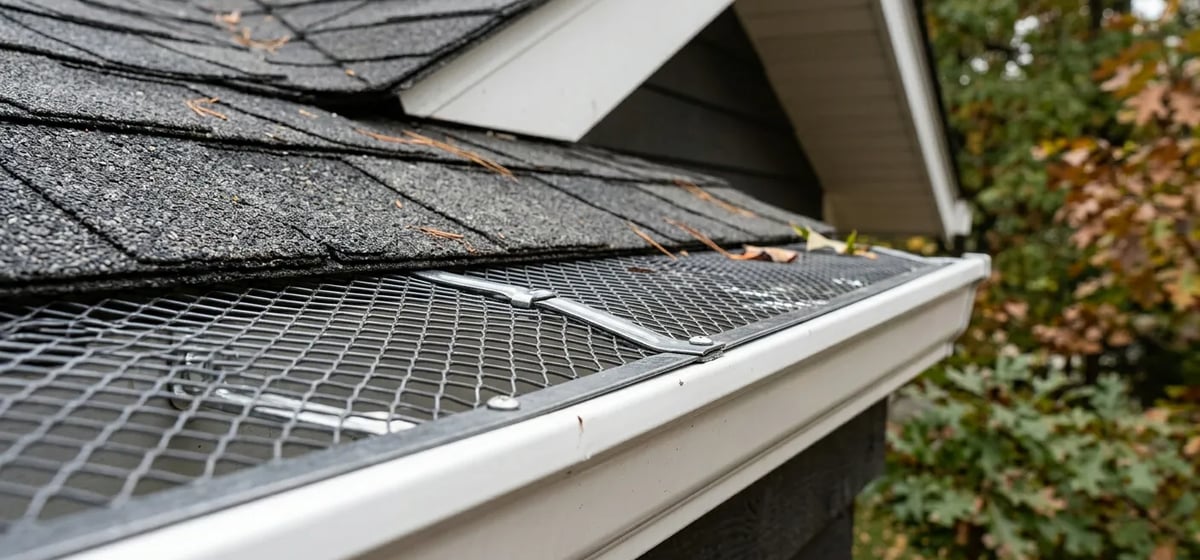
A gutter guard is a protective cover that sits directly on top of your rain gutters. It keeps leaves, pine needles, and twigs out of the channel. The guard features tiny holes, a mesh screen, or a curved surface. This design lets rain water flow through into the gutter while blocking solid debris. You install these to stop clogs and reduce how often you have to clean your gutters.
Gutters have a very simple job. They catch water rolling off your roof and guide it safely away from your house. When they fill up with leaves, the water stops moving. It spills over the edges and falls right next to your foundation. Gutter guards act like a filter to make sure the water always has a clear path to the downspout.
Why they matter for your home
Clogged gutters cause expensive problems. If water overflows, it can rot your wood trim or damage your siding. You can learn more about protecting your outer walls in our guide to Exterior: Siding, Garage & Decks. Water pouring near your foundation can also flood your basement or wash away your garden mulch. Standing water in a clogged gutter even creates a perfect breeding ground for mosquitoes.
Gutter guards keep the water flowing freely. They save you time and keep you off a dangerous ladder. You still need to check your gutters once a year, but you won't have to scoop out handfuls of wet, rotting leaves every single fall.
Common types of gutter guards
There are a few popular styles you'll see at the hardware store or hear about from local contractors.
- Mesh screens: These are flat metal or plastic sheets with small holes. They block most leaves but might let tiny seeds or pine needles slip through. You can often install these yourself.
- Micro-mesh: These use a very fine stainless steel screen. They block almost everything, including the tiny sand grit that washes off your roof shingles. You usually need a professional to install them.
- Reverse curve: These solid covers have a rounded edge. Water flows over the curve and drops into the gutter. Leaves slide right off the edge and fall to the ground.
- Brush guards: These look like giant pipe cleaners sitting inside the gutter channel. They catch large leaves on top but let water pass through the bristles.
- Foam inserts: These long foam blocks completely fill the gutter space so debris can't get in. Water flows right through the pores in the foam.
Costs and what to watch for
Buying and installing gutter guards is an investment. If you buy basic plastic screens at the hardware store, expect to pay 1 to 3 dollars per linear foot. If you hire a professional to install high quality metal micro-mesh guards, the cost jumps. You'll typically pay 15 to 30 dollars per linear foot. A normal house has about 150 to 200 feet of gutters. This means a professional installation usually costs 2,250 to 6,000 dollars total. Prices vary based on your location, the type of guard, and the height of your roof.
Even with the best guards installed, your gutters aren't completely maintenance free. Tiny bits of dirt will eventually wash into the channel. You'll still want to flush the gutters with a garden hose every spring. Heavy winds can also blow wet leaves onto the roof. Sometimes those leaves stick flat to the mesh and block the holes. When this happens, rain water will shoot right over the edge of the gutter during a heavy storm. You can usually clear this surface debris off with a long brush from the ground.
Good yard care also helps your gutter guards work better. Keep your tree branches trimmed back away from the roofline. You can read more about managing trees and water flow in our Landscaping, Drainage & Outdoor guide. Less debris falling on your roof means less work for your gutter guards.