What is an Igniter?
An igniter is a small electronic part that starts the flame in your gas appliances. In the past, appliances used a standing pilot light. A pilot light was a tiny flame that burned all day and night. That wasted gas. Today, appliance makers use electronic igniters instead. These parts stay off until you actually need heat.
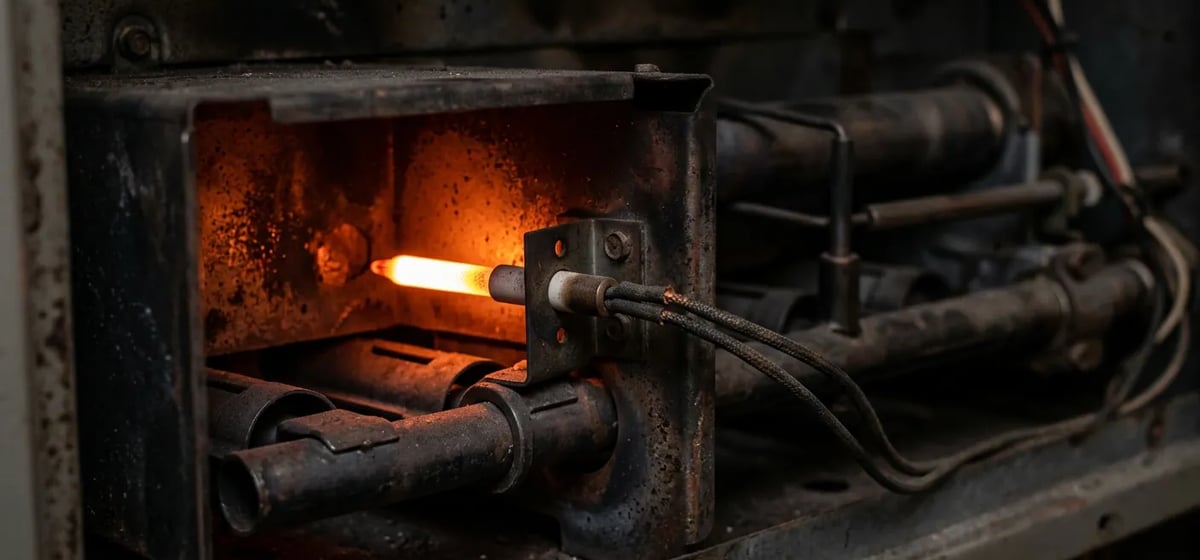
There are two main types of igniters in a home. The most common type is a hot surface igniter. It looks like a small piece of gray ceramic. When your thermostat asks for heat, the appliance sends electricity to this part. It glows bright orange and gets incredibly hot. Once it reaches the right temperature, the gas valve opens. The glowing metal safely lights the gas. The second type is a spark igniter. This type acts like a tiny lightning bolt. It creates a rapid clicking sound and a blue spark to catch the gas on fire. You usually see spark igniters on gas stove burners.
Where You Run Into Them
You will find these small parts in almost any modern gas appliance. Your gas furnace relies on one to keep your house warm all winter. If you want to learn more about heating systems, check out our guide on HVAC & Climate Control. Your gas water heater also uses an igniter to warm up your shower water. Gas ovens and clothes dryers use them too.
Most homeowners only think about this part when an appliance stops working. It sits hidden behind metal access panels. You do not need to clean it or oil it. It just does its job quietly until it eventually burns out.
Signs of a Bad Igniter
Igniters wear out over time. The constant heating and cooling weakens the material. In fact, a broken hot surface igniter is the number one reason a gas furnace stops working in the middle of winter.
You can usually tell when this part fails. Here are a few common signs:
- Your furnace blows cold air instead of hot air.
- You hear your oven click several times but it never heats up.
- Your gas dryer tumbles your clothes but leaves them cold and damp.
- You open your furnace panel and see a visible crack in the gray ceramic part.
Replacement Costs
Replacing this part is a very normal part of owning a home. You will likely have to do it a few times over the life of your appliances. The actual part is quite cheap. A brand new igniter usually costs 20 to 50 dollars at a local hardware store or online.
If you hire a professional heating technician, you have to pay for their labor and the trip to your house. A standard service call to replace a furnace igniter usually costs 150 to 300 dollars. Keep in mind that prices vary depending on your city and the exact brand of your appliance.
Many homeowners choose to replace this part themselves to save money. It usually requires just a screwdriver and ten minutes of time. If you go this route, you must turn off the electricity and the gas supply before you start. If you feel unsure, read our guide on DIY vs. Hiring a Pro to help you decide.