What is an ice maker?
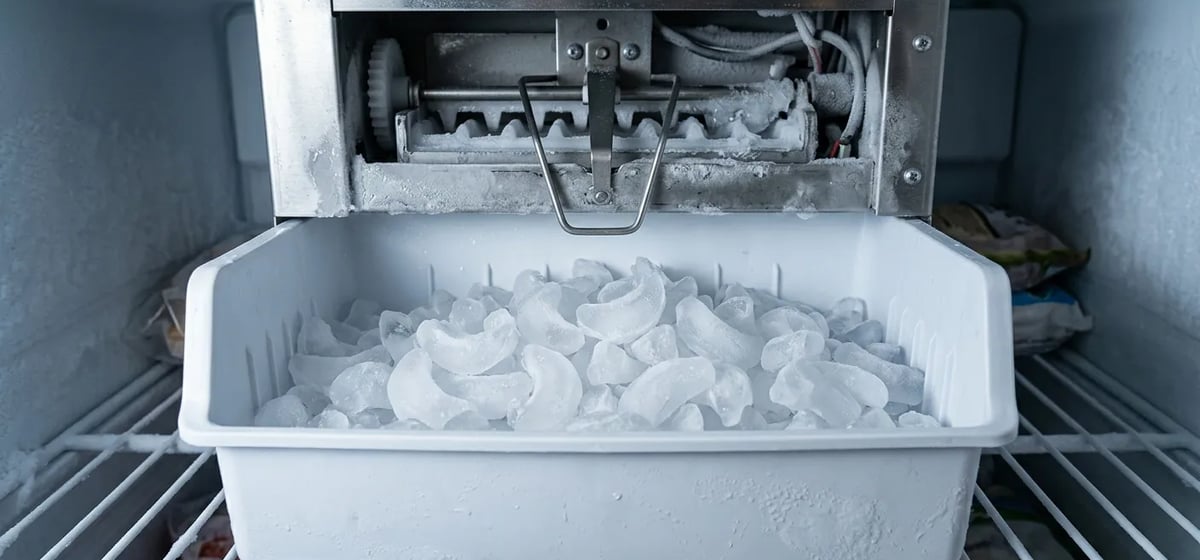
An ice maker is a small machine located inside your freezer. It automatically freezes water into solid cubes. Once the cubes are ready, the machine drops them into a storage bin. It stops making ice when a small metal arm or laser sensor detects that the bin is full.
Appliance companies first introduced automatic ice makers for home freezers in the 1950s. Before that, homeowners had to fill plastic or metal trays by hand. Today, the term simply describes exactly what the machine does. You will find an ice maker in almost every modern kitchen. To work properly, the machine must connect to a small water supply line located behind your refrigerator.
While most homeowners only deal with the unit inside their refrigerator, you can also buy freestanding ice makers. These sit under your counter like a dishwasher. They make clear ice and hold much more than a fridge unit. However, they cost between 1000 to 2000 dollars and require their own dedicated drain line.
How it makes ice
Your ice maker relies on your home Plumbing to get water. A thin copper or plastic tube runs from a water pipe in your wall to the back of your fridge. Inside the freezer, a small electric water valve opens for a few seconds. This fills a curved mold with fresh water.
The cold air in your freezer chills the water until it turns solid. A built-in thermostat tells the machine when the water hits the right temperature. Next, a tiny heater at the bottom of the mold warms up for a moment. This slight heat loosens the frozen cubes from the plastic or metal tray. Finally, a small motor turns a plastic rake. The rake pushes the fresh ice out of the mold and into your bin. The cycle starts all over again until the bin fills up.
Common issues to watch for
Ice makers bring a lot of convenience, but they are also one of the most common things to break in a kitchen. You should watch out for a few frequent problems. If you are reading our New Homeowner Guide, you know that catching small problems early saves you money.
- Bad tasting ice: If your ice tastes stale or smells bad, your water filter is probably dirty. You should change the filter in your fridge every six months.
- No ice production: The small metal arm might be stuck in the upward position. This tells the machine the bin is full. You might also have a frozen water line inside the freezer door.
- Hollow ice cubes: This usually means the water pressure is too low. The mold is not filling up completely before the freezing cycle begins.
- Water leaks: The thin water line behind the fridge can crack or come loose. A slow drip can ruin your floors or drywall over time.
Warning: Always pull your refrigerator away from the wall slowly. If you yank it too fast, you might tear the water line and cause a major flood in your kitchen.
Repair and replacement costs
Fixing an ice maker is a routine job for Appliances repair technicians. Sometimes you can fix the problem yourself by thawing a frozen line with a hair dryer. Other times, you need to hire a professional to swap out broken parts.
If your machine stops working, the technician will usually check the water inlet valve first. Replacing this valve is a fast job. If the motor or the internal heater fails, you will likely need to replace the entire ice maker unit.
Here are some ballpark costs for common ice maker repairs. Keep in mind that prices vary based on your location and the brand of your refrigerator.
| Repair Type | Average Cost |
|---|---|
| Replace water filter | 30 to 60 dollars |
| Replace water inlet valve | 150 to 250 dollars |
| Fix a leaking water line | 100 to 200 dollars |
| Install a new ice maker unit | 200 to 400 dollars |
If your refrigerator is very old, you might want to skip the repair. Paying 400 dollars to fix an old fridge rarely makes sense. You can buy bagged ice or use old fashioned ice trays until you are ready to buy a new refrigerator.