What Is a Knee Kicker?
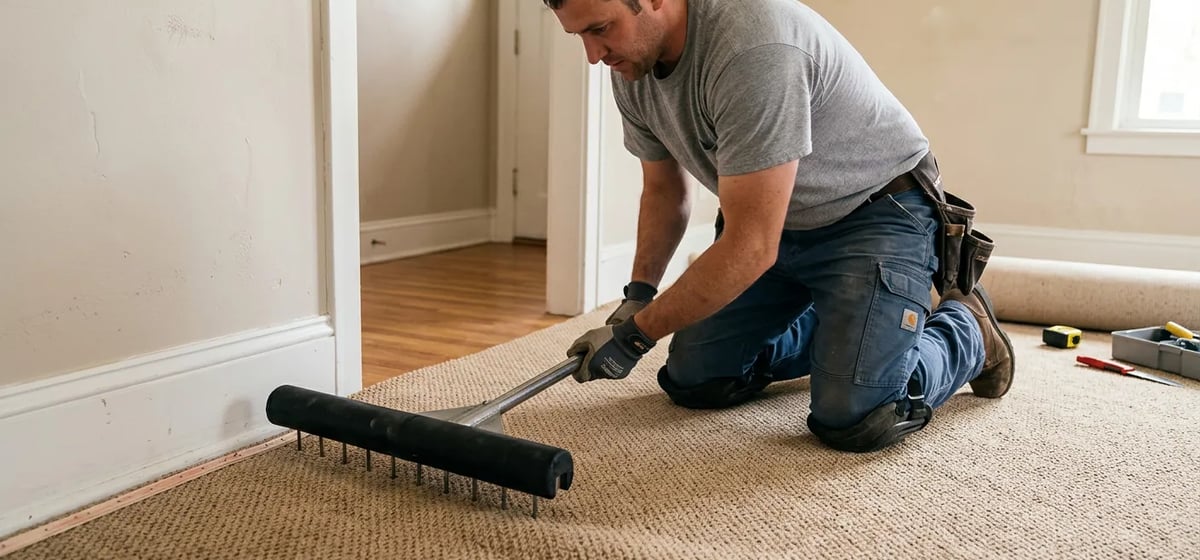
A knee kicker is a heavy metal tool that installers use to stretch carpet tightly across a room. It has a thick padded cushion on one end and a wide head with sharp metal teeth on the other end. The name is a literal description of how the tool works. The installer grips the carpet with the metal teeth and literally strikes the padded end with their knee. This action pulls the fabric tight against the walls.
Carpet layers invented this device in the middle of the 20th century. Before this tool existed, installing carpet across an entire room was slow and difficult work. The knee kicker changed the industry because it made the job much faster and helped keep carpets smooth.
Why Carpet Needs Stretching
When you buy new carpet for your home, it comes in large, heavy rolls. Simply unrolling it on the floor is not enough. You must stretch it tight before you secure it to the tack strips around the edges of the room. Tack strips are thin pieces of wood covered in sharp nails that grip the carpet backing. If the carpet is loose when you press it onto these strips, it will quickly develop ripples and wrinkles as you walk on it. These wrinkles look bad and create a major tripping hazard in your home.
Loose carpet also wears out much faster. Furniture dragging across ripples will tear the carpet fibers. Vacuum cleaners can catch on loose spots and pull up the backing, ruining the rug completely. A proper stretch with a knee kicker prevents these problems and extends the life of your flooring. A tight carpet lies perfectly flat, feels firm under your feet, and resists normal wear and tear for many years.
Knee Kicker vs. Power Stretcher
If you watch a professional install carpet, you might see them use two different stretching tools. The knee kicker is great for small rooms, closets, and tight spaces. It is also perfect for positioning the carpet on stairs or fixing small wrinkles in a narrow hallway. Installers use it to hook the carpet onto the tack strips in corners where larger tools simply cannot fit.
However, for large rooms, pros use a tool called a power stretcher. A power stretcher uses long metal tubes braced against the opposite wall to push the carpet tight. It applies much more force than a human knee ever could. Most experts agree that a knee kicker should only position the carpet or stretch small areas. Using only a knee kicker on a massive living room will not get the carpet tight enough, and wrinkles will eventually appear. If you are deciding between doing it yourself or hiring a pro, remember that large spaces require the heavy duty power stretcher to get the job done right.
What It Costs to Rent or Buy
If you want to tackle a small carpet repair or install carpet in a single closet, you do not need to hire a professional. You can easily rent or buy a knee kicker from a local hardware store.
- Renting: You can usually rent a knee kicker for 20 to 40 dollars a day. This is the best choice if you only have one small project.
- Buying: A basic model for home use costs 50 to 80 dollars. Professional grade kickers cost 100 to 150 dollars.
- Hiring a Pro: If you hire a professional to stretch a wrinkled carpet in a standard room, expect to pay 100 to 300 dollars for the labor.
Keep in mind that these prices are just estimates. Actual costs vary depending on where you live and the exact store you visit.