What is a macerator?
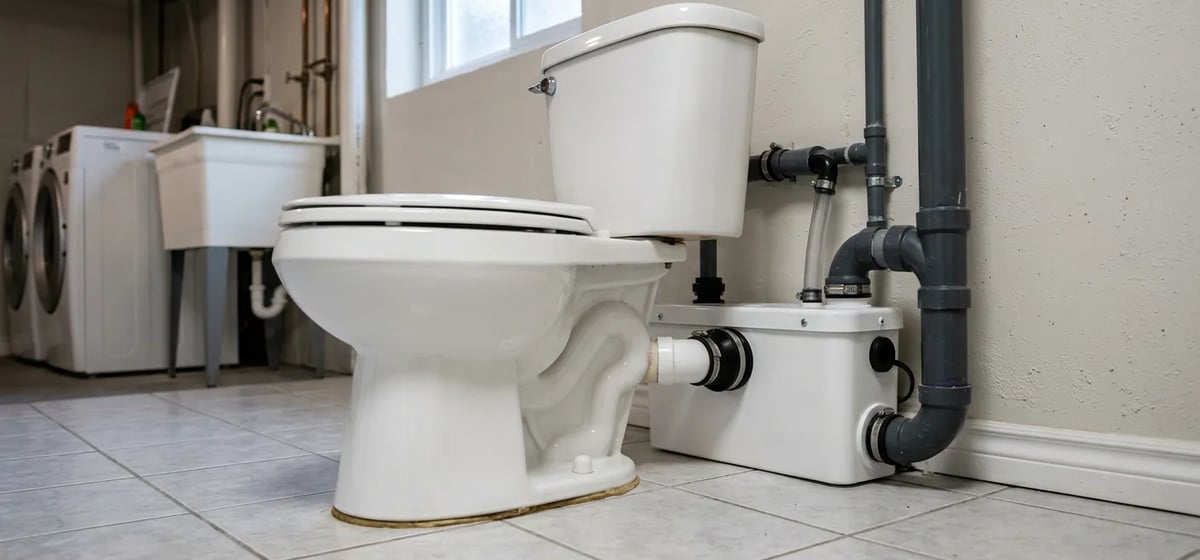
A macerator is a machine that grinds up solid human waste and toilet paper into a fine slurry. The word comes from the Latin word macerare, which means to soften or steep. Plumbers use this term for special pumps that break down solid waste so it can move through small pipes. You usually find them attached to the back of a toilet or hidden behind a wall.
Most toilets rely on gravity to pull waste down into your main sewer line. A macerator toilet works differently. When you flush, the waste drops into a tank holding a fast spinning blade. The blade chops everything up. Then, a strong pump pushes the liquid slurry upward through a small pipe until it reaches your home main drain. People often call these upflush toilets.
Why it matters to you
If you want to add a bathroom to your basement, you might face a big plumbing problem. Your basement floor often sits lower than the main sewer line that leads out to the street. Gravity can't pull water uphill. In the past, adding a basement toilet meant breaking up your concrete floor to install a deep sewage ejector pit. That's a messy and expensive job.
A macerator solves this problem. It lets you install a fully working bathroom anywhere in your house without tearing up the floors. The pump is strong enough to push waste up 15 feet vertically and over 100 feet horizontally. You can even connect a sink and a shower to the same macerator unit. This makes it much easier to finish your basement and increase your home value.
Many homeowners also use macerator pumps when converting a garage or an attic into a guest suite. Because the pipes are small, usually just 1 inch across, they are easy to hide inside existing walls. You don't need to frame out large bulkheads to cover bulky drain pipes. This gives you a lot of freedom when designing a new living space.
How to keep it running
A macerator has moving parts and a motor. That means you need to treat it with a little more care than a standard toilet. You must follow strict rules about what goes into the bowl. If you ignore these rules, you will jam the blades and burn out the pump motor.
Here are a few tips to keep your upflush toilet working well:
- Use regular toilet paper instead of extra thick or plush varieties.
- Clean the bowl regularly with a mild cleaner to prevent hard water buildup.
- Don't pour bleach or harsh chemicals down the drain. They can damage the rubber seals inside the pump.
- Listen to the motor. If it hums but doesn't pump, you might have a jam.
- Check your electrical connections. The pump needs a dedicated power outlet to work safely.
If you notice strange noises or leaks, you should probably call a professional. You can read more about dealing with drain issues in our Plumbing guide.
What it costs
Adding an upflush toilet is usually much cheaper than digging up a basement floor. The macerator pump and the special toilet bowl are sold together as a kit. The hardware alone usually costs 600 to 1,200 dollars. If you hire a plumber to install it, expect to pay another 500 to 1,000 dollars for labor and extra pipe fittings.
Your total cost will likely fall between 1,100 and 2,200 dollars. A standard gravity toilet might only cost 150 to 300 dollars at a hardware store. While the macerator system costs more up front, the savings on construction labor make it a smart choice for tricky spaces. Keep in mind that prices vary based on your location and how far the plumber has to run the new pipes. You can learn more about budgeting for pro help in our Hiring Contractors & What Things Cost guide.