What Is A Manifold?
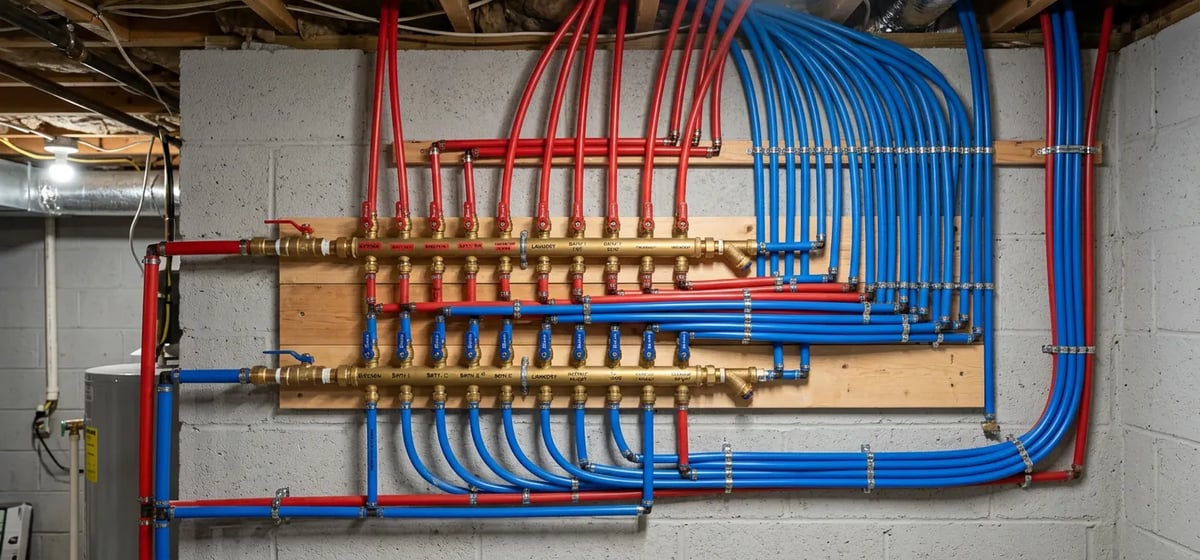
A manifold is a central hub for the water in your house. Think of it like a breaker box, but for plumbing. One large pipe brings water into this hub from your city supply or well. From there, the water splits into several smaller pipes. These smaller pipes run directly to your sinks, toilets, and showers.
The word comes from the Old English word manigfeald. This means many folds or many parts. Plumbers actually borrowed the term from mechanics. Mechanics used it to describe a single pipe that has multiple openings. Today, you'll see manifolds in almost all modern homes that use flexible plastic pipes called PEX.
Why It Matters To You
The best part about a manifold is the control it gives you. In older homes, water pipes branch off each other behind the walls. If a pipe breaks, you have to shut off the water to the entire house. A manifold changes that completely.
Most manifolds have a dedicated shutoff valve for every single pipe. If your guest bathroom sink leaks, you can walk over to the manifold and turn off just that one line. The rest of your house still gets water. You can still take a shower and wash your dishes while you wait for a plumber. Learning where this hub is located is an important step when managing your Plumbing system.
Where To Find It
You'll usually find the manifold near where the main water line enters your house. Common locations include:
- Mounted on a wall in the basement or utility room in colder climates.
- Hidden inside a recessed wall panel in a hallway or garage.
- Placed directly next to the main water heater.
A typical setup has two sides. One side handles cold water and the other handles hot water. You'll see a row of red pipes for hot and a row of blue pipes for cold. Each pipe connects to a small valve.
Costs And Maintenance To Watch For
Manifolds are very reliable, but the small valves can get stiff over time. It's a good idea to turn the valves off and back on once a year. This keeps the parts moving freely. If you skip this, a valve might freeze in place. Then you won't be able to shut off the water during Home Emergencies.
If your manifold cracks or a valve breaks, you'll need to call a professional. Replacing a manifold usually costs between 300 to 800 dollars. Prices vary widely based on where you live and how many water lines your home has. If you upgrade the plumbing in an older home to a new PEX system, installing a new manifold might cost 500 to 1200 dollars. Always get a few quotes when Hiring Contractors & What Things Cost to ensure you get a fair price.
Watch out for small drips around the connections. A tiny leak at the hub can cause water damage over time. If you see water pooling under the manifold, dry it off and see if the drip comes back. If it does, call a plumber to tighten or replace the fitting.