What is net metering?
Net metering is a billing system for homeowners who generate their own power. Most people do this using Solar Panels. During a sunny day, your panels might make more electricity than your house needs. When this happens, the extra electricity flows out of your house and into the local power grid. Your utility company measures this outgoing power. They then give you a credit on your next electric bill. At night, when your panels stop making power, you pull electricity from the grid. You use your earned credits to pay for that nighttime power.
The term net comes from a Latin word meaning clean or neat. In business, it means the final amount left over after you take away deductions. Metering simply refers to measuring the flow of power. So, net metering measures the final amount of power you actually buy from the utility company after deducting the power you gave them.
How your utility bill changes
When you have net metering, your electric bill looks different. You will see a line showing how much power you pulled from the grid. You will see another line showing how much power you sent back to the grid. You only pay for the net difference.
If you send more power to the grid than you use in a month, your bill might be zero dollars for electricity. You still have to pay basic connection fees. The extra credits usually roll over to the next month. This is very helpful. You can build up credits during long summer days and use them during short winter days when your panels make less power.
Different types of rules
Net metering rules depend on where you live. State laws and local utility boards set these rules. There are two main ways utility companies value your extra power.
- Retail rate: This is the best deal for homeowners. The utility company gives you a credit equal to the exact price they charge you for power. If you pay 15 cents for a unit of power, they give you a 15 cent credit for every unit you send them.
- Wholesale rate: Some companies only pay you the wholesale price. This is the lower price the utility company pays to buy power from huge power plants. If you pay 15 cents to buy power, they might only give you a 5 cent credit for the power you send them.
Costs and setup
You can't use net metering until you install a renewable energy system. A typical home solar setup costs 15000 to 30000 dollars before tax incentives. Prices and ranges vary widely based on your location and roof size. Once your panels are on the roof, you have to apply for net metering with your utility company.
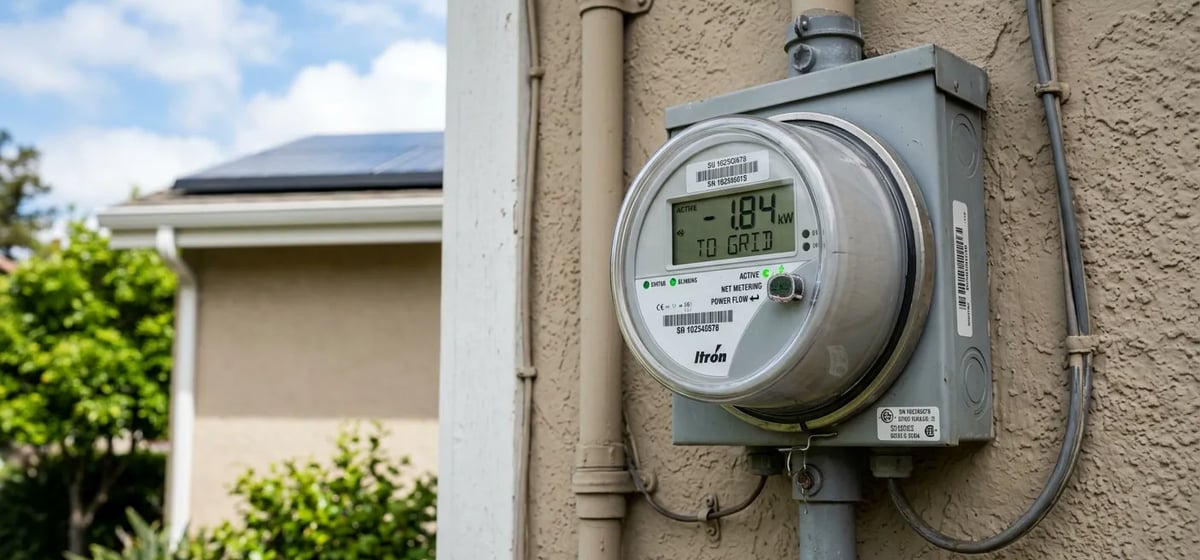
Your solar installer usually handles this paperwork for you. The utility company might charge a small application fee. This fee is usually 50 to 200 dollars. The utility company will also come to your house to check your Electrical meter. They must make sure you have a special bidirectional meter. This meter can measure power flowing in both directions. If you have an old meter, the utility company will replace it.
What to watch out for
Utility companies often place limits on net metering. They usually won't let you build a solar system that makes way more power than you use. They cap your system size at 100 to 110 percent of your past yearly energy use. They do this because they want you to offset your own bills, not act as a tiny power plant trying to make a cash profit.
You also need to watch out for changes in local laws. Some states are slowly replacing traditional net metering with new rules that pay homeowners less for their extra power. If you already have solar panels, the state usually lets you keep your old, better rates for 10 to 20 years. If you are thinking about buying solar, you should read up on your current local net metering laws before you sign a contract.