What is a multimeter?
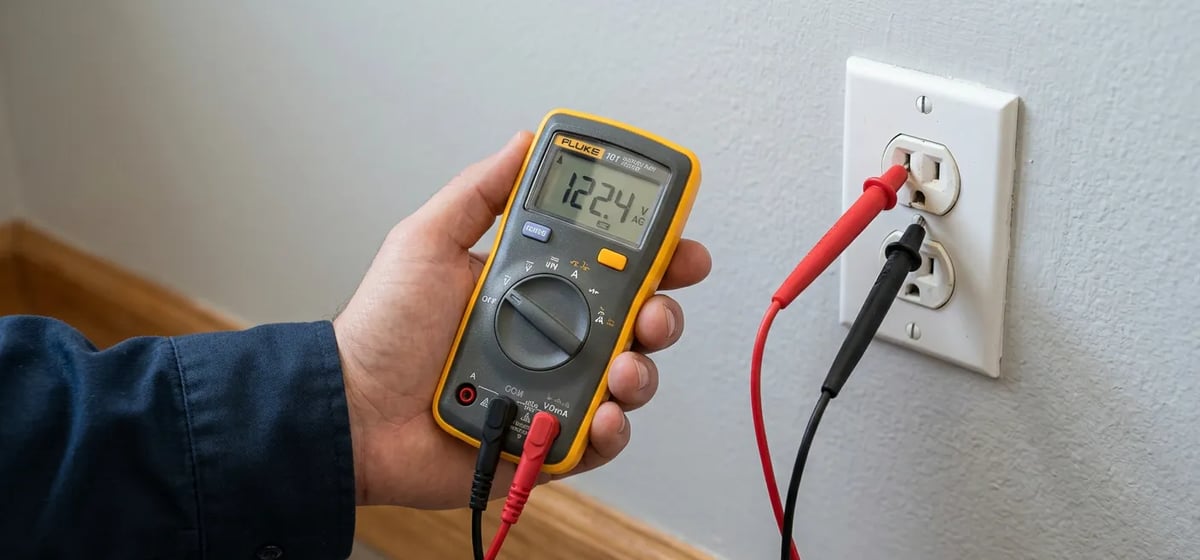
A multimeter is a small handheld tool that tests electrical circuits. It tells you if a wire is live and measures how much power is flowing. The device has a digital screen, a dial in the center, and two wires with metal tips called probes. One probe is red and the other is black. You touch these probes to a battery or a wire to get a reading on the screen.
Older versions had a needle that moved across a printed scale. These were called analog multimeters. Today, almost everyone uses digital multimeters because they're much easier to read. The screen gives you an exact number right away. The name comes from combining multi for many and meter for a measuring device. A postal engineer invented it in the 1920s because he wanted one single tool to measure voltage, current, and resistance. Today, it's a basic tool that belongs in every toolbox.
Why this tool matters for your home
Owning a multimeter saves you time and keeps you safe. You can use it to find out if an outlet is actually dead or if a breaker just tripped. It helps you test old batteries to see if they still have juice. You can also use it to check light switches, doorbell transformers, and appliances. If your air conditioner stops blowing cold air, a multimeter can test the capacitor to see if it failed.
If a lamp stops working, a multimeter tells you if the problem is the lamp or the wall outlet. This stops you from throwing away good electronics. It also protects you from getting shocked. Before you touch any wire, this tool proves that the power is totally off. Learning basic Electrical skills with this tool will make you a more confident homeowner.
What a multimeter costs
You don't need to spend a lot of money to get a good multimeter. A basic digital model costs 15 to 30 dollars at any local hardware store. This cheap version is perfect for checking batteries and testing wall outlets. If you want a heavy duty model with more features, you might pay 50 to 150 dollars. Professional electricians use high end versions that cost 200 to 400 dollars. Keep in mind that prices and ranges vary based on the brand and where you live.
When you shop, look for a feature called auto ranging. This means the tool automatically finds the right voltage range so you don't have to guess. It makes the tool much easier for beginners to use. Adding a basic multimeter to your shopping list is a great idea during Your First Week as a Homeowner.
How to use it safely
Using a multimeter is simple once you understand the dial. You plug the black probe into the hole marked COM for common. You plug the red probe into the hole marked with a V for voltage. Then you turn the dial to the setting you need.
- Voltage: Use this to see if an outlet has power. Look for a V with a wavy line for AC power in your walls.
- Direct Current: Look for a V with a straight line. Use this for testing batteries.
- Continuity: This setting usually has an icon that looks like a sound wave. It beeps if a continuous electrical path exists. You use this to test fuses.
Always test your multimeter on a known working outlet first. This proves the tool has good batteries and works correctly. If you feel unsure about testing a complex wire, it's time to stop. Read up on DIY vs. Hiring a Pro before you take apart a breaker box.