What Is Particle Board?
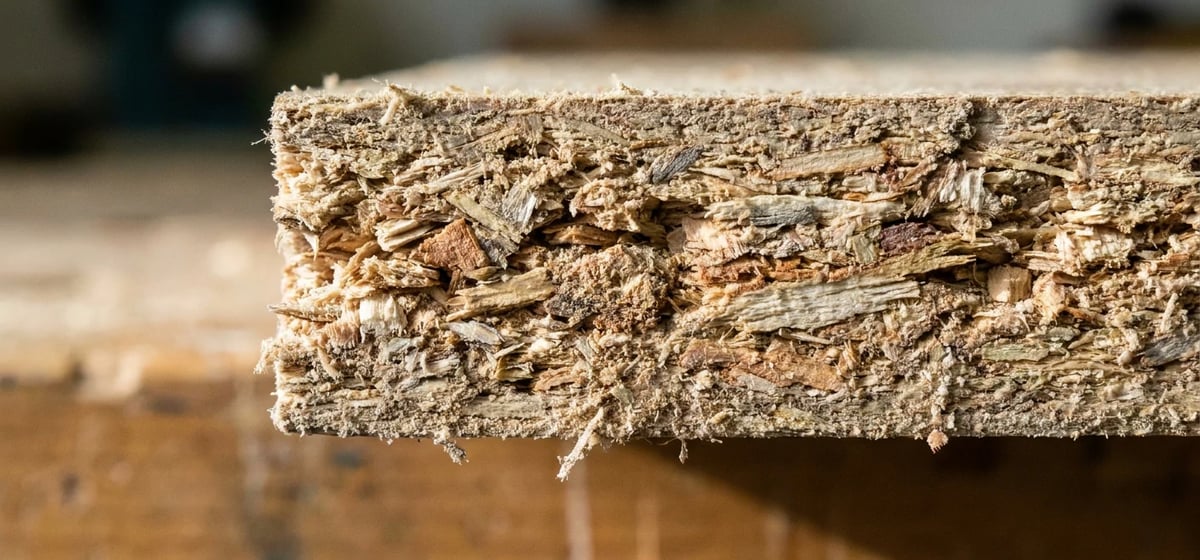
Particle board is a cheap building material made from wood chips, sawdust, and glue. Factories press all these scraps together under high heat to form large, flat sheets. The name literally describes the small particles of wood used to create the panels. It was first manufactured in Germany during World War II as a way to make use of waste wood when solid lumber was scarce. Today, builders use it constantly because it costs much less than solid wood or plywood.
You will usually see it covered up by something else. Manufacturers cover the raw board with a thin layer of plastic, wood veneer, or a smooth white foil. This makes it look nice on the outside while keeping costs very low on the inside. If you look at the raw, unfinished edge of a piece, it looks like coarse oatmeal mixed with glue.
Where You Find It In Your Home
You probably have particle board in several rooms right now. Builders love it for parts of the house that do not carry heavy structural weight. You will most often find it used for the hidden boxes of your kitchen and bathroom cabinets. It is also the standard core material hiding under most laminate countertops.
Other common places you will find it include:
- Flat-pack furniture like bookshelves, desks, and TV stands.
- Closet shelving and pantry organizers.
- The backing behind some types of interior trim and cheap wall panels.
- Hollow interior doors that feel very light when you swing them open.
It is a perfectly fine material for these jobs as long as it stays completely dry. It holds screws reasonably well if you do not overtighten them, and it provides a smooth surface for laminate layers.
The Big Water Problem
The main thing you need to know about particle board is how it reacts to moisture. It will swell up and ruin easily if it gets wet. Because it is basically glued sawdust, it acts exactly like a dry sponge. When a plumbing pipe drips on it, the board soaks up the water and expands outward. It loses all its structural strength and turns into a soft, crumbly mess.
Once the material swells, it never shrinks back to its normal size. You cannot sand it down or dry it out to fix it. The glue bond breaks down permanently. The only solution for water-damaged particle board is to tear it out and replace it. This is why you must keep a close eye on the plumbing under your sinks and behind your appliances.
Repair And Replacement Costs
If you catch a leak too late, you will have to pay to replace the damaged material. Fixing a swollen cabinet base is a common headache for homeowners. You usually have to hire a carpenter to cut out the rotten floor of the cabinet and slide in a new piece of plywood. If a laminate countertop gets wet at the seams, the particle board underneath will bubble up and ruin the smooth surface.
A basic cabinet base repair typically costs 150 to 400 dollars, though ranges vary depending on where you live and how hard the spot is to reach. Replacing a swollen section of countertop can cost 300 to 800 dollars. If a roof leak or a burst pipe destroys a whole row of upper and lower kitchen cabinets, replacing them can easily cost 3,000 to 10,000 dollars. You can read more about typical project prices in our guide on what home repairs cost.
When you do replace damaged cabinets or shelving, ask your contractor to use plywood instead of particle board. Plywood costs a bit more up front, but it survives small water leaks much better.