What is a veneer?
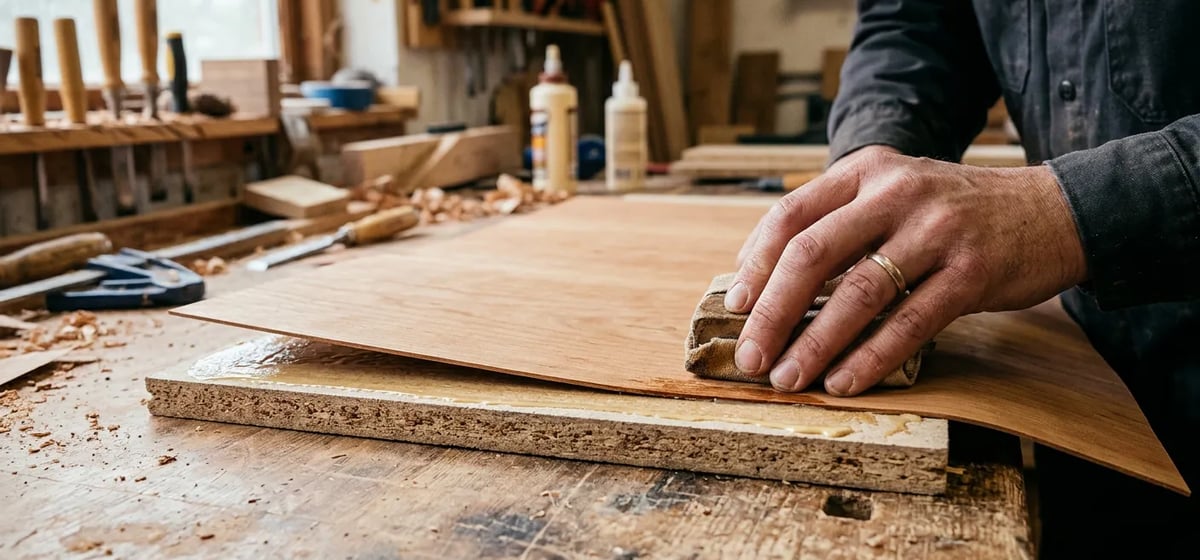
A veneer is a very thin slice of a high quality material glued over a cheaper core. Think of it like a beautiful skin. Cabinet makers use it to make standard plywood look like solid oak or cherry. Masons use it to make a basic wood framed wall look like a solid brick house. The word comes from the French word fournir, which means to furnish or supply. Furniture makers in the 1700s began slicing wood very thin to stretch their supply of rare tree species. Today, builders use the exact same trick to give your home a luxury look so you don't have to pay for solid materials. It's important to know that a veneer is real wood or real stone. It's just cut very thin. It's not a fake plastic print.
Where you'll find it
You'll run into veneers inside and outside your house. Inside, wood veneer is everywhere. Here are the most common spots:
- Kitchen cabinets: Most modern cabinets have a thin wood veneer glued over a particle board core.
- Interior doors: Your bedroom and closet doors are likely hollow core doors wrapped in a thin wood veneer.
- Flooring: If you have engineered hardwood floors, you're walking on a real wood veneer glued to layers of plywood. You can learn more about these materials in our guide to Flooring.
Outside your home, you'll find stone and brick veneers. Many homes look like they're built from solid stone blocks. In reality, they have a standard wood frame covered in thin slices of real stone. Builders call this architectural stone veneer. This is very common for the front face of a house or around an outdoor fireplace. You can read more about exterior materials in our guide to Exterior: Siding, Garage & Decks.
Why it matters and what it costs
Veneer matters because it saves you a lot of money. Solid wood is very expensive and very heavy. Solid stone is even heavier and requires massive concrete footings to hold it up. Veneer gives you the exact same look for a fraction of the cost. A solid cherry wood kitchen cabinet might cost 800 to 1200 dollars per box. A plywood cabinet with a cherry veneer usually costs 250 to 500 dollars per box. A solid brick wall requires a highly skilled mason and costs a fortune. A brick veneer siding job might cost 8 to 15 dollars per square foot. Keep in mind that all prices are rough estimates and ranges vary based on your location and the quality of the materials. Veneers also help the environment because one single oak tree can cover hundreds of cabinets instead of just a few.
What to watch out for
Veneers look great, but they have a few weak spots. Because the top layer is so thin, you have to be careful not to scratch it. If you gouge a solid wood table, you can sand it down and refinish it. If you gouge a wood veneer, you might sand right through the top layer and expose the cheap wood underneath. Once you sand through a veneer, it's almost impossible to fix.
When you clean veneer surfaces, use a damp cloth instead of soaking the wood. If you notice a loose edge on a cabinet door, glue it back down right away. A little bit of wood glue and a clamp will save the door. If you want to update the look of your cabinets, you can paint over a wood veneer. Just make sure you scuff it lightly with sandpaper first. You can find more tips on painting woodwork in our guide to Interior: Paint, Drywall & Trim.